Everything you need to know about curtain fabrics and materials
Standing in front of a hundred curtain samples can be overwhelming. Cotton. Linen. Polyester. Velvet. Sheers. Blackout linings. Each behaves differently on your windows and requires different maintenance. This guide helps you narrow down your choices to fabrics that actually fit your rooms and lifestyle.
What makes curtain fabric different from regular fabric
Curtain fabric has to do things regular fabric doesn't. It hangs vertically for years, often in direct sunlight. It needs to drape well, resist fading, and hold its shape without stretching or sagging. You can't just grab fabric from a craft store and expect it to work as curtains.
Weight matters in ways it doesn't for clothing or upholstery. Too light and the fabric won't hang properly. Too heavy and your curtain rod might struggle, or the fabric could pull at the header. Think of it this way: sheer fabrics feel like a lightweight t-shirt, medium-weight curtains feel like chino pants, and heavy drapes feel like a wool winter coat.

The weave structure also affects performance. Tighter weaves block more light and provide better insulation, while looser weaves let light filter through.
Sunlight exposure is another major factor. Fabrics that would last decades indoors can fade and deteriorate within months from UV exposure through a south-facing window. This is why curtain fabrics are often treated with UV inhibitors or made from fibers that naturally resist sun damage.
Why lining matters more than you think
The lining often matters as much as the face fabric itself, and this isn't common knowledge. A moderately priced cotton with quality lining will hang better and last longer than expensive silk with no lining.
Lining does several jobs at once. It protects the face fabric from sun damage, which is critical for natural fibers like silk and cotton that fade quickly. It adds weight and improves drape. It blocks light even if the face fabric is somewhat sheer. And it provides thermal insulation, keeping rooms cooler in summer and warmer in winter.

Unlined curtains have their place, but know what you're getting. Unlined cotton looks fine during the day, but at night with interior lights on, it appears thin and translucent. Unlined silk in a sunny window may last about two years before the fibers start breaking down. Unlined linen works well for casual, relaxed spaces where the see-through quality is intentional.
If you're spending real money on curtains, budget for lining. A standard cotton sateen lining adds little to the cost but makes a real difference in the finished look. Blackout lining costs more but delivers serious light blocking and insulation. For truly luxurious drapes with substantial weight and excellent thermal performance, consider interlining, a flannel layer between the face fabric and lining.
Natural fibers: cotton, linen, and silk
Natural fiber curtains have been around for centuries and remain popular because they breathe well, feel good to the touch, and age gracefully. Each fiber has its own personality.
Cotton
Cotton is the workhorse of curtain fabrics. It's affordable, widely available, and easy to care for. Most cotton curtains can go in the washing machine, making them practical for kitchens and kids' rooms. The fabric takes dye well, so you'll find cotton curtains in virtually any color or pattern.
The downside is wrinkling. If you strongly dislike wrinkled fabric, you'll need to either embrace the relaxed look or choose a cotton blend. A quick steam after hanging usually handles the worst creases. Pure cotton also absorbs moisture, which can lead to mildew in humid bathrooms.
Unlined cotton curtains often look disappointing. They tend to appear thin and cheap, especially at night when backlit by room lighting. If you choose cotton, lined panels make a noticeable improvement.
For more on cotton options, see our cotton curtains guide.
Linen
Linen has a texture cotton simply can't replicate. The natural slubs and slight irregularities give it character. Linen curtains filter light beautifully, creating a soft glow rather than harsh shadows.
Linen wrinkles even more than cotton, but many people consider this part of its charm. The fabric is stronger than cotton and actually softens with each wash. It handles humidity better too, making it suitable for slightly damp spaces.
Unlike other fabrics, linen "breaks" when it hits the floor, pooling in soft folds rather than hanging straight. Some people love this look; others find it messy. Know which camp you're in before buying floor-length linen panels.

Price is the main barrier. Quality linen costs significantly more than cotton. Our linen curtains article covers what to expect at different price points.
Silk
Silk is the most demanding curtain fabric. Nothing else has the same luminous sheen or catches light so brilliantly. In the right setting, silk curtains can elevate an entire room.
But silk requires serious commitment. It fades quickly in sunlight, requires dry cleaning, and watermarks easily. Silk must be lined, especially for windows with direct sun exposure. Unlined silk will deteriorate in about two years.
Most designers recommend silk only for formal rooms with limited light, no moisture risk, and little chance of spills. If that doesn't describe your space, a high-end polyester with a silk-like finish may serve you better.
Read our breakdown on whether silk curtains are worth the investment.
Synthetic fibers: polyester and blends
Polyester gets a bad reputation, often unfairly. Modern polyester curtains look nothing like the shiny, plasticky versions from decades ago. Today's polyester can mimic linen, silk, or cotton while offering practical advantages those natural fibers can't match.
The fabric resists fading, which matters if your windows get direct sun. It doesn't wrinkle much, so you can take curtains straight from the dryer and hang them without steaming. Polyester also repels moisture, making it a smart choice for bathrooms and kitchens where humidity is constant.
For homes with kids or pets, polyester is often the practical choice. It handles abuse, washes easily, and doesn't show wear the way natural fibers do. A well-made polyester curtain can look good for years with minimal effort.
Blends combine synthetic and natural fibers to get benefits from both. A cotton-polyester blend gives you the soft hand feel of cotton with the wrinkle resistance of polyester.
Learn more in our polyester curtains guide.
Special weaves: velvet and textured fabrics
Velvet deserves its own category because it's defined by how it's woven rather than what fiber it contains. You can find velvet made from cotton, silk, polyester, or blends. What makes velvet velvet is the pile, the soft raised surface created by cutting loops in the weave.
This construction gives velvet serious weight and density. Velvet curtains block light effectively, dampen sound, and provide meaningful insulation. The fabric has visual depth that shifts depending on how light hits it, adding dimension to a room.
Velvet hangs straight and heavy, falling in clean vertical lines rather than soft folds. This makes it well-suited to formal spaces and tall windows where you want drama.
Velvet requires more care than flat-weave fabrics. The pile can crush if stored improperly and shows marks if brushed the wrong way. Cleaning usually means professional attention. Despite the maintenance, velvet remains a favorite for bedrooms and media rooms where light control and acoustics matter.
Our velvet curtains article goes deeper on care and styling.
Natural vs synthetic: how to decide
The natural versus synthetic debate comes down to your priorities and circumstances.
Choose natural fibers if you prioritize texture and hand feel, want fabrics that develop character over time, don't mind dealing with wrinkles and more demanding care, and are decorating low-traffic or adult-only spaces.
Choose synthetics if you have kids, pets, or high-traffic rooms, your windows get significant direct sunlight, you want machine-washable and low-maintenance fabric, or budget is a constraint.
For most households, a mix makes sense. Linen in the dining room where guests appreciate it, polyester in the playroom where practicality wins.
For a complete comparison framework, see our article on natural vs synthetic curtain fabrics.
Light control: from sheer to blackout
Light control is often the primary reason people buy curtains, and fabric choice determines how much light gets through. The spectrum runs from sheer panels that diffuse light without blocking it, to blackout curtains that create near-total darkness.
Sheer and light-filtering fabrics
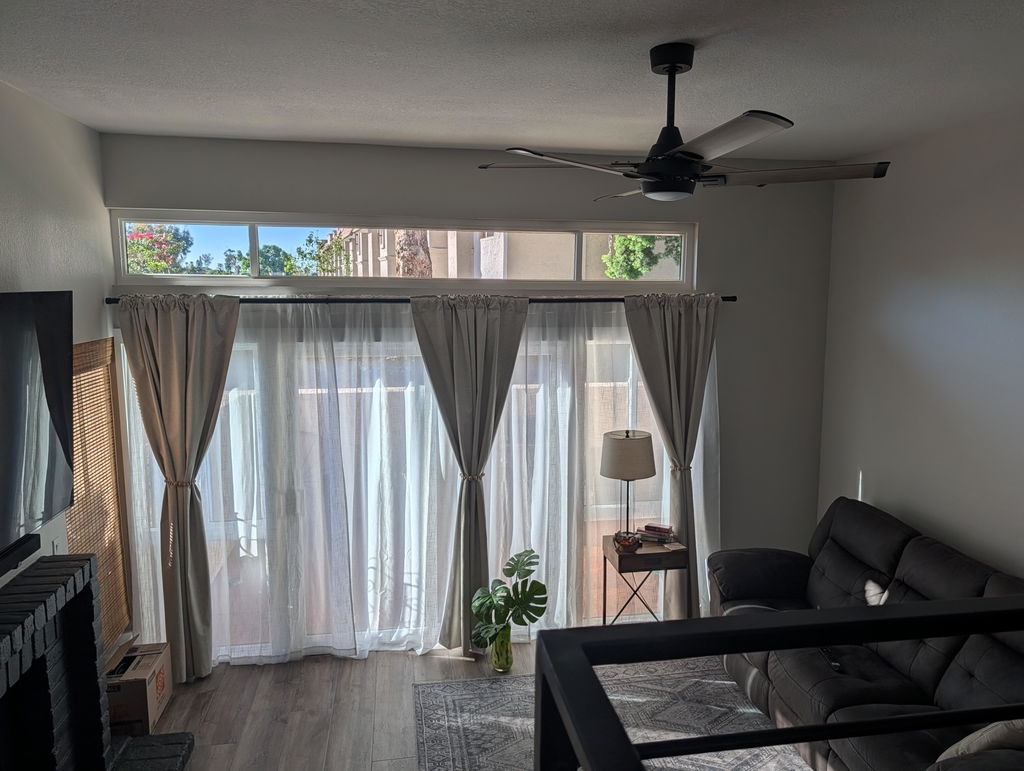
Sheer curtains are made from loosely woven or thin fabrics like voile, chiffon, or lightweight polyester. They soften incoming light and provide daytime privacy while still letting you see shapes and movement outside. Sheers work well layered under heavier curtains or alone in rooms where you want maximum natural light.
The trade-off is obvious: sheers offer almost no privacy at night when interior lights are on. Anyone outside can see in clearly.
For details on how different sheer fabrics perform, read our guide to sheer curtain fabrics.
Blackout fabrics
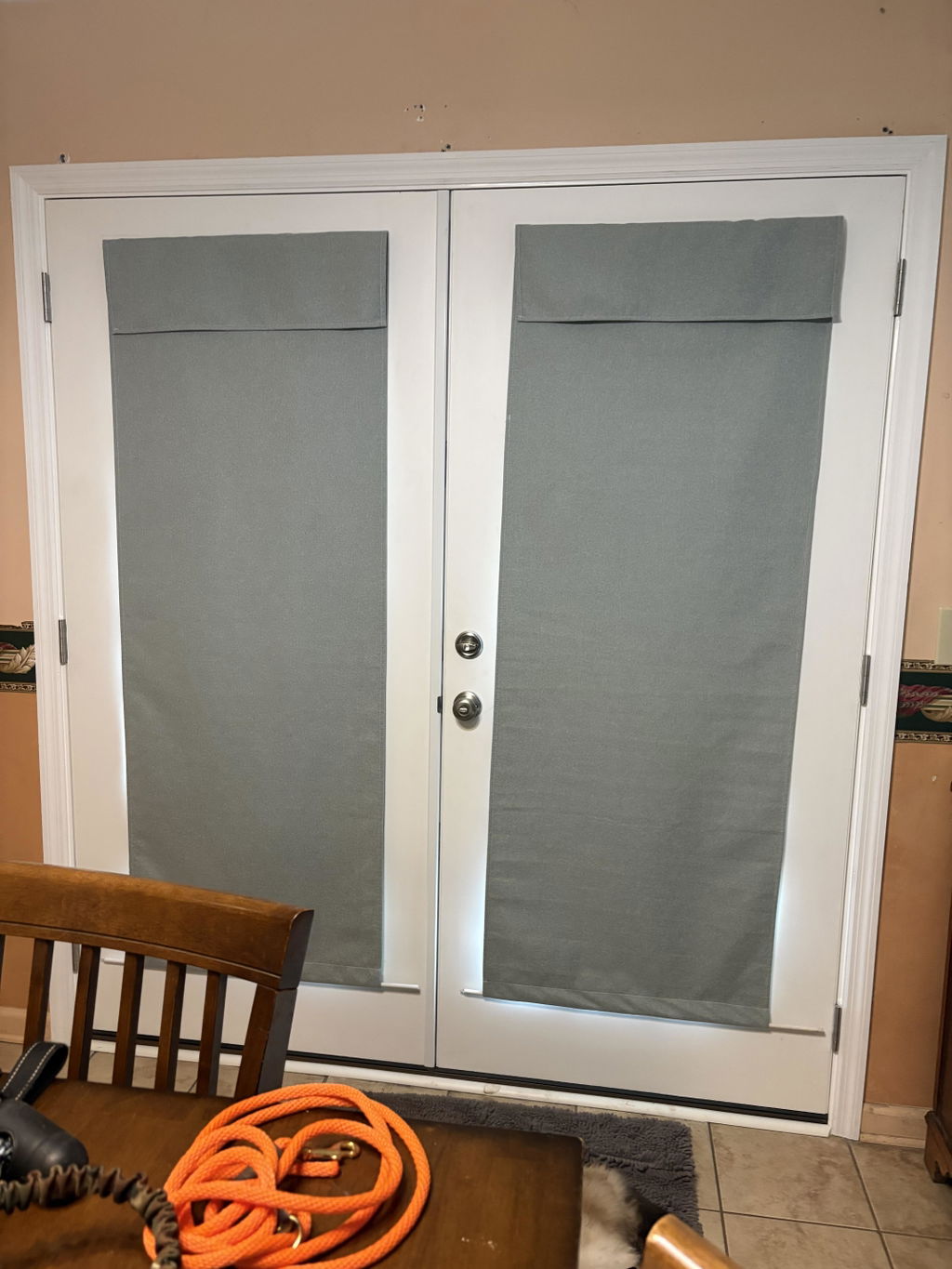
Blackout curtains use tightly woven fabrics, often with an additional coating or backing, to block nearly all incoming light. They're essential for bedrooms where you need to sleep during daylight, home theaters, or nurseries.

True blackout performance depends on more than fabric alone. Gaps around the curtain edges let light leak in, which is why blackout curtains work best with wraparound rods or ceiling-mounted tracks.
Our blackout curtains guide explains what to look for.
Thermal performance and energy savings
Dense, lined curtains can meaningfully reduce heating and cooling costs. In winter, heavy drapes add insulation at the window, one of the most heat-loss-prone areas in any home. In summer, they block solar heat gain.
The Department of Energy estimates that well-fitted insulating curtains can reduce heat loss through windows by up to 25%. If you're choosing curtains partly for energy efficiency, prioritize tight weaves, substantial weight, and quality lining. Floor-length curtains that seal against the window frame work better than shorter styles that let air circulate behind them.
Matching fabric to your room
Different rooms have different demands. The best curtain fabric for your bedroom probably isn't ideal for your kitchen.
Bedrooms need light control for sleep quality. Blackout fabrics or lined curtains make sense here. Velvet works well if you want both darkness and sound dampening.
Kitchens require fabrics that handle grease, steam, and frequent washing. Polyester or cotton-polyester blends are practical choices. Avoid anything that needs dry cleaning.
Bathrooms face constant humidity. Synthetic fabrics or moisture-resistant treatments prevent mildew. Some people skip fabric entirely and use vinyl or a shower-curtain style liner.
Living rooms and dining rooms are where aesthetics often take priority. These spaces can handle more delicate fabrics like linen or silk since they're not exposed to the same wear as utility spaces.
For room-specific recommendations, see our guide on choosing curtain fabric for each room.
Fabric and hanging style
The way you hang curtains affects which fabrics work well. Heavy fabrics like velvet and lined drapes need sturdy support: rings, grommets, or pinch pleats with proper hooks. These styles slide smoothly on a rod even with substantial weight.
Lightweight fabrics like sheers and unlined cotton can use rod pockets, where the rod threads directly through a sewn channel. This creates a gathered, relaxed look but works poorly with heavy fabric because the friction makes them difficult to open and close.
Tab tops and tie tops suit casual spaces and medium-weight fabrics. They don't slide easily, so they're best for curtains that stay in place rather than opening and closing daily.
If you want the tailored, "custom" look popular in design magazines, that usually comes from pinch pleat headers with proper stiffening. The fabric needs enough body to hold the pleat shape, which means medium to heavy weights work better than lightweight sheers.
How to assess fabric weight and quality
Assess fabric weight by feel and comparison rather than technical specifications.
Lightweight fabrics feel like a t-shirt or dress shirt. They move easily with air currents and filter light without blocking it. Examples: voile, lightweight cotton, chiffon.
Medium-weight fabrics feel like chino pants or a light jacket. They have enough body to hang well but aren't so heavy that installation becomes difficult. Examples: most cotton curtains, linen, lighter velvets.
Heavyweight fabrics feel like a wool coat or denim. They require sturdy rods and brackets and provide serious insulation and light blocking. Examples: heavy velvet, lined drapes, thermal curtains.
Quality involves more than weight. Hold fabric up to light to see how tightly it's woven. Check how it drapes by hanging a corner over your hand. Good curtain fabric should fall smoothly without stiffness or awkward bunching.
Our fabric weight guide explains specifications in detail, while our quality identification guide helps you evaluate fabrics before purchasing.
Safety considerations
Curtain flammability is worth considering, especially in homes with children or near kitchens.
Natural fibers like cotton and linen are combustible but tend to char and smolder rather than melting. Synthetic fabrics like polyester can melt when exposed to heat, potentially causing burns.
If fire safety is a concern, look for curtains labeled as fire-retardant or flame-resistant. These have been treated to slow ignition and reduce flame spread. They're required in commercial settings and worth considering for residential use near cooking areas or in children's rooms.
Budget expectations by fabric type
Knowing general price ranges helps you set realistic expectations. These are rough guidelines for ready-made curtains at a standard window size:
- Polyester: $20-60 per panel. The most affordable option with good durability.
- Cotton: $40-100 per panel. Wide range depending on weave and weight.
- Cotton-linen blends: $60-120 per panel. Popular middle-ground option.
- Linen: $80-200 per panel. Quality varies significantly by source.
- Velvet: $100-300 per panel. Weight and fiber content affect price.
- Silk: $200-500+ per panel. Often custom-made rather than ready-made.
Add $15-40 per panel for quality lining. Custom curtains cost more, sometimes double these ranges or higher if you need non-standard sizes or specific fabric combinations.
Finding your fabric
The right curtain fabric balances what you want with what your space needs. Start with practical requirements: light control, humidity, cleaning frequency, and whether you have kids or pets. Add lining unless you have a specific reason not to. Match fabric weight to your preferred hanging style. Then narrow down based on aesthetics and budget.
Use the linked guides throughout this article to go deeper on any fabric type or decision point relevant to your project.
Before You Go…
Here are a few handpicked articles to inspire your next self-care moment.