How to choose curtain fabric for each room in your house
The fabric you pick for curtains depends on two things: which room you're decorating and what you need the curtains to do. Every room has different requirements for moisture resistance, durability, and light control. Here's what works best in each space.
Living room

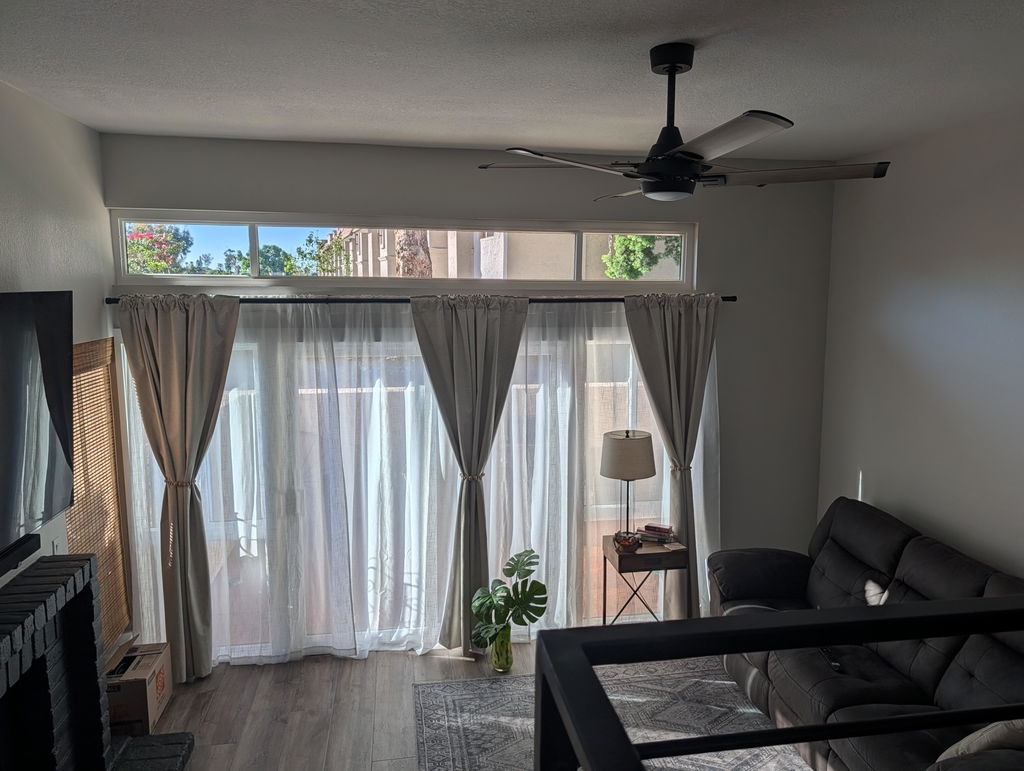
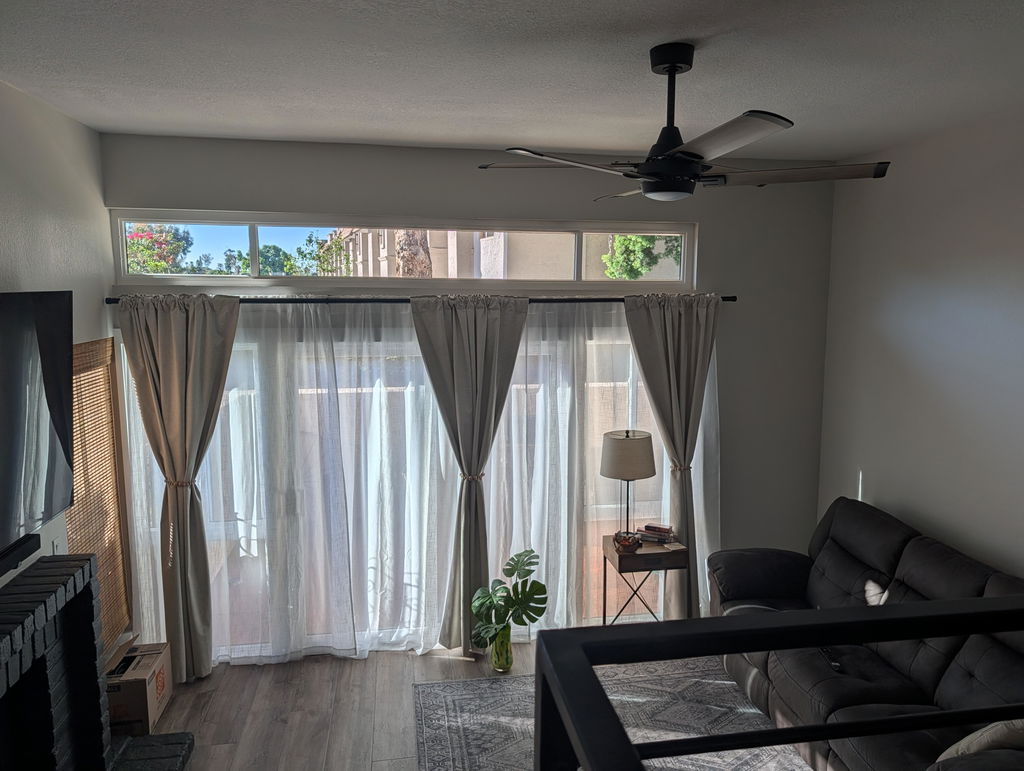
Medium to heavy weight fabrics work best here since living room curtains get daily use and need to look good for guests.
Cotton-linen blends give you texture and a relaxed look without feeling too casual. Pure linen wrinkles easily, which bothers some people, though others specifically choose it for that lived-in farmhouse or boho aesthetic. If you want crisp curtains, a 60-40 cotton-linen blend minimizes wrinkling. For pure linen, a handheld steamer helps.
Velvet makes sense for more formal living rooms. The dense pile creates natural fullness and a rich appearance. It also helps with insulation and temperature control.
Quality polyester has improved significantly and the best options now mimic natural fibers while resisting fading. If your living room gets direct afternoon sun, polyester holds up better than cotton or linen. For sunny rooms with kids or pets, performance woven indoor-outdoor fabrics resist stains and clean easily.
A note on sheers: using lightweight or sheer fabric as your only window treatment can make a room look unfinished. Layer sheers with heavier curtains for a more polished appearance.
Bedroom

How much darkness you need determines your fabric choice.
If you need complete darkness for sleeping (shift workers, light-sensitive sleepers), choose curtains with a coated blackout lining or add a separate blackout liner. These block 100% of light. The coating is typically a 3-pass acrylic or foam backing. The tradeoff: coated linings can crack, peel, or become stiff over time, especially with high heat, repeated washing, or in hot climates.
If you can tolerate some ambient light and prefer curtains that drape naturally, triple weave construction is a better option. This fabric sandwiches a black layer between two outer layers, blocking roughly 85-95% of light. There's no coating to degrade, and the drape stays soft and flowing. Triple weave works for most sleepers who want a dark room but don't require absolute blackness.
Velvet also performs well for bedrooms. The dense pile provides natural light blocking, sound absorption, and warmth in cold months. In warmer climates, look for lighter weight velvets or choose a white lining to reflect heat away.
For maximum flexibility, consider a double-rod setup: a blackout panel for sleeping and a sheer for daytime privacy.
Kids' rooms

Cotton face fabric with a sewn-in polyester blackout liner is the most practical choice for children's rooms.
The cotton outer layer breathes well, washes easily, and dries quickly without holding odors the way synthetics can. The polyester liner stays attached through washing without peeling like coated fabrics. This combination survives the frequent laundering that kids' curtains require.
If chemical sensitivity concerns you, look for OEKO-TEX Standard 100 certification, which indicates reduced levels of harmful compounds in the fabric.
What to avoid in children's bedrooms:
- Loosely woven fabrics that can snag on toys or small fingers
- Heavily treated fabrics with strong chemical odors
- Fabrics that require dry cleaning
Safety matters more than style in kids' rooms. Corded window treatments pose a strangulation risk for young children, so choose cordless options like grommet top, back tab, or tab top designs. Keep curtain lengths above the floor where toddlers can't grab and pull them down, which risks bringing the hardware down with them.
Dining room and kitchen
Poly blends with a higher percentage of polyester work best anywhere food is present.
These fabrics resist stains, wash in cold water without shrinking, and dry quickly. Some have stain-resistant finishes that cause water to bead up, giving you time to blot spills before they set. Adding some cotton to the blend keeps the appearance more natural than pure polyester.
Linen stains easily and absorbs grease. Cotton is somewhat better but still needs immediate attention when stained. Avoid silk in kitchens entirely.
For windows near the stove or any cooking surface, skip fabric curtains because of fire risk.Use blinds, shades, or shutters instead. For kitchen windows away from heat, shorter lengths make practical sense. Sill-length panels and cafe curtains are easy to remove for washing. In the dining room, where wine spills happen, stick with machine-washable fabrics you won't stress over.
For stain treatment on polyester blends, dish soap and cold water usually work if you catch stains within a few hours. Curtains in food areas should get washed at least once or twice a year, or whenever visibly stained.
Bathroom
Natural fibers won't survive bathroom conditions. Waterproof polyester or nylon are the only practical choices.
For high-humidity spaces, many homeowners find that faux wood blinds or cellular shades handle moisture better than fabric over time. If you prefer fabric curtains in a bathroom, here's what to look for.
Look for polyester with water-resistant finish and antimicrobial treatment to prevent mildew. Quick-dry weaves let moisture escape faster.
All natural fibers, including cotton and linen, will grow mildew in typical bathroom humidity, even with good airflow and regular washing. They retain moisture too long. Signs usually appear first along the bottom hem where water contact is heaviest.
If your bathroom has a window in the shower zone, use shower curtain fabric, which is fully waterproof rather than just water resistant. For windows outside the spray zone, moisture-resistant polyester works if you have good ventilation. Running the exhaust fan for 20 minutes after showers makes a noticeable difference in how long your curtains last.
Basement
Synthetic fabric with mildew-resistant treatment is the safest choice, even in finished basements.
Concrete walls and floors create higher humidity than above-grade rooms. Moisture can seep through during rainy seasons even in well-sealed spaces. Polyester handles humidity fluctuations better than any natural fiber. Cotton, linen, or untreated blends can develop a musty smell even without visible mildew.
If you run a dehumidifier and your basement stays consistently dry year-round, cotton blends become an option. For basement bedrooms, choose blackout polyester rather than blackout cotton to get the light control you need without moisture problems.
Care basics by fabric type
Different fabrics need different care. Getting this right extends the life of your curtains.
Cotton and cotton blends: Wash cold or warm, tumble dry low. Remove from dryer immediately to prevent wrinkles. Iron on medium heat if needed. Wash every 3-6 months or when visibly dirty.
Polyester: Wash cold, tumble dry low or hang dry. Polyester resists wrinkling and usually comes out ready to hang without ironing. Wash once or twice per year unless stained.
Velvet: Vacuum regularly with the upholstery attachment. For wet spots, use a damp cloth moving with the pile direction. Professional cleaning every year or two keeps velvet looking fresh. Never fold velvet; roll it for storage to protect the pile.
For blackout liners: Follow care instructions for the face fabric but use lower heat. Coated liners can be damaged by high heat. Triple weave construction handles normal machine washing.
How to choose: matching fabric to your priorities
Start with your main concern and choose accordingly.
If you want durability and good looks for a high-traffic room: quality polyester or medium weight cotton-linen blend. Spending more on better fabric pays off in appearance and longevity.
If complete darkness matters for sleep: curtains with 3-pass coated blackout lining or a separate blackout liner. If you prefer natural drape and can accept some light seepage, triple weave is a good alternative.
If you have kids and need frequent washing: cotton face fabric with sewn-in polyester liner. Choose cordless styles for safety. Look for OEKO-TEX certification if chemical sensitivity is a concern.
If food and spills are your main worry: machine-washable polyester or stain-resistant poly-cotton blend. Keep fabric curtains away from stovetops.
If moisture and humidity are problems: waterproof polyester or consider blinds and shades for easier long-term maintenance.
Getting the width right
One detail that separates good-looking curtains from cheap-looking ones: width. Curtains that are too narrow look skimpy and flat.
For fullness that looks intentional and polished, your total curtain width should be 1.5 to 2.5 times the width of your window or curtain rod. At minimum, aim for 2 times the width. For example, a 72-inch window needs about 144 inches of total curtain fabric, typically achieved with two 72-inch panels or four 50-inch panels.
Lighter sheers benefit from even more fullness (2.5 to 3 times the width) to avoid looking sparse. Heavy fabrics like velvet can work with less (1.5 to 2 times) because the weight creates natural body.
Hanging height

Where you mount the rod matters as much as the fabric. Hanging curtains right at the window frame makes windows look smaller and ceilings lower.
Mount your curtain rod 4-6 inches above the window frame, or halfway between the frame and ceiling for a more dramatic effect. Extend the rod 6-12 inches past the window frame on each side. This lets curtains stack fully open without blocking the glass, making windows appear larger and letting in more light.
For length, curtains should just touch the floor for a tailored look. Floating half an inch above the floor works for high-traffic areas. Puddling (1-3 inches of extra length on the floor) creates a luxurious European feel but requires more maintenance and doesn't work well with pets.
Before You Go…
Here are a few handpicked articles to inspire your next self-care moment.