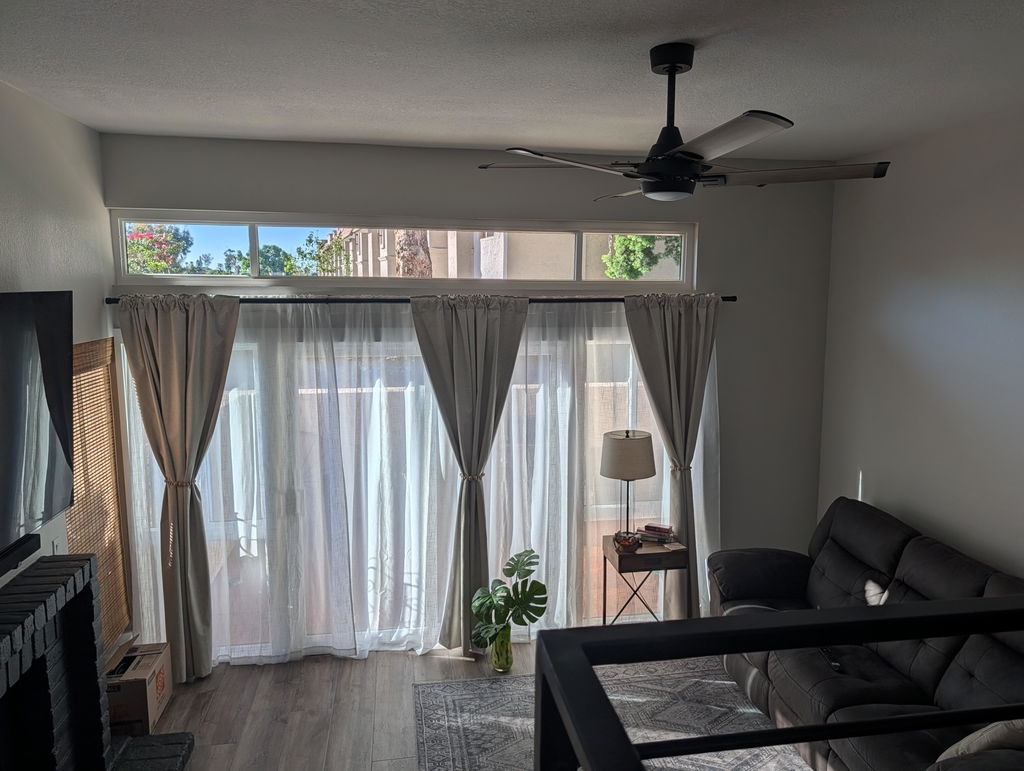
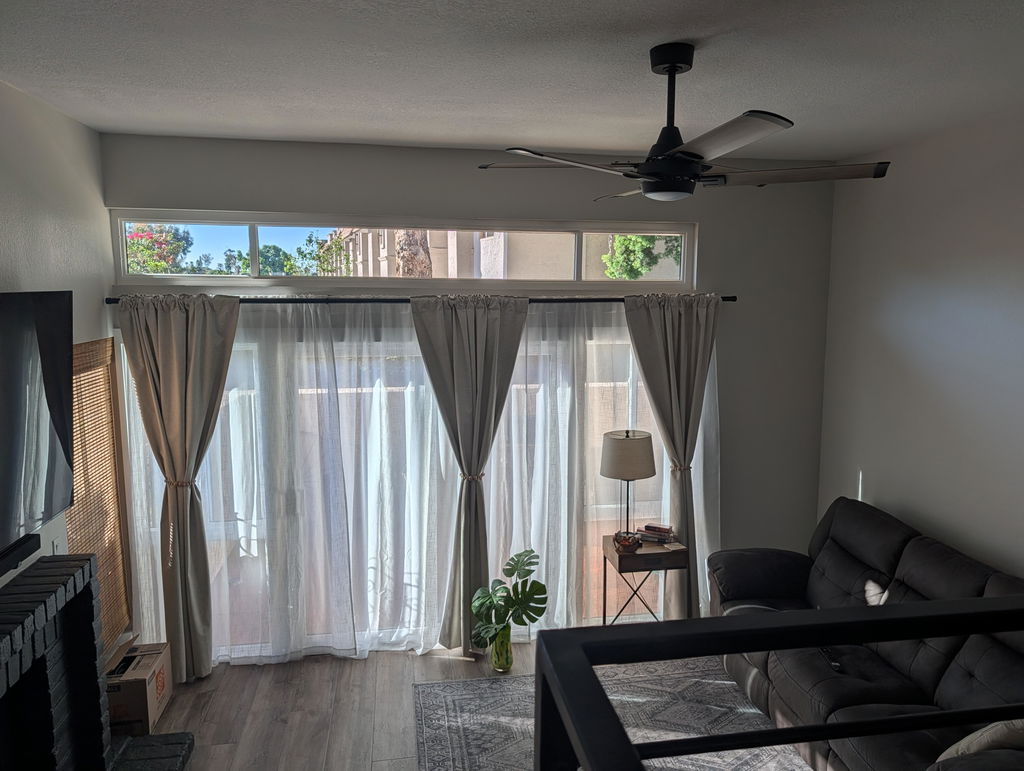
Linen curtains: a beautiful, natural addition to a modern home
Designers love linen curtains for their texture and understated elegance. But linen is not for everyone, and at $80 to $200 per panel, you should understand exactly what you're getting before you buy.
The aesthetic

Linen is a natural, breathable, semi-sheer woven fabric. It wrinkles. The weave is loose and irregular. If those words appeal to you, keep reading. If you want curtains that hang in crisp, controlled folds, stop here and look at synthetics.
The material drapes in a relaxed manner, which works for coastal, organic modern, and minimal interiors. Linen gets softer over time as the fibers relax. What arrives a bit stiff will feel better after a few months of hanging.
To get the "designer look" from linen, you need the right header style. Pinch pleat or Euro pleat headers create elegant, controlled folds. Rod pocket and grommet headers make linen look cheap and messy, like a drop cloth.
Light and privacy

Unlined linen filters light. It softens harsh sunlight into a warm glow, which is why it works so well in living rooms and dining areas. But it does not block light, and it does not provide privacy at night.
This is the point most articles gloss over: when the lights are on inside and it's dark outside, unlined linen curtains turn your home into a fishbowl. Your neighbors can see you. If your windows face a street or a neighbor's house, you need either lined linen or a separate layer of blinds behind the curtains.
For bedrooms, unlined linen is a non-starter. You will get early morning sun, and you will be visible at night. Pair linen with blackout lining, or add blackout blinds behind the curtains.
Temperature regulation
Unlined linen has no insulating properties. The loose weave lets air flow through, which is comfortable in summer but does nothing to keep heat in during winter. If you want curtains that help with energy costs, you need lined linen with a thermal backing, not plain linen panels.
Lined linen curtains are the standard for quality living rooms, not just bedrooms. The lining protects the fabric from UV damage, improves the drape, and adds actual function to what would otherwise be purely decorative.
Durability and sun exposure

Linen resists pilling and abrasion better than most fabrics. With proper care, lined linen curtains can last 10 to 15 years. That durability claim comes with a big asterisk: unlined linen in direct sunlight degrades much faster.
UV radiation breaks down natural fibers. The organic compounds in linen are more vulnerable than synthetic alternatives. If you put unlined linen in a south or west-facing window with strong afternoon sun, expect the fabric to become brittle and weak within 3 to 5 years. The leading edges, the parts facing the window, deteriorate first.
Lining solves this problem. A quality lining acts as a sacrificial barrier, absorbing UV damage while protecting the visible linen. This is another reason why lined linen is the practical choice, not just the light-blocking choice.
Mold and humidity
Linen resists mold and mildew better than cotton, which makes it a reasonable choice for kitchens and bathrooms. But hang curtains at least 10cm from the glass to let air circulate. Trapped moisture between curtains and windows creates conditions for mildew growth, regardless of fabric type.
Cost
Quality lined linen panels run $120 to $250 each. Unlined panels are cheaper, $80 to $200, but require additional blinds for privacy and light control, which adds cost. Budget polyester curtains cost $20 to $50. You are paying 3 to 5 times more for linen.
The cost is justified if you value the texture and appearance and plan to keep the curtains long-term. When you calculate cost per year of use over a 10 to 15 year lifespan, linen becomes more reasonable. But if you change your decor every few years, the premium doesn't make sense.
Sustainability
Flax plants use less water than cotton and grow without heavy pesticide use. The resulting fabric is biodegradable. If environmental impact matters to you, linen is one of the better choices among natural fibers.
Pure linen vs blends vs faux linen

Pure linen gives you the full texture, breathability, and aging characteristics. It also wrinkles the most and costs the most.
Linen-cotton blends, typically 55% linen and 45% cotton, wrinkle less and shrink more predictably. You lose some texture but gain practicality. The price is slightly lower.
Faux linen is polyester. It costs $20 to $50, doesn't shrink, doesn't wrinkle, and doesn't have any of the properties that make linen appealing. It looks like linen from across the room but feels like plastic up close.
Shrinkage and sizing
Untreated linen shrinks 4% to 10% on the first wash, with some sources reporting up to 15%. This matters more for curtains than for clothing because even a few inches of shrinkage is visible.
If your curtains are 96 inches long and shrink 10%, you lose 9.6 inches. A lot of buying guides tell you to add 4 to 6 inches to compensate for shrinkage. That advice is wrong. You need to add 10 to 15% to your desired length if buying untreated linen.
You have three options. First, buy pre-shrunk or pre-washed linen. Check the product description. If the manufacturer has treated the fabric, they will say so. Treated linen can be sized normally.
Second, buy longer panels and wash them before hanging. Add 10 to 15% to your desired length, wash in cold water, and the curtains will shrink to approximately the size you need.
Third, dry clean only. This preserves the original dimensions but limits your cleaning options.
Custom linen curtains solve the sizing problem. A good workroom will pre-shrink the fabric before cutting, so the finished product fits correctly from day one. For complicated window sizes or expensive fabric, the custom premium is often worth paying.
Length recommendations
Linen's relaxed drape looks best when curtains either break slightly at the floor or hover about half an inch above it. Avoid puddling, where excess fabric pools on the floor. Puddled linen collects pet hair, gets caught in robot vacuums, and the textured weave holds onto debris.
Washing and care
Most linen curtains can go in the washing machine on a gentle cycle with cold water. Skip the fabric softener, which coats fibers and reduces breathability.
The drying stage is where most damage happens. High heat causes the most shrinkage. Tumble dry on low and remove the curtains while still slightly damp, or air dry completely. If you hang damp linen, gravity helps pull out some wrinkles.
Washing 96-inch drapery panels in a standard home washer is not as simple as "just toss them in." The panels get heavy, twisted, and come out more wrinkled than you might expect. If you care about the appearance, dry cleaning is easier and gives more consistent results.
For wrinkles, you have two approaches. Iron on medium-high heat while the fabric is still damp for a crisp look. Or embrace the wrinkles as part of the aesthetic. Neither is wrong, but be honest with yourself about whether you will actually iron 8-foot curtains.
Where linen works
Lined linen works well in living rooms, dining rooms, and bedrooms where you want texture and light control. Pair with quality hardware and pinch pleat headers.
Unlined linen works in sunrooms and spaces where you want filtered light and don't need privacy, or where you're layering over blinds that handle privacy and light blocking.
Linen does not work if you want precise, controlled folds, complete light blocking without additional treatments, or maintenance-free window coverings.
Bottom line
If you appreciate natural materials and can accept imperfection, lined linen curtains are a sound investment. They look better than synthetics, last longer than cheap alternatives, and develop character with age.
But be realistic about what unlined linen can and cannot do. It offers texture and filtered light, not privacy, insulation, or UV protection. For most rooms in most homes, lined linen is the practical choice. Unlined linen is a design statement that requires supporting players, whether blinds, sheers, or a lifestyle where being visible to neighbors doesn't bother you.
Before You Go…
Here are a few handpicked articles to inspire your next self-care moment.