Curtains that completely block out light
If you have ever tried to sleep during the day or watch a movie while the afternoon sun is washing out your screen, you already understand the purpose of blackout curtains. What is the difference between fabrics that just dim light and those that actually block it completely? What justifies the price difference between a panel that costs $20 and one that costs $120? This guide covers blackout technology and how it works, so you can make a good choice for your situation.
Blackout vs room darkening: understanding the terminology
"Room darkening" and "blackout" are not the same thing, even though retailers sometimes use them loosely.
Room darkening curtains block 70% to 95% of light. They dim a room significantly but still allow some brightness to filter through. These work well in living rooms or spaces where you want reduced glare without total darkness.
Blackout curtains block 99% to 100% of light, creating near-total darkness. For shift workers sleeping during the day or home theater setups, true blackout performance is what you need. When shopping, look specifically for products labeled "100% blackout" if complete darkness is your goal.

How blackout fabrics block light
Blackout fabrics work by eliminating the small gaps that allow light to pass through standard curtains. This can be done in three different ways, each with their own trade-offs.
Dense fabric construction means the threads are packed together tightly, making it difficult for light to find a way through. Thread count and thickness matter here. Tightly woven curtains will feel noticeably heavier than typical standard curtain fabric.
Multi-layer coatings are applied to the back of the fabric. Manufacturers use foam backing (slightly thick, usually white or off-white) or acrylic coating. Coated fabrics can achieve 100% blackout in any color, which is their main advantage. Acrylic can be applied in multiple passes (2-pass or 3-pass) to improve coverage, with 3-pass coatings offering the highest light blocking.
Triple weave technology places a layer of black yarn between two layers of decorative fabric. The center layer does most of the blocking while the outer layers provide the color and texture you actually see. No coating is needed.

What the percentages mean
Curtains are rated at 85%, 95%, 99%, or 100% light blocking. These numbers indicate how much light the fabric blocks in testing.
85% blocks a good amount of light but leaves the space dimly lit. Shapes and silhouettes can easily be seen, and you can navigate the space without turning on a light.
95% creates a preferred dark room setting. The space gets dark enough that your eyes need time to adjust before you can see shapes.
99% produces near-total darkness. You might see a thin glow around the window borders, but otherwise the room is dark.
100% is laboratory tested to block all measurable light. Coated fabrics are the most reliable way to achieve this level in any color.
The gap between 95% and 99% is significantly more noticeable than between 99% and 100%. If you are bothered by even the tiniest bit of light when sleeping, go for 99% or higher.
Triple weave curtains
Triple weave construction consists of three layers woven as a single fabric with black yarn in the middle. Because there is no coating, the fabric drapes nicely and has no chemical smell. This construction is widely available at budget-friendly prices, with many options starting around $15-30 per panel on Amazon and at major retailers like Target and Walmart.
The trade-off is that triple weave typically blocks 70% to 95% of light rather than 100%. Light-colored triple weave curtains (white, beige, pastels) usually block less light than dark-colored ones. If you want white curtains with true 100% blackout, triple weave alone may not get you there without adding a separate blackout liner.
Triple weave works well for room darkening needs and offers good durability since there is no coating to peel or flake. For shift workers or anyone requiring total darkness, darker colors in triple weave will perform better, or you may want to consider coated options instead.
Coated blackout fabric
Coated fabrics have a foam or acrylic backing applied to the face fabric. The coating is responsible for blocking light, which means the front of the curtain can be any color or pattern while still achieving 100% blackout. This flexibility is why coated curtains are popular for bedrooms where you want both style options and complete darkness.
Basic coated curtains start around $20-40 per panel, while higher-quality options (especially those with 3-pass coatings on premium fabrics like linen or cotton blends) can cost $60-150 or more. Mid-range coated curtains usually perform well for 3-5 years. The durability depends on coating quality. Cheap coatings can peel or flake after a few washes or prolonged sun exposure, while better coatings last longer.
Some people find coated fabrics feel stiffer than uncoated options.
Velvet blackout
Velvet has a dense pile that blocks light through sheer thickness. It was commonly used in theaters and was the original blackout solution before modern coatings existed.
Velvet has the most luxurious appearance of all the blackout fabric options. It also absorbs sound better than flat weaves. However, it is heavy, more difficult to clean, and tends toward traditional styles that do not fit every room.
Blackout liners
These are panels designed to hang behind your existing curtains. If you already have curtains you love, liners allow you to keep them while gaining the ability to block light.
Liners work well once the right size is matched to your curtain, though it can be difficult to keep the two layers moving smoothly together. Some liners clip directly to the curtain rings while others hang from a separate rod.
Benefits of blackout curtains
Curtains that block sunlight offer several measurable benefits.
Because the material blocks sunlight, it also blocks heat transfer. Studies have estimated a decrease of 20-25% in heat gain or loss, depending on the season. The effect varies based on climate and window orientation. South and west-facing windows experience the most heat gain and loss.
Sleep quality can improve significantly. Darkness helps the brain produce and release melatonin, the sleep hormone. For shift workers sleeping during the day, or anyone optimizing their sleep hygiene and circadian rhythm, blackout curtains become more of a necessity than a luxury.

Blackout curtains provide UV protection and help preserve your furniture. Direct sunlight fades wood and fabrics, so blocking that exposure extends the life of your belongings.
External noise is reduced somewhat with blackout curtains. The material will not eliminate noise, but it can absorb some sound and reduce echo from the street.
How to spot low quality curtains
Cheap coated blackout curtains can have a noticeable chemical smell when new. This is called off-gassing. Quality coatings should dissipate within a day or two. If your curtains still smell like a chemical factory after 24-48 hours, that is a sign of low-quality manufacturing, and you should consider returning them. If you have chemical sensitivities, look for products with OEKO-TEX or similar certifications, or choose uncoated triple weave in a dark color.
Another red flag: affordable coated fabric can trap moisture, get damaged easily, and develop cracks and flaking after a few washes or prolonged sun exposure. The coating can leave white residue and eventually become ineffective at blocking light. Investing in higher-quality coated fabric or triple weave saves you money in the long run.
The weight catches people off guard. Blackout curtains weigh 2-3 times more than standard curtains. Curtain rods, especially existing ones, may sag or fall if they are not heavy duty. Check weight ratings before installation and consider heavy-duty brackets if needed.
Limited designs can frustrate shoppers who are not expecting this. Blackout fabrics are available in far fewer patterns than standard curtains, and coatings can dull fabric colors. Look at swatch samples before ordering to make sure you are happy with the appearance. Triple weave in light colors will block less light than dark colors, so there is a trade-off between color choice and performance.
Care requirements
Different blackout curtains have different care needs. Check the manufacturer's label first.
Many modern blackout curtains, especially polyester-based options, can tolerate machine washing on a gentle cycle with cold water. For drying, some curtains can handle tumble drying on low heat or an air-only cycle, but others need to be air-dried to prevent coating damage. Check the care label. Rubber-backed curtains specifically should always be air-dried, as the heat can cause the backing to crack and peel.
When in doubt, hang to dry and use a handheld steamer to remove wrinkles afterward.
Choosing your ideal blackout level
For daytime sleepers and shift workers, 99% or 100% blackout is recommended. Look specifically for products labeled "100% blackout" or choose coated fabrics, which are the most reliable for total darkness.
Standard bedrooms work well with 95% darkness for a good night's sleep. Most people do not need their bedroom to feel like a sealed bunker.
Media rooms and home theaters benefit from 99% or higher. Even small amounts of light can reduce image contrast and make colors look off, so total darkness is ideal for viewing.
Higher blackout percentages work better for east and west-facing windows, which receive harsh direct light. If morning light through an east-facing window wakes you up, invest in higher blackout fabric.
In hot or cold climates, blackout fabric provides insulation benefits beyond light blocking. Heavier options like triple weave and velvet offer good thermal performance, though coated options also help with insulation.
Testing blackout fabric
Even plain black fabric can let light through depending on the weave, so always test before committing.
To test fabric, hold it up to a window. For a thorough check, press a flashlight against the fabric. True blackout material will show no light coming through at all.
After installation, check for light gaps around the window edges. If gaps exist, light will enter and defeat the purpose.
The heading style matters for blackout
Not all curtain styles block light equally well at the top.
Grommet curtains (eyelet curtains) are popular because they slide easily and look modern, but the metal rings create small gaps where light can seep through. For a living room where you want some light control but not total darkness, grommets are fine. For a bedroom where you need true blackout, they are not the best choice.
Pinch pleat and pencil pleat styles provide better light coverage at the top because the fabric is continuous, with no holes or gaps. If total darkness is a priority, consider pinch pleats hung on rings or a curtain track.
Back tab curtains are a middle ground. They hide the rod for a cleaner look than rod pockets while creating soft waves. The fabric coverage at the top is better than grommets, though not as controlled as pinch pleats.
Installation secrets: hang high and wide
How you hang blackout curtains matters as much as what you buy. The number one rule American interior designers follow is to hang curtains high and wide. This makes your windows look larger and your ceilings feel taller, and it also improves light blocking.
Mount your curtain rod 4-6 inches above the window frame. If the space between the top of your window and the ceiling is less than 12 inches, go even higher, closer to the ceiling. In rooms with standard 8-foot ceilings, placing the rod just a few inches below the ceiling is common.
Extend the rod 6-12 inches past each side of the window frame. This allows the curtains to stack on the wall rather than covering the glass when open, giving you more natural light during the day. It also means the fabric overlaps the window frame substantially when closed, reducing side light gaps.
For blackout specifically, this "high and wide" approach is also functional. The more your curtains overlap the window frame on all sides, the fewer gaps exist for light to sneak through.

Solutions for light gaps
Even the best blackout fabric will not help if light leaks around the edges of your window.
Wrap-around curtain rods (also called French return rods) are a popular modern solution. These rods curve at both ends so your curtains wrap around to meet the wall, eliminating the gaps on each side where light typically sneaks through. They work with grommet, rod pocket, and tab-top curtains. Many American homeowners prefer these over valances because they look cleaner and more contemporary.
The hook-and-eye method is a simple DIY trick. Install a small hook and eye on the wall directly under where the last curtain pleat sits. Attaching the curtain edge to this hook pulls the fabric flush against the wall and eliminates the side gap. This costs almost nothing and makes a noticeable difference.
Top valances or cornices cover the gap between the curtain rod and the ceiling. Pelmets serve the same function and are particularly helpful if you cannot mount your rod high enough.
Wider panels that extend beyond the window frame on all sides also help reduce light leakage.
Proper curtain length matters too. If your curtains float an inch above the floor, light will seep in from below. For best results, have curtains graze the floor or break slightly (extend about an inch after touching the floor). This also masks uneven floors.
Sometimes a 95% blackout product with excellent edge coverage outperforms a 100% blackout with edge gaps. How you install matters as much as what you purchase.
Layering for style and function
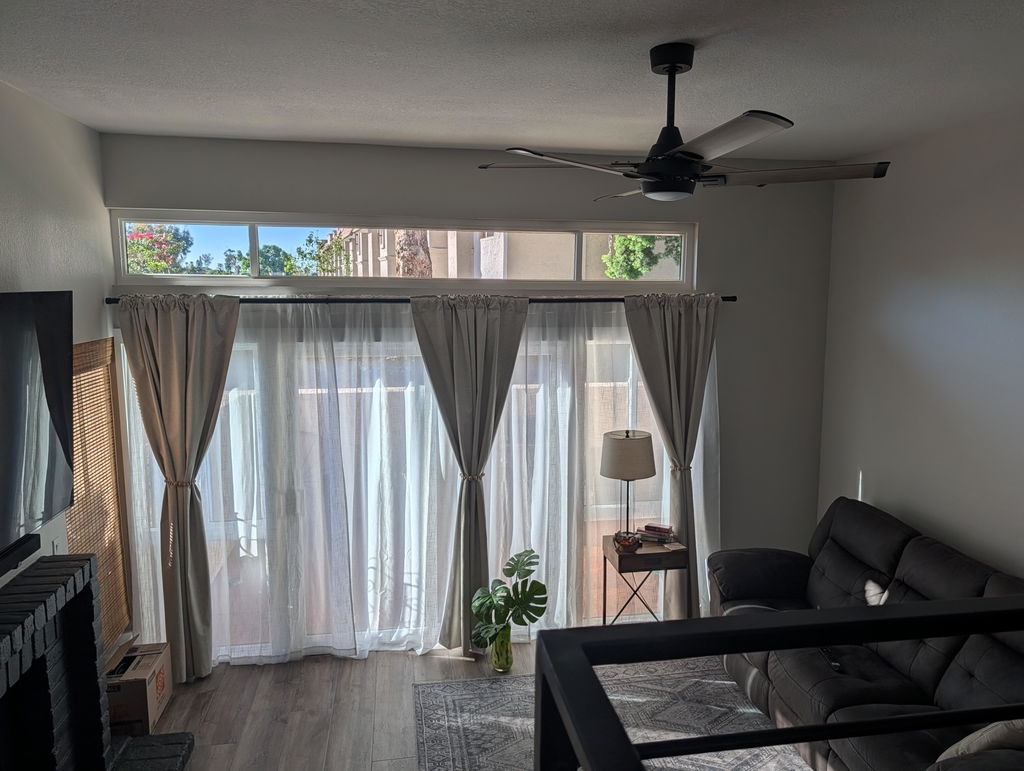
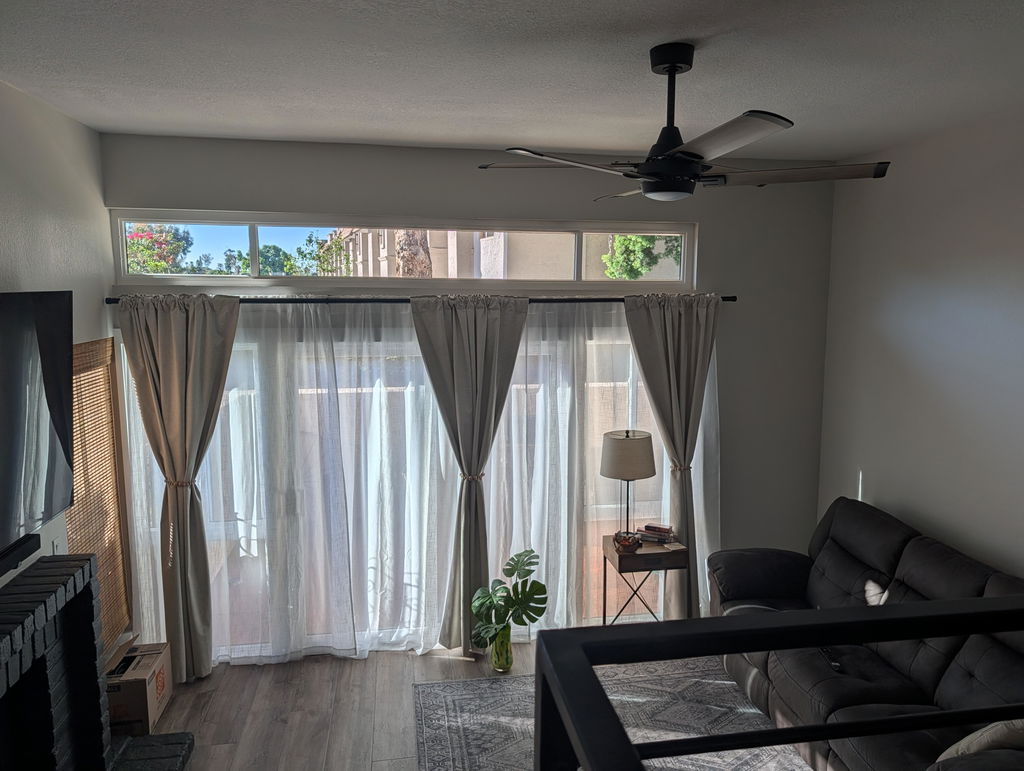
Many American homeowners use a double-rod setup to get the best of both worlds. Sheer curtains hang on the inner rod for daytime privacy and light filtering. Blackout curtains hang on the outer rod for nighttime darkness and temperature control.
This approach requires either a double curtain rod or two separate rods mounted at slightly different depths. The result is a layered look that works well in bedrooms, living rooms, and nurseries. During the day, close just the sheers for soft light and privacy. At night, close both layers for complete darkness.
Which type is best for your room
Living room: Triple weave in a color you like. You probably do not need total darkness, just reduced glare and some insulation. 85-95% light blocking is enough.
Bedroom (adults): Coated fabric in any color, or triple weave in dark colors. 95-99% light blocking is comfortable for most people.
Nursery or shift worker bedroom: 3-pass coated fabric for 100% blackout. Pair with pinch pleats or back tabs rather than grommets. Install high and wide, and consider a wrap-around rod or hook-and-eye setup to eliminate edge gaps.
Home theater: Velvet if you want the classic look and some sound absorption. Otherwise, 100% blackout coated fabric. Either way, edge coverage matters more here than in other rooms.
The white curtain problem
One of the most common questions: can I have white curtains that are 100% blackout?
With standard triple weave, white curtains will block less light than dark colors, typically topping out around 70-85%. The light color lets more brightness through.
For true 100% blackout in white, you need either a grey or black liner behind the white face fabric, or high-end 3-pass acrylic coating. The coating approach keeps everything in a single panel but costs more. The liner approach works with any curtains you already own.
Making your choice
Three different technologies underpin blackout curtain fabrication: coated fabrics for reliable 100% blackout in any color, triple weaves for budget-friendly room darkening without chemical coatings, and velvets for a luxurious natural dense product. Select a product that matches your darkness needs. If you need true 100% blackout, coated fabrics are typically the most reliable choice. If you have chemical sensitivities, look for quality certifications or choose uncoated triple weave in a dark color.
Consider your heading style. Pinch pleats and back tabs block more light than grommets. Consider your installation. Hang high and wide, use wrap-around rods or the hook-and-eye method, and make sure your curtains reach the floor.
The right curtains give you complete control over light and heat in your room.
Before You Go…
Here are a few handpicked articles to inspire your next self-care moment.