What Color Curtains Make a Room Look Bigger? A Small Room Guide
Mia's guest room was only nine feet wide, but that was not the real problem. The real problem was contrast. She paired creamy walls with bright white curtains that stopped just below the sill, and the whole room looked chopped into pieces. If you are wondering what color curtains make a room look bigger, the short answer is this: curtains that stay light or close to the wall color usually make a small room feel larger.
That said, white is not always the best move. In some rooms, warm ivory looks bigger than stark white. In others, a soft greige or pale flax works better because it keeps the edges of the room calm. This guide explains the best curtain colors for small rooms, when dark curtains can still work, and which setup choices protect that spacious effect once the panels are on the wall.
What Color Curtains Make a Room Look Bigger?
If you want the simplest answer first, these are usually the best curtain colors for small rooms:
- soft white
- warm white
- ivory
- oatmeal
- flax
- pale greige
- light beige
- muted blue or sage with low contrast
These shades work because they reflect more light or keep the room from breaking into hard visual blocks. Sherwin-Williams notes that lighter colors can make a room feel more open, while Benjamin Moore also recommends off-whites, pale neutrals, and pastels when you want a space to feel bigger and brighter.
The other rule matters just as much: do not choose curtain color in isolation. A small room feels larger when the curtain color, wall tone, and hanging height all work together. That is why a soft beige curtain can make one room feel open while a bright white curtain makes another feel tighter.
Want to check color in your actual room before ordering? Start with curtain swatches. It is the fastest way to see whether a fabric looks airy, flat, or too sharp against your wall.
Why Curtain Color Changes How Big a Room Feels
Small rooms are sensitive to contrast. Every strong shift between wall, trim, curtain, and rod makes the eye stop and measure the room more aggressively. Softer transitions do the opposite. They let the eye move across the wall more easily, which makes the room feel calmer and often larger.

Sherwin-Williams also points out that color changes throughout the day. Morning light, afternoon sun, and lamplight can all change how a fabric reads. That matters more in small spaces because there is less room for a color mistake to hide.
Low contrast usually feels more open
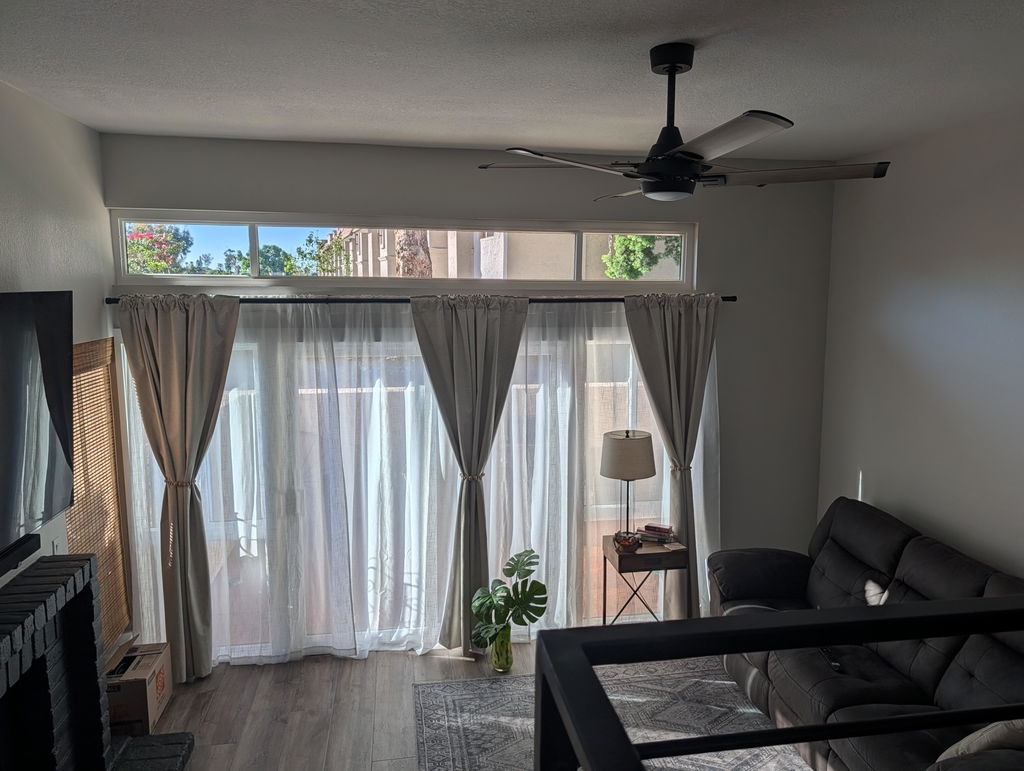
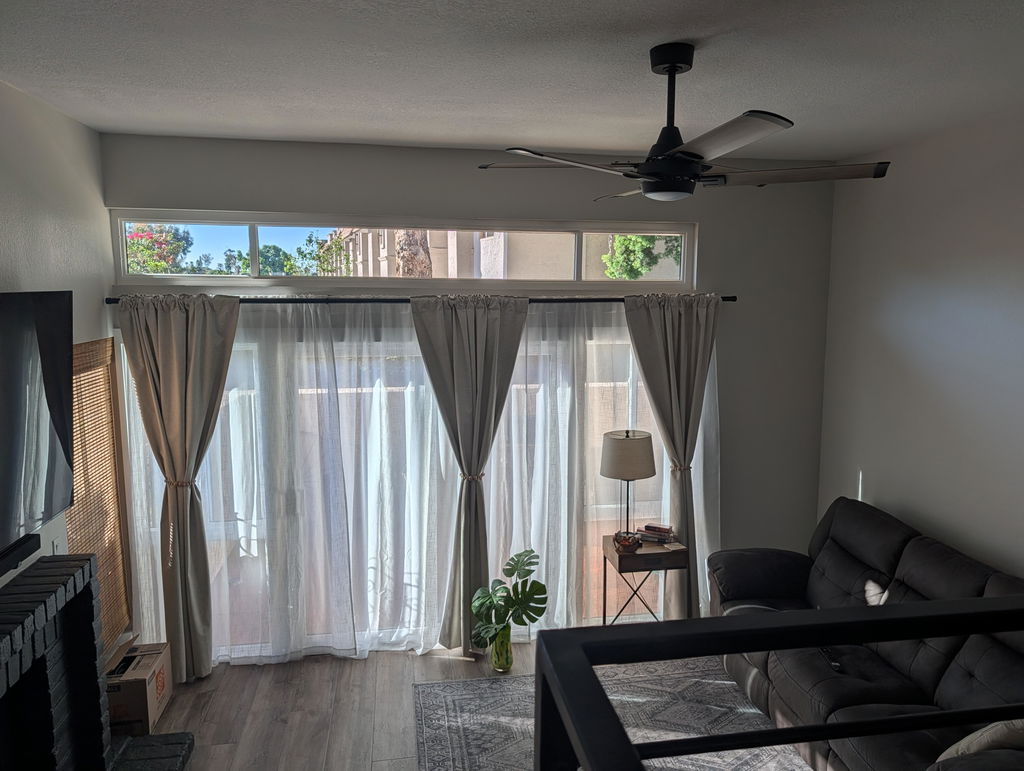
If your walls are warm white, cream, beige, or pale greige, a similar curtain color often gives the best result. The curtains do not disappear, but they also do not slice the wall into separate blocks. That continuity is one of the easiest ways to make a small room feel taller and wider.
This is why the safest answer to "should curtains be lighter or darker than walls in a small room?" is usually "slightly lighter or very close in value." Exact matching can look flat. Strong contrast can look abrupt. The middle ground often wins.
Bright white is not a universal fix
Some people assume white curtains always make a room feel bigger. That is not always true. If the walls are creamy and the curtains are icy white, the room can look colder and smaller because the contrast feels accidental. Warm walls usually need warm whites, ivories, or oat tones to keep the space soft.
Light matters as much as color
Carlos learned this in his apartment office. The room had gray walls, one small north-facing window, and a bulky desk that already made the space feel tight.
He almost bought charcoal curtains because they matched the chair. Instead, he tested pale mushroom fabric and hung it higher than the window frame. The color warmed the cool walls, the extra height pulled the eye up, and the room looked taller within an afternoon.
Best Curtain Colors for Small Rooms
Not every small room needs the same answer. The best curtain colors for small rooms depend on the wall undertone, how much daylight enters the room, and whether you need privacy or blackout performance.

When people ask what color curtains make a room look bigger, they are usually deciding between a few safe families. Start with the shades below before you move into stronger contrast.
Soft white and warm white
Soft white works best with crisp white walls, cooler light, and cleaner modern rooms. Warm white works better with cream, beige, wood tones, and warmer paint colors. Both can make a space feel open, but the undertone has to agree with the rest of the room.
Choose soft white if:
- the walls are bright white or cool off-white
- the room gets good natural light
- the trim and hardware already look clean and crisp
Choose warm white if:
- the walls lean creamy or warm
- the room has oak, walnut, brass, or natural linen accents
- you want the room to feel soft rather than stark
Ivory, oatmeal, flax, and beige
These are often the safest curtain colors for small rooms because they add warmth without adding heaviness. They work especially well in small bedrooms, guest rooms, and apartment living rooms where you want the room to feel relaxed instead of clinical.
Priya had this problem in her rental bedroom. The walls were builder-grade beige, the carpet was slightly warmer, and she kept ordering white decor because she thought it would feel bigger. It never looked finished. Once she switched to flax-colored curtains and repeated that tone in a pillow and bench cushion, the room felt more intentional and less cramped.
Pale gray and greige
These tones can work well in small rooms, but they are riskier than warm neutrals. If the room is dim or north-facing, a cool gray curtain can make the whole space feel boxed in. A warmer greige is usually safer because it softens the room without losing the quiet look people want from gray-based palettes.
If you are deciding between pale gray and pale greige, choose the warmer option unless the room already has strong daylight and cool trim.
Muted blue, sage, and pastels
Color can still work in a small room if it stays muted and close in value to the wall. Benjamin Moore notes that blues can visually recede, which is one reason soft blue and sage can feel open when used carefully.
The key is restraint. A dusty blue curtain can feel airy. A saturated cobalt curtain in a dim room usually will not.
Should Curtains Match the Wall Color in a Small Room?
In many small rooms, yes, curtains should stay close to the wall color. That does not mean exact matching. It means the curtain should sit in the same family or near the same lightness level so the room feels continuous.
If you are still asking what color curtains make a room look bigger after narrowing your palette, the safest answer is still low contrast over sharp contrast.
Tone-on-tone usually makes the room feel bigger
This is the safest strategy for:
- small bedrooms
- narrow guest rooms
- compact living rooms
- home offices with limited daylight
If your walls are soft white, try ivory or warm white curtains. If your walls are beige, try oatmeal or flax. If your walls are pale gray, try pale greige or a warmer off-white instead of another icy gray.
Soft contrast adds shape without shrinking the room
Sometimes exact matching is too flat. In that case, aim for soft contrast. A room with warm white walls and flax curtains still feels open, but it gains more texture and depth. A room with light gray walls and mushroom curtains can feel more finished than one with plain white panels.
If your room already feels washed out, soft contrast is often better than pure white.
Need help balancing width, fullness, and final look? NICETOWN's curtain width guide and measurement guide can help you avoid the skinny-panel look that makes small windows feel even smaller.
Can Dark Curtains Work in a Small Room?
Yes, but only when the room is designed to support them. The blanket rule that dark curtains always make a room smaller is too simple. Dark curtains can work when they stay close to a darker wall color, when the room already has depth, or when blackout performance matters more than a bright visual effect.

When dark curtains can work
Dark curtains are more likely to work if:
- the walls are already medium to dark
- the room uses a monochromatic palette
- there is enough lighting from lamps, sconces, or daylight
- the look you want is cocooning, not airy
Sherwin-Williams has noted that monochromatic color schemes can make a room look larger than a space filled with sharper variation. That means a moody bedroom with charcoal walls and charcoal curtains can sometimes feel deeper than a room with dark walls and high-contrast white panels.
When dark curtains make the room feel smaller
Dark curtains usually hurt the room when:
- the room is dim and cool-toned
- the walls are much lighter than the curtain
- the curtains stop short and create a hard visual break
- the fabric is thick, bulky, or heavily patterned
If you need blackout performance but still want the room to feel open, a lighter blackout fabric is often the better compromise. You do not have to choose between sleep and style.
For bedrooms where light control matters most, start with blackout curtains, then narrow the color to a lighter or lower-contrast option that still supports the room.
Curtain Setup Choices That Make Small Rooms Feel Larger
Anyone searching for how to make a small room look bigger with curtains needs more than color advice. Setup does almost as much work as color.

Hang curtains higher than the window
Sherwin-Williams specifically recommends hanging curtains above the window to make a room feel larger by drawing the eye upward. This is one of the highest-impact changes you can make in a small room.
If you need a placement refresher, see NICETOWN's curtain rod height guide. A higher rod can make even a small window feel more generous.
Use floor-length panels
Short curtains often make small rooms feel smaller because they visually cut the wall. Floor-length curtains give the room longer lines and a more finished look. They also help the window feel more connected to the full wall height.
NICETOWN's curtain length guide is useful here if you are debating floor, sill, or apron length.
Keep pattern and hardware visually quiet
If your room is already small, large patterns or heavy rods can make the window area feel busy. Solid colors, subtle texture, and clean hardware usually create a calmer effect. This does not mean the room must be boring. It means the visual rhythm should stay simple.
Use the right fullness
Too little fullness makes curtains look skimpy. Too much fullness can look bulky. In a small room, aim for a polished amount of drape without turning the window into the heaviest object in the room.
If you want a neater fit, custom curtains can help you avoid awkward length or width gaps. If you need a faster apartment-friendly option, ready-made curtains are a practical starting point.
What Color Curtains Make a Room Look Bigger in Different Rooms?
Small bedroom
The best curtain colors for a small bedroom are usually warm white, ivory, oatmeal, pale greige, or a muted soft color that stays calm in low light. If you sleep lightly, consider lighter-toned blackout options so the room stays restful without looking heavy.
Small living room
A small living room often benefits from privacy without full darkness. Light neutrals, soft white, flax, and muted blue-green tones can all work well. If you need daytime coverage, privacy curtains can give you softness without the visual weight of a darker blackout panel.
Small home office or guest room
These rooms usually need flexibility. Lean toward colors that stay easy to work with, like ivory, pale beige, or light greige. If the room doubles as a guest room, choose a fabric that still feels welcoming under lamplight at night.
How to Test Curtain Color Before You Buy
This step saves more regret than any trend tip. It is also the easiest way to verify what color curtains make a room look bigger in your specific room instead of guessing from product photos.
Test the swatch in changing light
Look at the fabric in morning light, afternoon light, and at night with the lamps on. What color curtains make a room look bigger at noon may not look as good at 7 p. m. if the room turns yellow or shadowy.
Compare it to the wall and the floor
Do not just hold the swatch against the paint. Compare it to the flooring, rug, bedding, or sofa too. The room reads as a whole, and the curtain connects multiple surfaces at once.
Picture the final hanging height
Dana made this mistake in her studio apartment. She chose the right pale curtain, but judged it at eye level against the wall. Once it was installed lower than planned and ended above the baseboard heater, the room lost the tall effect she wanted. She kept the same fabric, moved the rod up, switched to a longer panel, and the room immediately felt less cramped.
For a broader overview of fabric, hardware, and heading style, NICETOWN's curtain buying guide is a useful companion.
Mistakes to Avoid in Small Rooms
- choosing stark white curtains for warm creamy walls
- using dark curtains with strong contrast in a dim room
- stopping curtains at sill length when floor length would stretch the wall
- forgetting that blackout lining can make a curtain look heavier
- picking a trendy color before thinking about room light and daily use
- using skinny panels that make the window feel undersized
FAQ
What color curtains make a room look bigger?
Soft white, warm white, ivory, oatmeal, flax, pale greige, and other low-contrast colors usually make a room look bigger. If you want the shortest possible answer to what color curtains make a room look bigger, it is usually a light or low-contrast curtain that does not interrupt the wall.
Should curtains be lighter or darker than walls in a small room?
Usually slightly lighter or close in value works best. Strongly darker curtains can make a room feel smaller unless the space already uses a darker monochromatic palette.
Are white curtains always best for small rooms?
No. White curtains can work well, but the undertone matters. Warm rooms often look better with ivory or warm white than with stark optic white.
Do blackout curtains make a room look smaller?
They can if the fabric is very dark, bulky, or high-contrast. They do not have to. A lighter-toned blackout curtain can still give you sleep-friendly coverage without making the room feel closed in.
Can dark curtains work in a small bedroom?
Yes, especially if the walls are also dark or the room uses a monochromatic scheme. The look will feel moodier and cozier, not necessarily larger. If spaciousness is the main goal, lighter or lower-contrast colors are usually safer.
The Best Curtain Color Makes the Room Feel Less Interrupted
If you remember one thing, remember this: the best curtain colors for small rooms are usually the colors that interrupt the room the least. That often means warm white, ivory, flax, pale beige, or soft greige, plus a hanging setup that draws the eye upward instead of cutting the wall in half.
For most homes, what color curtains make a room look bigger is less about chasing the brightest possible white and more about choosing a color that keeps the room visually connected.
The exact answer depends on your wall color, your light, and whether you need blackout or privacy. Start with the visual goal first. Do you want brighter, calmer, warmer, or more cocooning? Then test a swatch, measure carefully, and make sure the final length and rod height support the same effect.
If you are ready to narrow the options, start with curtain swatches, then compare custom curtains, ready-made curtains, or lighter privacy curtains depending on how your room needs to function. The right curtain color should not just cover the window. It should make the whole room feel easier to live in.
Before You Go…
Here are a few handpicked articles to inspire your next self-care moment.