Pet-Friendly Curtains: Best Fabrics, Lengths, and Safety Tips for Cats and Dogs
Pet-friendly curtains are not one fabric category. They are a set of choices that reduce snagging, chewing, hair buildup, muddy lower hems, cord hazards, and rod pull-down risk.
The best curtain for a cat that climbs is different from the best curtain for a dog that presses against the window. A cat owner usually needs lower-snag fabric, secure hardware, and a scratching alternative near the window. A dog owner usually needs easier-care fabric, less floor contact, and a setup that can handle body contact, paw marks, and window watching.
Use this guide to choose fabric, length, hardware, and safety details before you order custom curtains, curtain swatches, or a standard ready-made size.
Start With the Pet Problem, Not the Curtain Fabric
Choose the curtain around the damage pattern: climbing needs less reachable fabric and stronger mounting, chewing needs shorter hems and fewer dangling details, and shedding needs smoother texture plus a forgiving color.
| Pet behavior | What usually goes wrong | Better curtain priority |
|---|---|---|
| Cat climbs panels | Claws catch, panels pull, rod brackets loosen | Lower-snag fabric, shorter length, secure rods, scratching post near the window |
| Cat scratches lower fabric | Loose yarns pull, sheers tear, hems fray | Tighter weave, less texture, access control, alternate scratching surface |
| Dog paws at window | Lower panel gets dirty or distorted | Stronger fabric, no puddle, easier care, better window visibility plan |
| Dog chews corners | Lower hems and tiebacks become targets | Apron or sill length, no tassels, no dangling trim |
| Pet sheds heavily | Hair collects on textured or high-contrast fabric | Smoother texture, color close to pet hair, swatch test before buying |
| Muddy paws or patio traffic | Bottom hem absorbs dirt and moisture | Waterproof or outdoor-style fabric where appropriate, floor-skimming or apron length |
| Calm pet with low contact | Main risk is normal hair and dust | Most curtain types work if length, care, and hardware are sensible |
Cat scratching is a normal behavior, not a curtain-specific problem. Cornell Feline Health Center recommends redirecting cats by placing a scratching post next to the area they already target, then gradually moving it if needed. The ASPCA gives similar advice: provide acceptable scratching surfaces and place them near objects the cat is already scratching.
Curtains can reduce temptation, but they should not be the only solution if a cat has already chosen the window as a climbing or scratching zone.

Best Curtain Fabrics for Homes With Cats and Dogs
The most pet-friendly curtain fabrics usually share three traits: a tighter surface, enough body to avoid constant swinging, and care instructions that match the room.
| Fabric type | Best for | Watch out for |
|---|---|---|
| Tight-weave blackout or lined polyester | Active pets, bedrooms, living rooms, dogs that brush against panels | Confirm product-specific care before assuming machine washing |
| Velvet | Rooms where a low-snag pile and heavier drape are useful | Pet hair can show, and care may be more delicate |
| Faux linen or linen-look curtains | Homes that want texture with a cleaner look | Loose, slubby weaves can catch claws more easily |
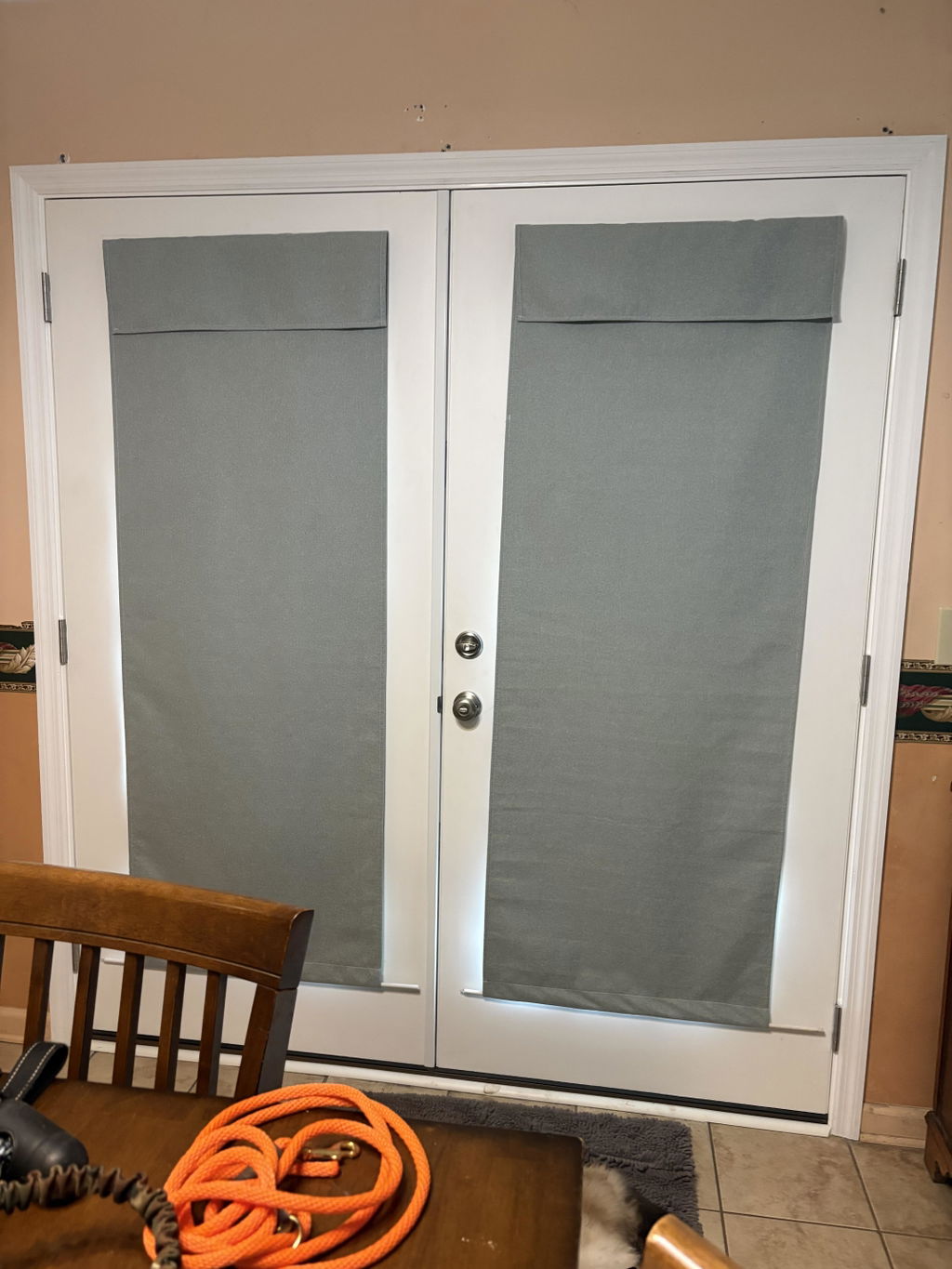
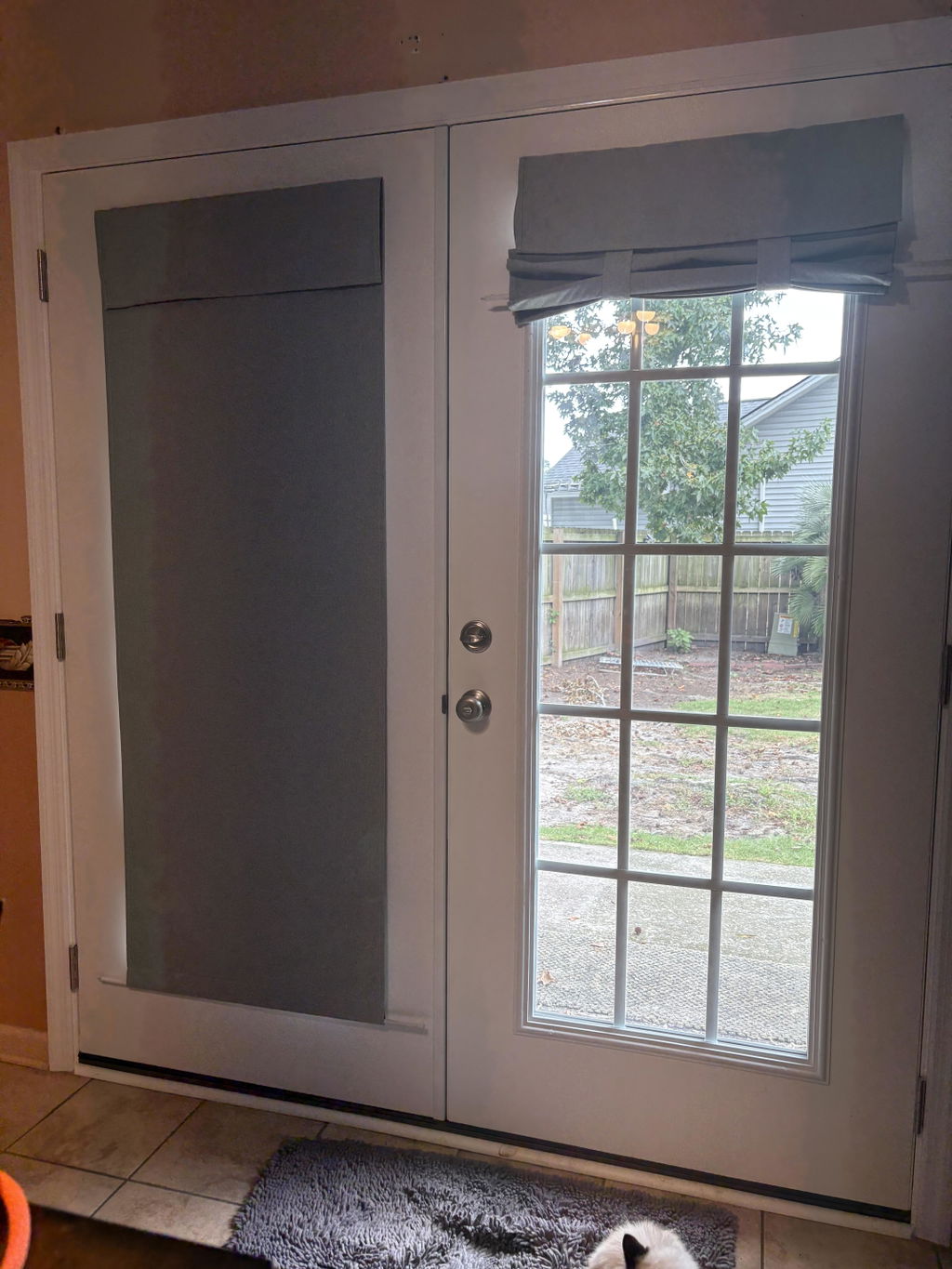
| Waterproof or outdoor-style fabric | Patio doors, muddy dogs, humid spaces, indoor-outdoor traffic | Check whether the look and drape fit the room |
| Privacy curtains | Street-facing rooms where pets react to outdoor movement | Privacy levels vary by fabric and light conditions |
| Soundproof or heavier blackout curtains | Noisy streets, dogs triggered by outside sound or movement | They reduce conditions that may trigger behavior, but they do not train a pet |
| Sheer curtains | Low-contact windows, layered looks, rooms where pets do not climb | Higher snag risk around claws and playful pets |
| Chenille, lace, loose linen, open textures | Decorative low-contact rooms | More loops and texture can invite claw catching |
For active pets, the safest general rule is to avoid open weaves, delicate sheers, lace, fringe, tassels, and loose threads at the lower hem. Cat claws catch on loops and loose yarns; dog paws and nails can distort lightweight fabric when the panel sits in a traffic lane.
NICETOWN curtains by fabric include blackout linen, faux linen, velvet, sheer, waterproof/windproof/warm curtains, chenille, and pinch pleat options. That range is useful because the best choice changes by room. A patio door used by a dog may need a different fabric than a bedroom window where a cat only watches birds from a nearby perch.
Blackout curtains are often a practical starting point because they tend to have more body than lightweight panels. They can also reduce outside light and movement that may trigger some pets at night. Do not treat blackout as a pet behavior cure; a dog that paws at windows or a cat that climbs fabric can still damage blackout panels if length and hardware are wrong.

Velvet can work in some pet homes because the pile surface may offer fewer obvious yarns for claws to hook than a loose woven texture. The tradeoff is maintenance. Velvet can collect visible hair, show pressure marks, and require more careful care than simpler woven panels.
Faux linen and linen-look curtains are better pet choices when the fabric is tightly constructed or lined. Loose, open, slubby textures give claws more places to catch, especially at the lower half of the panel.
Sheers should be treated as a low-contact or layered option. They can still work in a pet home if the window is not a pet route, if the panels are tied back during active hours, or if they sit behind a stronger outer layer. They are a poor first choice for a cat that climbs or a puppy that chews hems.
Before committing to color or texture, order curtain swatches and test them where the curtain will hang. Rub the swatch with a lint brush, compare it against your pet's hair color, and look for texture that could catch a claw.
The Best Curtain Length Depends on the Pet's Reach
Curtain length is a pet-safety and maintenance decision, not only a style decision.
| Length | Best fit | Pet-home caution |
|---|---|---|
| Sill or cafe length | Persistent climbers, chewers, windows above pet beds, kitchens | Still reachable from a windowsill or cat tree |
| Apron length | Dogs that brush lower walls, rooms with crates or food stations below windows | Can look casual, so use it where function matters more |
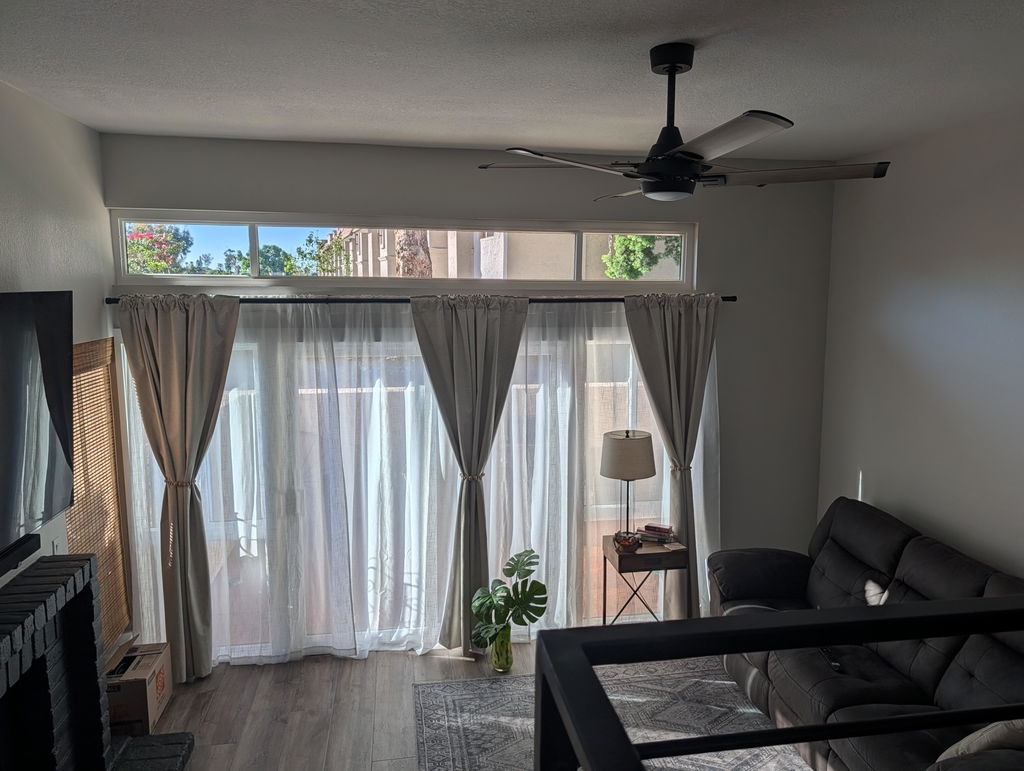
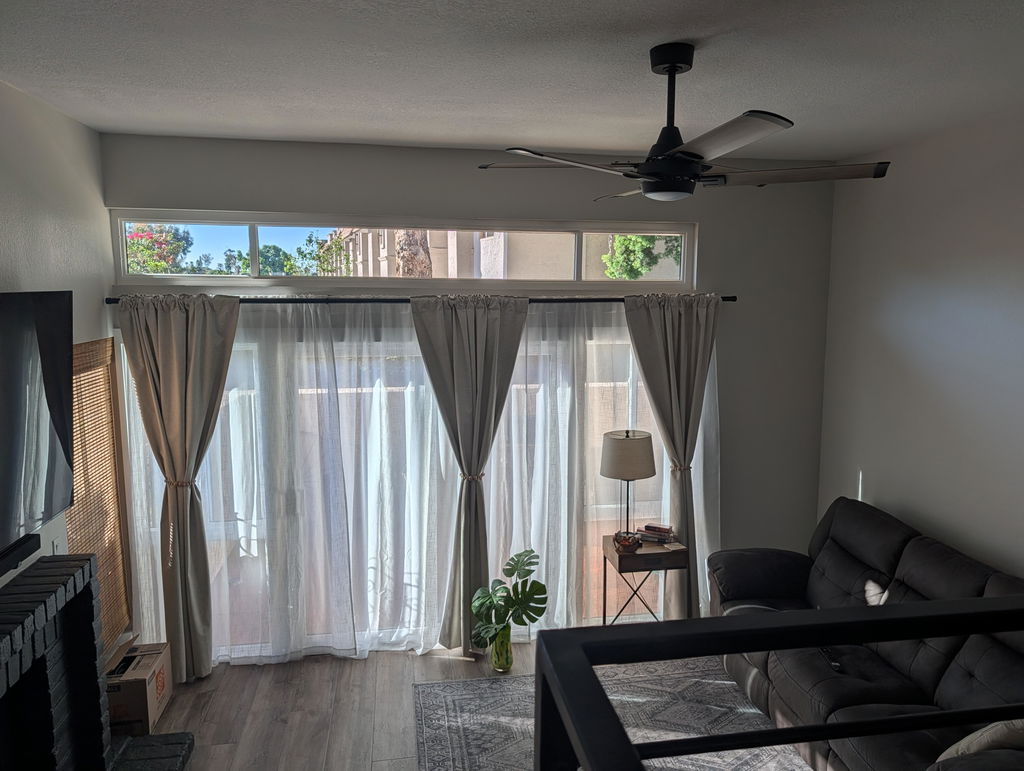
| Floor-skimming | Calm pets, bedrooms, living rooms, polished full-length look | Requires accurate measuring so fabric does not pool |
| Puddled | Formal rooms with low pet access | Collects hair, invites lying, and creates chew or play fabric |
Choose sill or cafe length when a cat repeatedly climbs from the floor or a dog chews lower corners. Shorter fabric removes the loose vertical path that turns a curtain into a ladder or toy.
Choose apron length when the window sits above a pet bed, crate, food station, litter area, or high-traffic route. The panel can still soften the window without dragging through hair, dust, water bowls, or muddy paws.

Choose floor-skimming length when the pet is calm and the room needs a more finished look. The lower edge should meet or hover just above the floor, not create a fabric pile.
Avoid puddled curtains in rooms where pets play, sleep, chew, wrestle, or sprint past the window. Extra fabric on the floor collects hair and body oils, and it gives cats and dogs more material to grab.
The NICETOWN measurement guide is the right next step when you want full-length curtains without accidental puddling. Custom sizing is especially useful for nonstandard windows, high-mounted rods, and rooms where an inch or two of extra fabric would create a pet problem.
Safer Headers, Rods, Tiebacks, and Hardware for Pet Homes
The safest curtain setup removes dangling temptations and makes the mounted hardware match the panel weight.
Avoid long cords, looped cords, bead chains, tassels, and decorative trim that hangs at mouth or paw height. The U.S. Consumer Product Safety Commission identifies window covering cords as a strangulation hazard and says cordless window coverings are the safest option when young children are present. That guidance is child-safety focused, but it supports a conservative rule for pet homes too: do not leave loops or dangling cords where a curious animal can chew, paw, or tangle.
Use fixed holdbacks when you need to keep panels away from a pet route. A simple wall-mounted holdback is usually cleaner than a long tasseled tieback in a home with puppies, fabric-chewing dogs, or cats that swat moving objects.
Match the curtain rod and brackets to the total panel weight. Heavier blackout, velvet, soundproof, or thermal curtains move less than lightweight sheers, but they also place more load on the rod. A cat climbing a heavy panel or a dog jumping at the window adds force that a weak bracket may not handle.
Install brackets into studs when possible, or use anchors appropriate for the wall material and curtain weight. If you rent, choose hardware that fits your lease limits and avoid creating a setup that looks sturdy but cannot handle real pet contact.
NICETOWN curtain rods can be part of the purchase plan when you are changing from lightweight curtains to heavier panels. If you are unsure about fabric weight, heading style, or hardware fit, contact NICETOWN before ordering.
How to Choose Curtains for Cats
Cats create curtain problems through climbing, scratching, jumping, and claw catching. The fabric matters, but the window setup matters just as much.
Choose lower-snag fabrics before delicate texture. Tight-weave blackout, lined faux linen, and some velvet options are usually more practical than sheer, lace, loose linen, or looped texture for a cat that scratches vertical surfaces.
Use shorter lengths or holdbacks when the cat targets the lower half of the panel. A full-length panel can still work if the cat ignores the fabric, but it is a poor fit when the cat already treats curtains as a climbing route.
Place an acceptable scratching surface near the window your cat already uses. Cornell notes that scratching posts work best when placed next to the area the cat likes to scratch, and the ASPCA recommends putting scratching posts beside inappropriate targets as legal alternatives.
Keep cat trees and furniture from turning curtains into a bridge. A cat tree beside a window may be perfect for enrichment, but a panel hanging directly behind it can become a reachable fabric wall.
Check the lower hem and side edges after installation. Loose threads, pulled yarns, and damaged hems can catch claws more easily than intact fabric.
Trim nails as part of normal cat care if your cat tolerates paw handling. Cornell and the ASPCA both include nail care or claw caps among options that can reduce scratching damage, but curtains should still be selected and installed as if contact will happen.
How to Choose Curtains for Dogs
Dogs usually damage curtains through contact, moisture, chewing, pawing, and window reactivity rather than vertical climbing.
For large dogs that lean or push past panels, choose fabric with enough body to return to shape and hardware that can handle repeated movement. Lightweight panels can twist, stretch, or swing every time a dog passes.
For muddy dogs or patio-door traffic, avoid fabric that puddles on the floor. Waterproof or outdoor-style curtains may be worth considering where paws, damp fur, or open doors are part of the room.
For dogs that watch the street, privacy curtains or blackout curtains can reduce visual triggers at certain times of day. This can make the window less stimulating, but it should not be described as a training solution or a guaranteed fix for barking.
For shedding dogs, color and texture matter as much as durability. Dark fabric shows pale fur, pale fabric shows dark fur, and textured fabric can trap hair. Swatches help you see the problem before you order full panels.
For dogs that chew, remove dangling tiebacks, tassels, trim, and puddled hems first. No curtain fabric should be treated as chew-safe, and product care pages should be checked before using sprays or cleaners near fabric.
The Fiber-Seal window treatment care guide notes that cats and dogs can leave body oils and hair on window fabrics, and that pet stains can be difficult to remove from some window treatment materials. Use that as a practical reminder to match curtain care to the room. A dry-clean-only fabric may be reasonable in a formal dining room and frustrating at a patio door.
Room-by-Room Pet-Friendly Curtain Matrix
| Room or window | Better starting point | Why it works |
|---|---|---|
| Bedroom with calm pets | Blackout or lined curtains, floor-skimming length | Light control and finished style without extra floor fabric |
| Living room with active pets | Privacy or blackout curtains, fixed holdbacks | Reduces window exposure and keeps fabric out of traffic during active hours |
| Patio door with dogs | Waterproof or easier-care fabric, no puddle | Handles paw contact and reduces dirty lower hems |
| Window with cat tree nearby | Sill, apron, or tied-back panels | Reduces reachable loose fabric behind the perch |
| Street-facing window | Privacy curtains or layered blackout | Limits visibility that may trigger dogs or distract cats |
| Low-contact dining room | Velvet, faux linen, or decorative fabric | Allows more style flexibility when pets rarely touch the panels |
| Nursery or shared child-and-pet room | Cordless or no-cord setup, secure rods, no loops | Keeps cord and loop hazards out of reach |
Bedrooms often benefit from blackout curtains because the fabric has more body and the room usually needs light control. Choose floor-skimming length only if the pet does not chew or climb.
Living rooms often need privacy curtains because pets react to outdoor movement and people still want daylight. Holdbacks can keep panels away from a dog path during the busiest part of the day.
Patio doors need the most practical fabric choice in many pet homes. The lower hem sits near paws, outdoor dirt, wet fur, and repeated movement, so avoid puddles and confirm care instructions before choosing delicate fabric.

Rooms with cat trees need access planning more than heavy fabric. If the cat can stand on the perch and reach the panel, even a stronger curtain can become a scratch surface.
NICETOWN Buying Workflow for Pet-Friendly Curtains
Start by naming the pet behavior: climbing, scratching, chewing, shedding, muddy contact, or window watching. This keeps the purchase focused on the actual failure point.
Order curtain swatches before choosing a full panel if hair visibility, texture, or color matching matters. A swatch lets you compare fabric against your pet's fur and feel whether the surface is smooth, textured, heavy, or delicate.
Use the measurement guide before selecting length. For pet homes, the goal is not just a correct curtain measurement; it is the right amount of clearance from the floor, pet bed, crate, food bowl, patio threshold, or windowsill.
Choose custom curtains when you need exact floor clearance, a nonstandard window size, or a high-mounted rod without accidental puddling. Choose ready-made curtains when a standard length already gives you the right clearance and the fabric suits the room.
Choose rods and holdbacks after you choose fabric weight. Heavier blackout, velvet, thermal, or sound-focused curtains need hardware that fits the load and the room's pet activity.
Ask NICETOWN customer support about product-specific fabric, care, sizing, and hardware questions before ordering if the curtain will hang in a high-contact pet zone.
Pet-Friendly Curtain Safety Checklist Before You Buy
- Pick fabric with a smoother or tighter surface if claws are a concern.
- Avoid loose weaves, lace, fringe, tassels, and dangling trim in active pet rooms.
- Choose sill, apron, or floor-skimming length instead of puddled fabric where pets play or sleep.
- Keep lower hems away from puppies and dogs that chew fabric.
- Avoid dangling cords and looped accessories within pet or child reach.
- Match rod, brackets, and anchors to the panel weight and wall material.
- Move furniture, cat trees, and pet beds if they turn curtains into climbing routes.
- Place scratching posts near the window if a cat already targets that area.
- Check care instructions before choosing curtains for patio doors or muddy-paw zones.
- Test swatch color against pet hair before ordering full panels.
FAQ
Are there curtains cats won't scratch?
No curtain fabric can be promised as something cats will never scratch. A tighter, smoother, lower-snag fabric can reduce damage risk, but cats still need acceptable scratching surfaces near the areas they already target.
Are blackout curtains good for pets?
Blackout curtains can be a practical choice because they often have more body than lightweight panels and can reduce light or outdoor movement. They still need accurate length, secure hardware, and pet-safe details such as no dangling cords or puddled hems.
Should pet owners avoid sheer curtains?
Sheer curtains are best for low-contact windows or layered setups. They are not the best first choice for cats that climb, cats that scratch fabric, or dogs that paw at windows.
What curtain length is safest for cats and dogs?
Sill or apron length is safer for pets that climb, chew, or target lower fabric. Floor-skimming panels can work for calm pets. Puddled curtains are the highest-maintenance choice because they collect hair and create extra fabric for pets to grab.
How do I keep pet hair from showing on curtains?
Choose a curtain color close to your pet's fur and avoid high-texture fabric that traps hair. Swatches are useful because they let you compare color and texture in the actual room before ordering.
Final Buying Rule
Choose pet-friendly curtains by behavior first, then fabric, then length, then hardware. A tight-weave blackout panel in the wrong length can still become a chew target, and a beautiful velvet panel on weak brackets can still be pulled down.
For the lowest-regret path, test fabric swatches, measure for a no-puddle length with the NICETOWN measurement guide, and use custom curtains when exact clearance matters.
Before You Go…
Here are a few handpicked articles to inspire your next self-care moment.