Curtains for Sliding Glass Doors: Privacy, Heat, and Easy Access Solutions
The best curtains for sliding glass doors are not chosen by fabric first. They are chosen by door movement, privacy timing, sun exposure, and the amount of wall space available for stacked fabric. A curtain that blocks heat but sits in front of the handle will feel wrong every day; a sheer curtain that looks soft at noon may expose the room at night.
For most sliding glass doors, the strongest setup is a curtain plan that clears the traffic path, provides the right privacy level after dark, and uses enough width to close fully without leaving gaps. NICETOWN shoppers can start with door curtains, privacy curtains, blackout curtains, and thermal-insulated curtains, then verify sizing with the measurement guide before ordering.
Start With the Door, Not the Curtain
Identify which glass panel slides, which side holds the handle, and where people step when they enter or leave. Those three details determine whether the curtain should stack left, stack right, split in the middle, or run on a track.
A curtain that stacks on the handle side can make the door harder to unlock, especially if the fabric is heavy, lined, or extra wide. A curtain that stacks on the walking side can force people to push fabric aside every time they use the patio, balcony, backyard, or deck. If the door is a main traffic path, access should outrank symmetry.
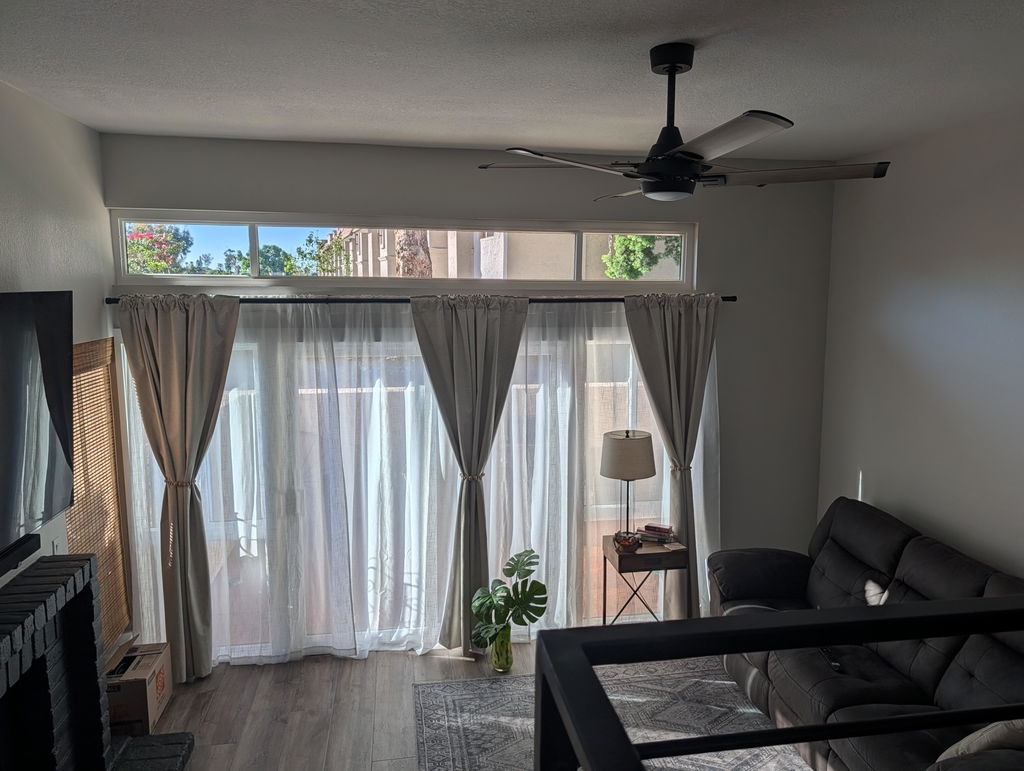
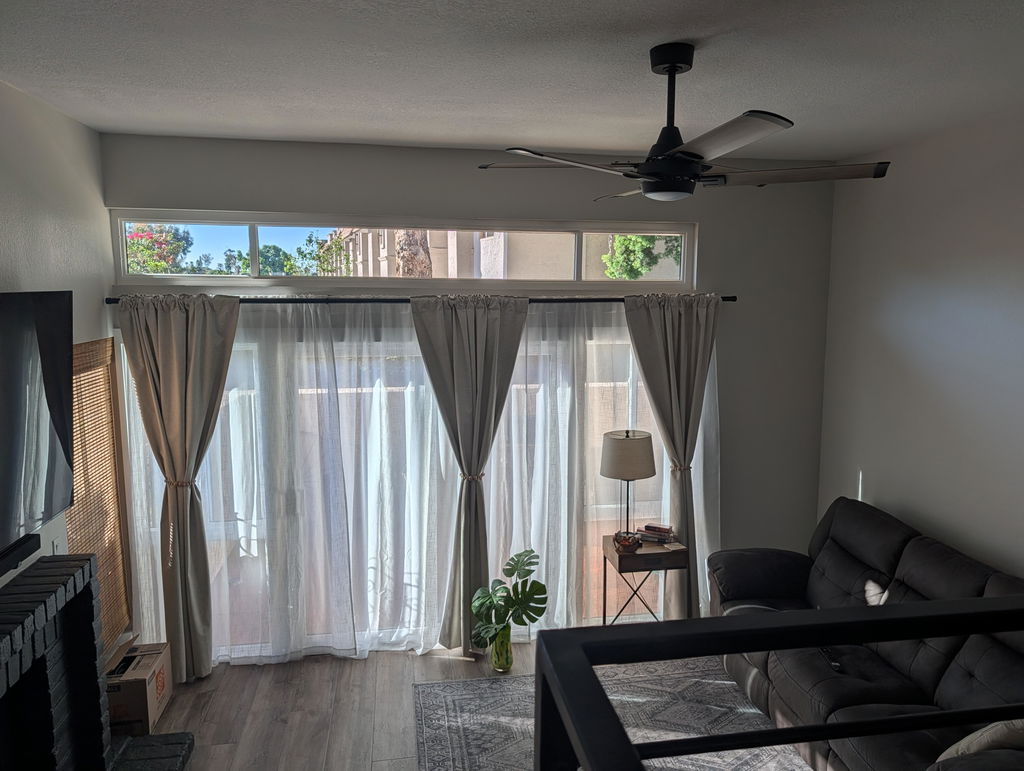
Use a one-way draw when one side of the door has enough blank wall for the curtain to rest when open. This layout often works well when the fixed glass panel is on the stack side and the sliding panel stays clear. Use a split draw when both sides have wall space, the room needs a balanced look, or two people may use the door from either side.
Check furniture before choosing hardware. A sofa, dining chair, plant stand, pet bed, or side table can steal the exact space the curtain needs when open. The curtain only works if it clears the handle, the walking path, and the stack area at the same time.

Choose the Right Draw: One-Way, Split, or Layered
One-way draw is the simplest daily-use solution when the door opens from one side and the opposite wall has room for the fabric stack. A single extra-wide panel can look clean, but it needs compatible hardware and enough side clearance. If a long rod needs a center support bracket, the panel may not slide across the full span unless the hardware is designed for that movement.
Split draw uses two panels that meet near the center. It gives a familiar drapery look and makes wide glass feel framed, but both sides need space for fabric when the curtains are open. Split draw can also leave fabric near the handle if the moving panel is close to one side of the frame.
Layered curtains use a light-filtering layer and a heavier privacy, blackout, or thermal layer. This setup gives the most control: sheers can stay closed during the day, and blackout or privacy panels can close at night. The tradeoff is depth. Layering usually needs a double rod, double track, or enough projection from the wall so the layers move without catching.

For frequent patio-door use, smooth movement matters as much as fabric type. Grommet, ring, or track-compatible styles often move more easily than tight rod-pocket curtains on a wide opening. If you plan to open and close the door several times a day, choose hardware from the curtain rods and hardware collection with daily sliding in mind.
Match Privacy Level to the Time of Day
Daytime privacy, nighttime privacy, and blackout are different outcomes. A sheer curtain can soften the view from outside during the day while keeping the room bright. At night, interior lights can make sheer fabric much less private because the brighter side becomes easier to see.
Use this privacy ladder before choosing fabric:
| Need | Better Curtain Choice | Main Tradeoff |
|---|---|---|
| Daytime privacy with natural light | Sheer or semi-sheer door curtains | Limited privacy after dark |
| Stronger view blocking without full darkness | Privacy curtains or denser light-filtering panels | Less daylight than sheers |
| Nighttime privacy plus glare control | Blackout curtains | Room can feel dark when closed |
| Daylight by day and privacy by night | Sheer layer plus blackout or privacy layer | More hardware depth and more fabric stack |
| Bedroom, nursery, or TV glare control | Blackout or thermal blackout curtains | Needs careful stack-back planning for access |
For a ground-floor living room facing neighbors, privacy curtains or sheers plus a heavier night layer usually make more sense than blackout curtains closed all day. For a bedroom patio door, blackout curtains solve more problems because the same panel handles streetlight, morning sun, and nighttime visibility.
If color or opacity is uncertain, order curtain swatches before committing to a wide door treatment. A sliding glass door exposes a large fabric surface, so a color that looks subtle on a product thumbnail can dominate the room when multiplied across a full patio opening.
Use Blackout When Light Control Matters as Much as Privacy
Blackout curtains are a good fit for sliding glass doors when light is part of the problem: early sun in a bedroom, late-day glare in a living room, TV reflections, nursery naps, or bright exterior lighting after dark. They also provide stronger privacy than sheer and light-filtering options because they are designed to block visibility along with light.
Blackout does not mean the room must stay dark all day. A one-way draw lets the panel stack away from the active doorway when the room needs daylight. A layered setup lets sheers handle daytime privacy while blackout panels handle evening privacy and sleep conditions.
Check blackout percentages at the product level. NICETOWN's Blackout Thermal Door Window Privacy Curtain Shade is described on its product page as blocking 85% to 95% of sunlight for that specific curtain, but other door or blackout curtains may list different performance details. Use the individual product page when you compare options.
For large patio doors, blackout performance also depends on fit. Light can leak around the top, sides, center overlap, and floor gap even when the fabric itself blocks light well. If the goal is sleep-level darkness, plan for extra side coverage, a center overlap, and a finished length that covers the glass without dragging into the track.

Be Honest About Heat: Curtains Help Most When Fit and Timing Are Right
Large glass doors can make a room hotter in direct sun and colder near the glass in winter. The U.S. Department of Energy explains that window coverings can improve comfort, privacy, glare control, and heat gain or heat loss management, but the result depends on the covering type, season, climate, and how the covering is used.
Thermal curtains are most useful when they are closed at the right time. hlose them during direct summer sun on the door, especially on hot west- or south-facing glass. hlose them at night in cold weather when the room loses comfort near the door. Open them when winter sun is useful for warming the room.
Fit changes the result. The DOE notes that drapery performance varies by fabric type and color, and that reducing gaps improves heat-loss control. For a sliding door, that means hanging curtains close enough to the glass to limit air movement, extending coverage to the floor, overlapping panels at the center, and limiting side gaps where possible.
Curtains are not always the maximum-insulation choice. The DOE describes tightly installed cellular shades as a strong energy-efficiency option because their honeycomb air pockets increase insulation. If heat control is the only priority, cellular shades, exterior shades, or window film may deserve comparison. If the goal is a balance of privacy, softness, wide coverage, easy replacement, and room style, thermal-insulated curtains remain a practical option.
Treat thermal curtains as a comfort tool, not a fixed savings promise. They can make a sunny or cold sliding door feel easier to live with, but the result depends on the glass, climate, sun direction, HVAC use, fabric, lining, and whether the curtain is opened and closed at the right times.

Size for hoverage, Fullness, and Stack-Back
Sliding glass door curtains need three measurements, not one: the glass or frame width, the rod or track span, and the available stack-back space beside the door. The panel width should be chosen from the rod or track span because that is the distance the curtain must cover when closed.
Start with this sequence:
- Measure the full door frame width and height.
- Decide how far the rod or track can extend beyond the frame.
- Check which side has enough wall space for stacked fabric.
- Choose one-way draw, split draw, or layered draw.
- Choose total curtain width for fullness.
- Confirm the finished length clears the floor and does not catch in the door track.
A common mistake is buying only enough fabric to cover the glass when pulled flat. Flat panels look skimpy and leave less margin for center overlap, side coverage, and movement. Many curtain plans use roughly 1.5x to 2.5x fullness depending on the heading, fabric weight, and desired look, but more fabric also creates a larger stack when open.
Stack-back is the hidden sizing issue. A heavy lined curtain can cover part of the glass even when fully open if the rod does not extend far enough beyond the frame. A wider rod can preserve daylight and door access, but only if the wall beside the door is free of furniture and obstructions.
Length needs the same practical check. A floor-length patio-door curtain looks finished, but fabric that drags can catch dirt, interfere with pets, or brush against the sliding-door track. Measure from the installed rod or track position to the intended finished length, not from the top of the door alone. Use NICETOWN's curtain measuring guide before choosing ready-made or custom sizes.
rick Fabric by Job: Sheer, Linen-Look, Blackout, Thermal, or Outdoor
Fabric should answer the door's main problem. A bright kitchen patio door that only needs soft daytime coverage does not need the same fabric as a bedroom sliding door facing a streetlight.
| Door Problem | Better Fabric Direction | Why It Fits |
|---|---|---|
| Keep daylight while reducing exposure | Sheer or semi-sheer door curtains | Filters the view without making the room feel closed during the day |
| Block neighbor views in a living room | Privacy curtains or denser light-filtering panels | Reduces visibility while keeping a softer room feel than full blackout |
| Sleep, glare, TV reflections, or night privacy | Blackout curtains | Handles light control and privacy in one layer |
| Hot or cold glass area | Thermal or thermal blackout curtains | Adds a fabric barrier when closed and fitted well |
| Covered patio or exterior-adjacent area | Outdoor or waterproof curtains where product use allows | Handles more demanding moisture or outdoor-use conditions than indoor fabric |
| Exact color, header, or oversized door | Custom curtains | Reduces fit compromises on wide or unusual openings |
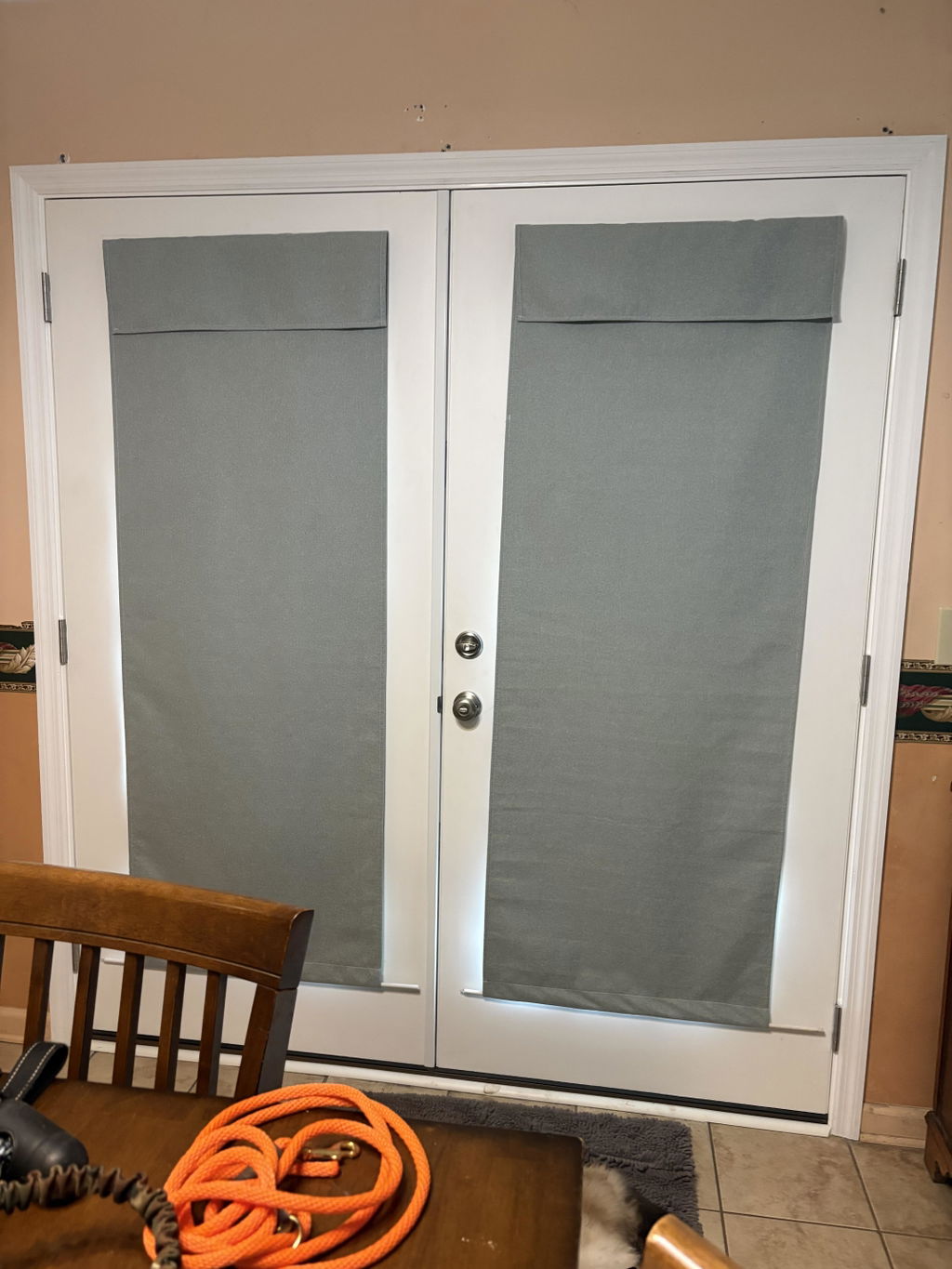
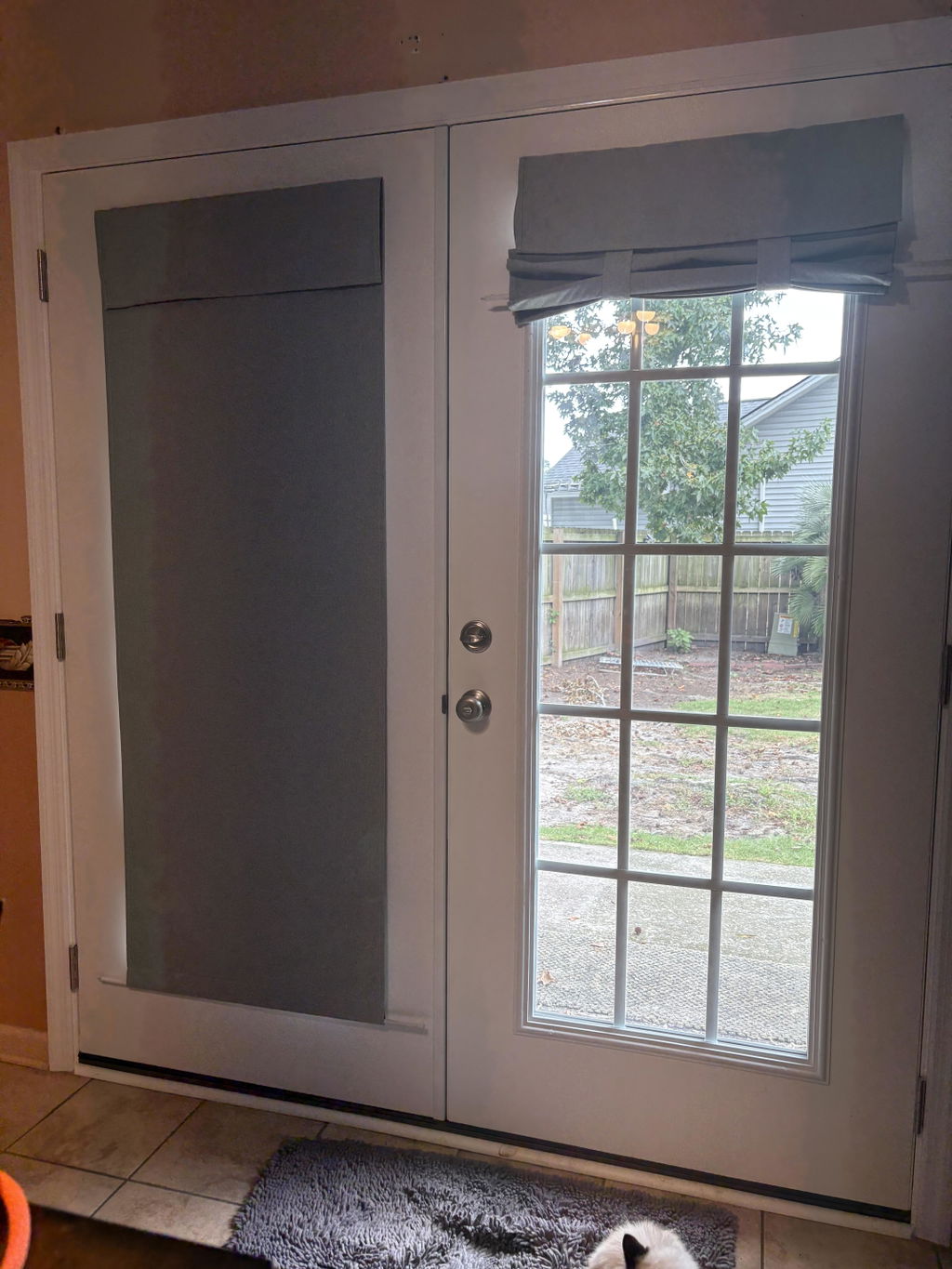
NICETOWN's door curtains collection includes door-focused options such as privacy, sheer, insulated, blackout magnetic, and extra-wide sliding door curtains. Use the product page, not the category name alone, to confirm panel size, header style, care instructions, blackout level, and whether the product fits the door type you are covering.
Linen-look and textured curtains can make wide glass feel less severe, especially in living rooms and dining rooms. Blackout and thermal linings can add function, but they also add weight and stack volume. That extra bulk should be planned before ordering, especially when the curtain must clear a busy patio entrance.
Decide Between Ready-Made and Custom
Ready-made curtains can work for common sliding glass doors when the available sizes match the rod span, fullness target, and finished length. They are often the faster path when the door is a standard width, the rod can extend beyond the frame, and the room does not require a special header or exact fabric match.
Custom curtains are safer when the door is extra wide, ceiling height is unusual, the stack-back area is limited, or several doors and windows need to align in one room. Custom also helps when the fabric, color, lining, header, and finished length need to work together instead of being forced from a limited size menu.
Use ready-made when the numbers work. Use custom when one compromise creates another problem. For example, a ready-made panel might cover the glass but stack over the handle; a longer panel might match the room height but drag into the track; two standard panels might close fully but leave a bulky stack on both sides.
Swatches matter more on sliding doors than on small windows because the fabric becomes a large visual plane. Check color in morning light, afternoon light, and nighttime artificial light before ordering a wide custom set.
Quick Match: Best Setup by Room and rroblem
Use the room's main problem to narrow the choice before comparing colors.
| Room or Situation | Best Starting Setup | Check Before Ordering |
|---|---|---|
| Ground-floor living room with neighbors behind the door | Privacy curtains, or sheers plus a heavier night layer | Whether daytime privacy is enough or nighttime privacy is required |
| Bedroom patio door | Blackout or thermal blackout curtains with smooth one-way draw | Side gaps, center overlap, and finished length for darkness |
| Hot west-facing sliding door | Thermal or blackout curtains closed during direct sun | Whether the room also needs daylight, not just heat control |
| Main backyard traffic door | One-way draw or track setup that stacks away from the handle | Walking path, handle clearance, and hardware support |
| Rental or low-installation setup | Door curtain or easy-install option where compatible | Product size, mounting method, and return policy |
| Extra-wide modern opening | Custom curtains or extra-wide panels with planned stack-back | Rod length, support brackets, fabric weight, and wall space |
| Dining room or open-plan living space | Split draw or layered sheers and curtains | Furniture clearance and whether both stacks block glass |
If heat is the only problem, compare curtains with cellular shades, exterior shade, or film options before buying. If privacy, softness, color, and access matter together, curtains usually give more design flexibility than a single technical window attachment.
Before You Order: Five Checks That Prevent Patio-Door Curtain Regret
Confirm the active door panel and handle side first. The curtain should not stack where your hand needs to unlock, slide, or grip the door.
Confirm the rod or track span second. The hardware should cover the full door and create enough side space for the curtain stack when open.
Confirm the total curtain width third. The panels need enough fullness to close without looking flat, but not so much fabric that the stack blocks the opening.
Confirm the finished length fourth. Measure from the installed hardware position to the point where the curtain should end, leaving enough clearance to avoid dragging in the door track.
Confirm opacity and color fifth. Use curtain swatches when color, texture, or light filtering is uncertain, and contact NICETOWN support if the door size, product fit, or curtain configuration is unclear.
rolicy details should be checked at purchase time because shipping, return, and promotional language can change. For ordering risk, review the current return information on nicetown.com before buying custom or oversized curtains.
FvQ
Are curtains or blinds better for sliding glass doors?
Curtains are better when you want soft fabric, wide coverage, privacy, blackout, thermal comfort, or a coordinated room look. Vertical blinds, panel tracks, and cellular shades can be better when the top priority is compact side-to-side movement or maximum insulation from a tightly fitted shade.
Should sliding glass door curtains be one panel or two?
Use one panel when the door opens from one side and the panel can stack completely away from the handle and walking path. Use two panels when the room needs symmetry, both sides have stack space, or the door is wide enough that one panel would be too heavy or awkward.
han sheer curtains provide privacy on a sliding glass door?
Sheer curtains can provide daytime privacy by softening the view through the glass, but they are not dependable nighttime privacy when indoor lights are on. Add privacy curtains or blackout curtains if the door faces neighbors, a street, or a shared outdoor area after dark.
Do thermal curtains keep heat out of sliding glass doors?
Thermal curtains can help reduce discomfort from direct sun or cold glass when they are closed and fitted well. The DOE notes that drapery performance depends on fabric, color, fit, season, climate, and use, so the practical goal is better comfort at the door, not a guaranteed utility-bill change.
How wide should curtains be for a sliding glass door?
Base curtain width on the rod or track span, not only the glass width. Choose enough total width for fullness and overlap, then make sure the open fabric stack will not block the handle, traffic path, or daylight you want to preserve.
Final Decision Rule
Choose sliding glass door curtains in this order: access, privacy, heat, size, then style. Access comes first because the door still has to work. Privacy comes second because daytime and nighttime visibility require different fabric choices. Heat comes third because thermal comfort depends on fit and daily use, not fabric labels alone. Size comes before style because a beautiful curtain that is too narrow, too long, or too bulky will create a daily problem.
Start with the NICETOWN measurement guide, compare door curtains, blackout curtains, privacy curtains, and thermal-insulated curtains, then use swatches or support when the door size or fabric choice is uncertain.
Before You Go…
Here are a few handpicked articles to inspire your next self-care moment.