Curtains for Renters: Stylish Window Ideas That Don't Risk Your Deposit
The best curtains for renters are not just the prettiest panels that fit the window. They are the panels your hardware can actually support, your lease is likely to allow, and your wall or frame surface can handle without avoidable damage.
Start with the installation limit, then choose the curtain. A lightweight privacy curtain on a tension rod may be the right answer for a street-facing living room. A heavier blackout curtain may need stronger hardware, more overlap, or written landlord approval before it becomes a smart purchase.
No-drill does not always mean no-risk. Adhesive can pull paint, tension rods can scuff or slip, magnetic rods only work on compatible metal, and tap-in brackets still leave small holes in trim. The goal is to choose the lowest-risk setup that still solves the real problem: privacy, darkness, insulation, or a more finished room.
Start With the Least Invasive Setup That Still Solves the Window Problem
Use four filters before buying curtains: lease rules, surface type, window shape, and curtain job.
Lease rules decide whether holes, adhesive, pin brackets, or exterior-mounted rods are allowed. Some rentals allow small picture-hanging holes but restrict drilling into trim, while others ban adhesive products because paint repairs can be harder to blend than patched nail holes. If the lease is unclear, ask for written approval before using screws, tap-in brackets, or adhesive hardware on visible painted surfaces.
Surface type decides which no-drill method is realistic. Tension rods need firm, parallel sides inside the window frame. Adhesive hooks need smooth, clean surfaces and manufacturer-approved materials. Magnetic rods need ferrous metal, not vinyl, aluminum, wood, or painted drywall. Freestanding rods avoid the wall but need floor space and enough stability for the curtain width.
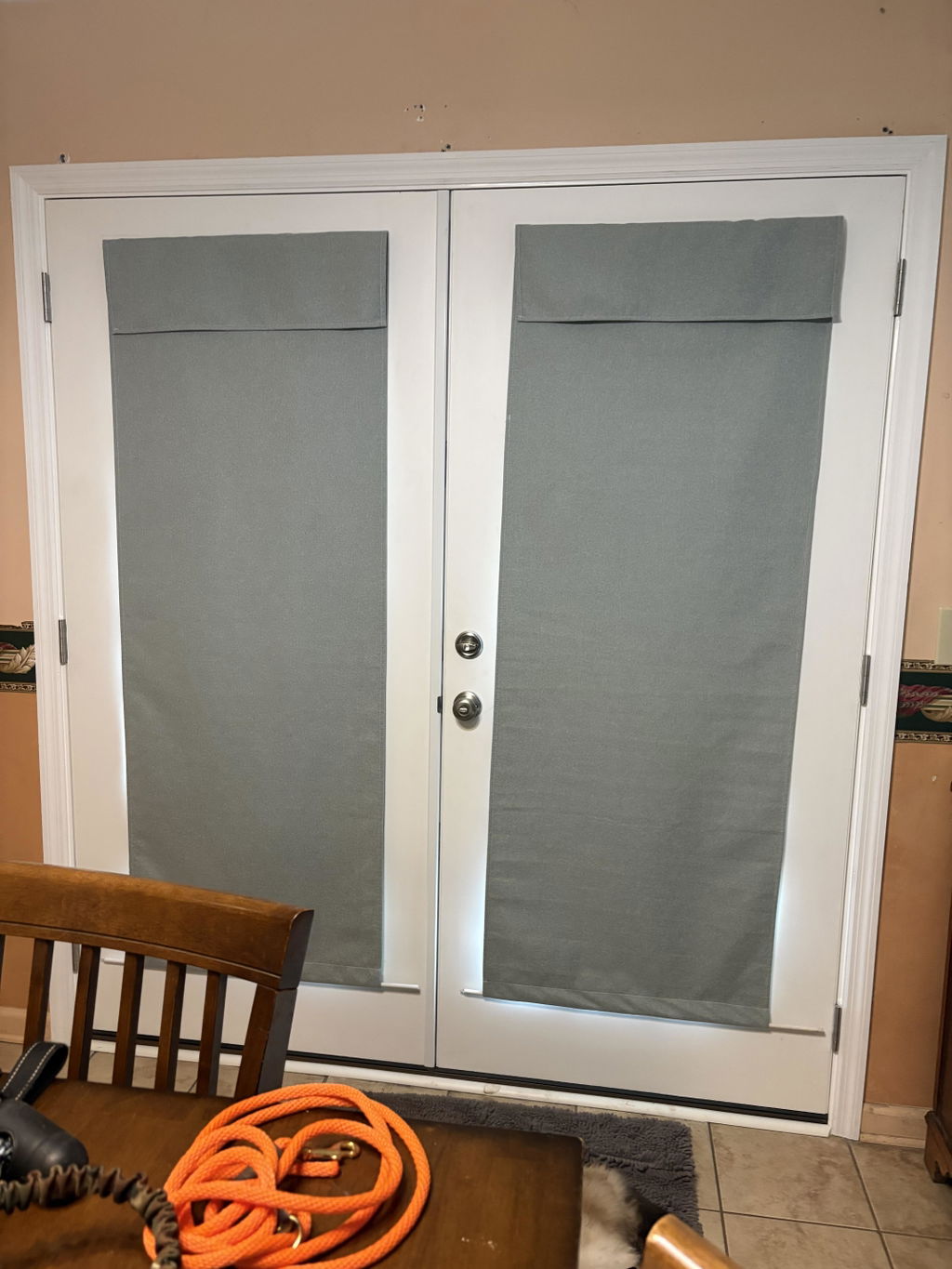
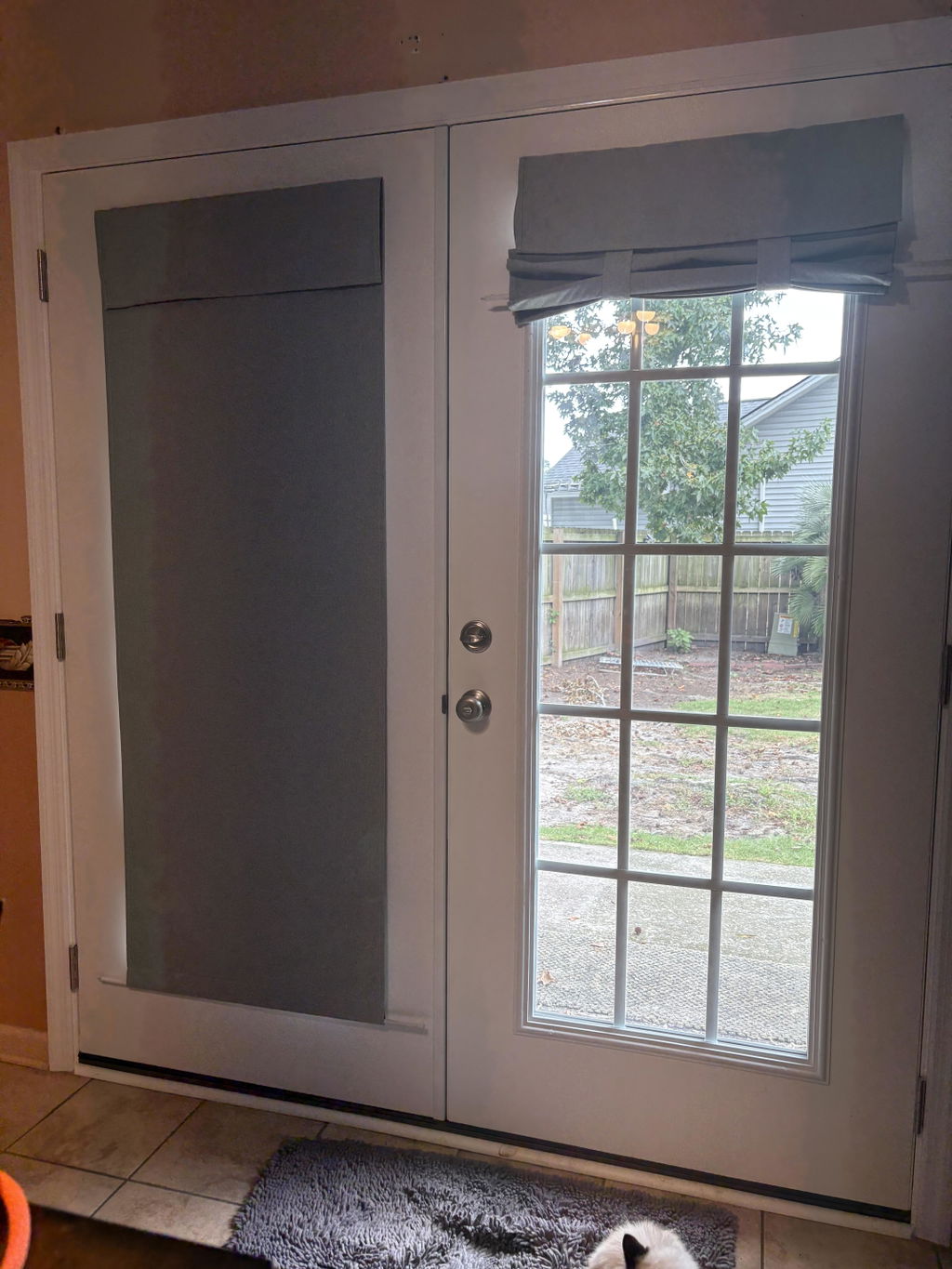
Window shape decides how much light and privacy control you can get without touching the wall. A recessed window can often take an inside-mounted tension rod, but that setup leaves side gaps. A sliding glass door usually needs a wider span, so a basic tension rod or light adhesive hook setup may not be enough. A metal entry door can work with a magnetic rod, but only for light panels that will not drag when the door moves.
Curtain job decides fabric weight. A decorative or daytime privacy panel can be light. A blackout or thermal curtain is usually heavier and needs a stronger margin between the curtain's real weight and the hardware's rated capacity. A renter-safe setup fails when the fabric goal asks more from the hardware than the surface can give.

For standard windows and shorter leases, ready-made curtains are usually the first path to test because they keep cost and commitment lower. For odd window sizes, unusual lengths, or a blackout setup that needs precise overlap, custom curtains can reduce fit mistakes before hardware decisions become expensive.
Renter-Friendly Curtain Hardware, Ranked by Deposit Risk
The safest hardware is the one that matches the surface and curtain weight, not the one with the most "no-drill" language on the package.
| Hardware option | Best fit | Main risk | Curtain weight fit | Privacy/blackout fit |
|---|---|---|---|---|
| Tension rod | Recessed windows with firm parallel sides | Slipping, rubber-end marks, pressure scuffs | Light to medium, depending on rod and span | Good for privacy; blackout may leave side gaps |
| Twist-and-fit rod | Inside mount where a more finished look is wanted | Same pressure risks as tension rods | Light to medium | Cleaner look than basic tension rods, still limited by side gaps |
| Adhesive hooks or brackets | Smooth painted drywall, tile, glass, finished wood, or metal approved by the product maker | Paint lift, residue, fall risk, wrong removal angle | Lightweight panels unless product-specific capacity supports more | Better overlap than inside mount if placed outside the frame |
| Magnetic rod | Steel doors or compatible metal frames | Weak hold on non-compatible metal, sliding if overloaded | Very light panels | Useful for small door windows, weak for heavy blackout |
| Tap-in brackets | Wood trim where hidden pinholes are acceptable | Small holes in trim, lease dispute | Often stronger than adhesive, but product-specific | Good outside-mount look when allowed |
| Freestanding rod or room-divider rod | No-touch leases, wide windows, temporary rooms | Floor space, wobble, visual bulk | Depends on frame design | Useful for patio doors or no-wall-contact rules |
| Landlord-approved mounted rod | Long-term rental or heavy blackout/thermal need | Holes must be approved, patched, and documented | Best for heavier curtains | Best for side overlap and fuller blackout control |
Command curtain rod hooks are one example of adhesive curtain hardware with a stated weight capacity, but the package rating is not permission to hang any curtain that weighs less than the number on the label. Curtains move, rods flex, panels can pull unevenly, and wide spans create more leverage than a small test load.
Manufacturer instructions matter more than renter folklore. Command's own instructions for adhesive hanging products say to clean with rubbing alcohol, allow time for adhesive bond, pull strips straight down during removal, and avoid surfaces such as wallpaper, rough surfaces, textured walls, and fabrics. Those details are the difference between a lower-risk adhesive install and a paint-repair problem at move-out.

Use tap-in brackets only when the word "no-drill" is not doing too much work. They may avoid a drill, but they still pierce wood trim. That can be a reasonable compromise for a long-term rental with written permission, but it is not the same risk category as a tension rod that leaves no hole.
Match Curtain Weight to Hardware lefore You Choose the Fabric
Fabric choice should follow hardware capacity, especially when the curtain needs to block light, reduce heat gain, or add privacy at night.
Sheer and light-filtering curtains are the easiest renter option because they need less support and still soften bare rental windows. They work well for daytime privacy when the room is brighter than the outside view, but they do not provide strong nighttime privacy when interior lights are on.
Opaque privacy curtains need more fabric density than sheers, but they can still work with lower-risk hardware if the panels are not oversized or heavily lined. For street-facing bedrooms and living rooms, privacy curtains should be paired with enough width to cover the glass without pulling tight across the rod.
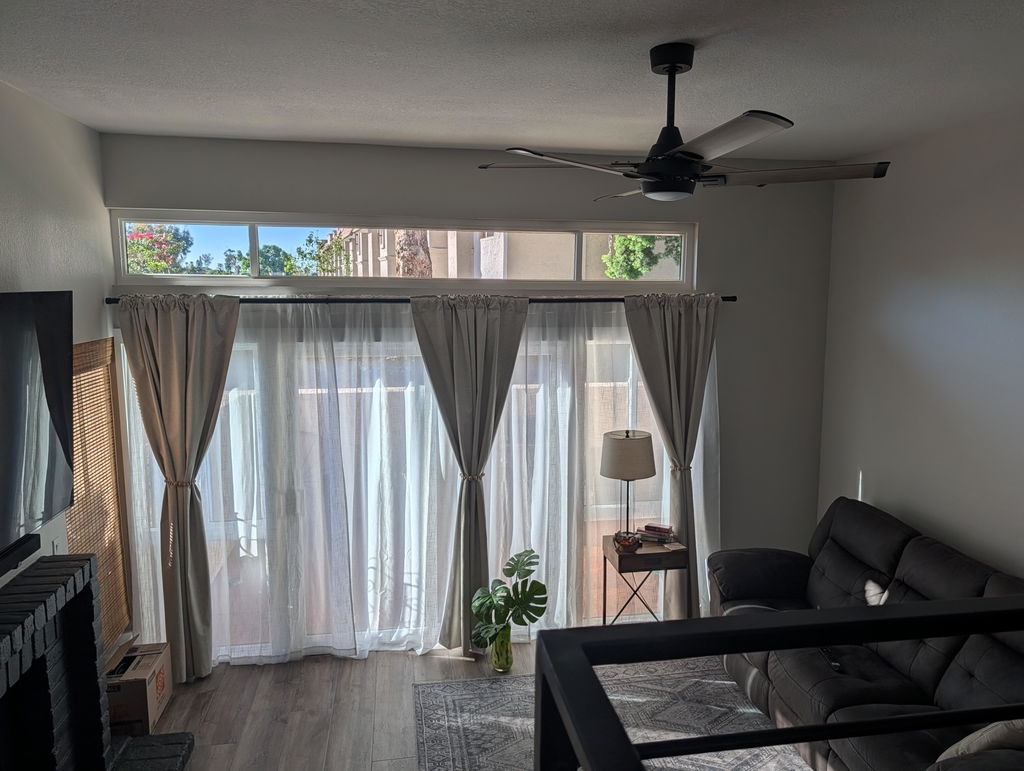
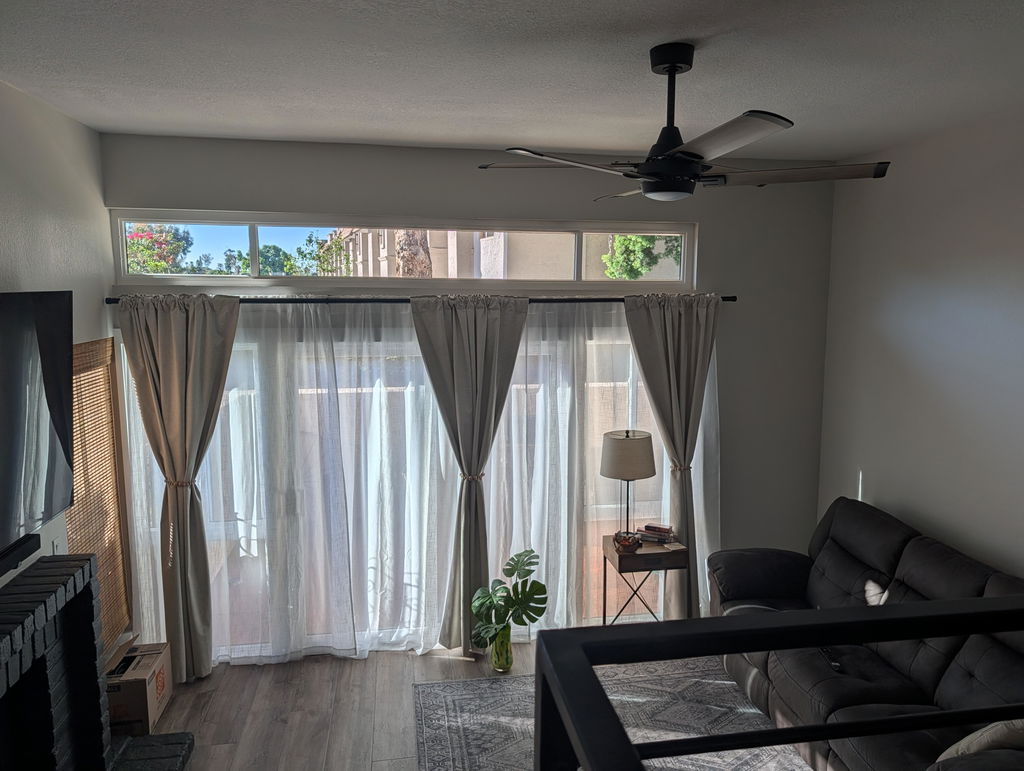
Blackout curtains need more than blackout fabric. They need enough side overlap, top coverage, and bottom length to reduce light leaks. A tension rod inside the window frame can darken a room, but the sides usually leak light because the curtain sits within the opening. An outside-mounted rod gives better overlap, but that usually requires adhesive hooks, tap-in brackets, freestanding hardware, or landlord-approved mounting.

Blackout curtains and thermal-insulated curtains can be useful in rentals with early sun, drafty windows, or pFor blinds, but heavier panels narrow the hardware choices. If the lease bans wall attachments, choose a stronger tension or freestanding solution before choosing a thick fabric. If the room needs reliable darkness for sleep, ask whether an approved mounted rod is possible before relying on adhesive alone.
Sound control needs the most careful wording. Heavier curtains can soften room reflections and may reduce some perceived outside noise, but a no-drill renter setup should not be treated as true soundproofing. If noise is the main issue, look at soundproof curtains as one layer of comfort, not as a guaranteed acoustic fix for gaps, thin glass, or building structure.
Choose the Mounting Style by Window Type
Match the mounting style to the physical window first: a recessed frame, slick vinyl frame, metal door, wallpapered wall, and sliding glass door all eliminate different hardware options.
| Window or surface | Lower-risk choice | Avoid or verify first | Why it matters |
|---|---|---|---|
| Recessed window with firm sides | Tension rod or twist-and-fit rod | Heavy lined curtains on a long span | The rod can brace inside the frame without touching the wall. |
| Shallow or slick vinyl frame | Freestanding rod or approved outside mount | Over-tightened tension rods | Slick or shallow sides make slipping and scuffing more likely. |
| Painted drywall around a standard window | Adhesive hooks only if surface is smooth and approved | Textured paint, dusty walls, fresh paint, wallpaper | Adhesive performance depends on surface prep and paint condition. |
| Wood trim | Tap-in brackets only with permission | Assuming pinholes are deposit-safe | The holes may be hidden but still exist. |
| Metal entry door | Magnetic rod with a light panel | Heavy blackout panels | Magnets are useful only on compatible metal and light loads. |
| Sliding glass door | Freestanding rod or approved mounted rod | Small adhesive hooks or narrow tension rods | Wide spans and moving doors need more stability. |
| Wallpaper, brick, rough plaster, textured wall | Freestanding rod or inside-frame tension if possible | Adhesive products | Adhesive removal can tear or fail on these surfaces. |
For recessed windows, measure the inside width at the top where the rod will sit, not only the glass width. A tension rod that is too short will slide, and a rod forced too tightly can leave compression marks or damage delicate surfaces.
For outside mounts, use the NICETOWN measurement guide before buying panels. The guide recommends planning rod position above and beyond the window frame when complete coverage and side light control matter. In a rental, that advice becomes a permission question: if you cannot mount outside the frame, choose the best inside-mount compromise instead of buying panels sized for hardware you cannot install.
For sliding doors, do not assume a regular window solution scales up. Wider rods sag more, adhesive brackets carry more leverage, and curtains get pulled more often because people pass through the door. A freestanding rod or landlord-approved mounted rod usually gives a more stable result than trying to make a small-window trick handle a patio door.
Make Renter Curtains Look Intentional, Not Temporary
Use four visible details to make temporary curtains look intentional: enough width for folds, a length that clears the floor or lands cleanly, fabric that works with fixed rental finishes, and a rod finish that matches existing hardware.
Width creates fullness and coverage. NICETOWN's measurement guide uses fullness as a practical choice: 1.5x fullness gives a simpler, more cost-conscious look, while 2x fullness creates deeper folds and a more decorative result. Renters using adhesive or tension hardware should balance fullness against weight because extra fabric improves style but also adds load.
Length changes the room more than the bracket type. Floor-length curtains usually look more finished in bedrooms and living rooms, while sill-length or apron-length curtains can make sense for kitchens, radiators, desks, or windows where a freestanding rod sits closer to the frame. If the curtain will move often, avoid lengths that drag on the floor and add pulling force to temporary hardware.
Header style affects both operation and weight distribution. Rod pocket and back tab panels create a clean look but can drag more on the rod when opened. Grommet panels slide more easily but put visible metal rings into the design. Pleated styles can look more tailored, but they may need specific rings, hooks, or track hardware that a no-drill setup cannot support.
Color and fabric should be checked in the actual room, especially in rentals with fixed wall color, old blinds, or landlord-selected flooring. Curtain swatches reduce the risk of buying panels that look different under apartment lighting or clash with finishes you cannot change.
Hardware finish should echo something already in the room. Black rods work with black door hardware and modern furniture. Warm wood rods can soften white walls and beige floors. Silver or brushed metal rods make sense when the room already has stainless, chrome, or nickel finishes. A temporary setup looks less temporary when the rod finish feels intentional.
Privacy, Blackout, and Thermal Goals Need Different Renter Setups
Choose the curtain by the problem you need to solve, then check whether your lowest-risk hardware can support that solution.
| Goal | Best renter curtain direction | Hardware caution | Fit detail that matters |
|---|---|---|---|
| Daytime privacy | Sheer, light-filtering, or privacy panels | Light hardware usually works better here | Cover the visible glass without pulling the panel flat. |
| Nighttime privacy | Opaque privacy curtains | Confirm panel weight before using adhesive | Add enough width so the fabric overlaps the window edges. |
| Better sleep darkness | Blackout curtains | Stronger hardware or approved mount may be needed | Side and top gaps matter as much as fabric. |
| Thermal comfort | Thermal or insulated curtains | Heavier fabric may exceed adhesive/light rods | Closer fit helps reduce drafts and heat transfer paths. |
| Softer room acoustics | Heavier fabric or sound-reducing curtains | No-drill hardware may limit weight | Treat curtains as one comfort layer, not wall construction. |
| Style only | Linen-look, sheer, patterned, or solid decorative panels | Lightweight panels create more hardware options | Choose length and fullness first. |
Daytime privacy can usually be solved without heavy panels. A light privacy curtain can blur the view from outside while keeping the room brighter than blackout fabric would. This is often the best renter tradeoff for living rooms, kitchens, and home offices.
Nighttime privacy needs opacity because interior light reverses the daytime privacy effect. If people can see silhouettes through the fabric after dark, use a denser privacy panel or layer the curtain over existing blinds.
Blackout is the least forgiving goal. If a child, shift worker, or light-sensitive sleeper needs serious darkness, plan the hardware and measurements before choosing the fabric. A tension rod inside a shallow frame can still leak light around the sides, top, or bottom even when the panel fabric itself is blackout.
Thermal comfort also depends on fit. A curtain that hangs close to the window and covers the glass area can feel more useful than a beautiful panel with large side gaps. In a rental, the tradeoff is that closer inside mounts are safer for walls, while outside mounts often control gaps better.
lefore You Install, Protect Your Deposit With a Move-Out Trail
lefore installing anything, create a record that shows the window condition, the approved hardware method, and the removal instructions you plan to follow.
Read the lease language for holes, adhesive products, alterations, window treatments, and move-out condition. If you need screw-mounted rods, tap-in brackets, or adhesive outside the frame, ask for approval in writing and keep the answer with your rental records.
Photograph the window, wall, trim, and existing blinds before installation. Take close photos of chipped paint, cracked trim, old screw holes, warped frames, and blind damage so those conditions are not confused with curtain damage later.

Keep the hardware packaging or installation instructions. If an adhesive product requires alcohol cleaning, a wait time before loading, or a specific removal angle, those instructions are part of your deposit-risk plan. Command's adhesive instructions warn that failure to follow directions can cause damage, and they specify pulling the strip straight down during removal rather than away from the wall.
Avoid adhesive on surfaces the manufacturer excludes. Wallpaper, rough plaster, textured walls, fabric, and unstable paint are pFor candidates because removal can tear the surface or fail unpredictably. Freshly painted surfaces also need caution because adhesive instructions may require waiting before use.
Use extra caution in older buildings. The EPA says renovation, repair, and painting work in pre-1978 housing can disturb lead-based paint, and federal lead rules require known lead information to be disclosed to renters before lease signing for pre-1978 housing. A renter should not casually drill, sand, or scrape old painted trim to install or remove curtain hardware without understanding the building's age and lease requirements.
Photograph the removal. After taking down curtains and hardware, photograph the same wall and trim areas in daylight. If a landlord later questions the window area, dated photos give a clearer condition record than memory.
Local security deposit rules vary. Seattle's renter guidance, for example, says tenants must return a unit to its move-in condition except for reasonable wear and tear, and lists holes in the wall as a possible damage example. Treat that as a reminder to check local rules and lease language, not as universal legal advice for every state or city.
Quick Recommendations by Renter Scenario
Use the strongest constraint as the tie-breaker: lease limits beat style preferences, hardware capacity beats fabric preference, and privacy or blackout needs beat decorative fullness.
| Renter scenario | Best starting point | Why |
|---|---|---|
| Street-facing living room needs daytime privacy | Light privacy curtains on a tension rod or approved adhesive setup | Privacy can be solved without heavy fabric. |
| Bedroom needs darker mornings | Blackout curtains with the strongest allowed hardware and enough side overlap | Fabric alone cannot solve top and side light leaks. |
| Lease forbids wall attachments | Inside-frame tension rod or freestanding rod | These avoid direct wall fastening. |
| Metal door has a small window | Magnetic rod with a light panel | Metal compatibility gives a simple no-drill path. |
| Wide patio door needs coverage | Freestanding rod or landlord-approved mounted rod | Width and daily movement require more stability. |
| Odd window size or awkward length | Measure first, then compare ready-made and custom curtain options | Fit mistakes are harder to hide when hardware choices are limited. |
| Rental has wallpaper or textured walls | Avoid adhesive; use tension, freestanding, or approved mounted hardware | Adhesive products are not designed for those surfaces. |
| The fabric color is uncertain | Order swatches before panels | Swatches reduce mismatch risk in fixed rental lighting and finishes. |
If the window is standard and the lease is short, start with ready-made curtains, a low-risk rod, and measurements from the curtain measuring guide. If the window is unusual or the room needs a precise blackout, privacy, or thermal result, compare custom curtains before buying hardware that locks you into the wrong dimensions.
For questions about fit, fabric, or product selection, contact NICETOWN before ordering. A renter's best curtain choice is the one that fits the window, solves the room problem, and comes down cleanly when the lease ends.
FAQ
Can renters hang curtains without drilling?
Yes, renters can often use tension rods, twist-and-fit rods, adhesive hooks, magnetic rods, tap-in brackets, or freestanding rods, but each option has a different surface and weight limit. Check the lease first, and do not treat "no-drill" as a guarantee that paint, trim, or wallpaper cannot be damaged.
What is the safest curtain rod for renters?
A tension rod is usually the lowest-risk option when the window has firm, parallel inside-frame surfaces because it does not require holes or adhesive. It is not the best option for every renter because wide windows, shallow frames, slick vinyl, or heavy blackout curtains can make tension rods slip or scuff.
Can blackout curtains work in an apartment without drilling?
Blackout curtains can work in an apartment without drilling when the hardware can support the panels and the setup controls side and top gaps. Inside-frame tension rods are lower-risk for walls, but outside-mounted or wraparound setups usually control light better and may require landlord-approved hardware.
Are adhesive curtain hooks safe for painted walls?
Adhesive hooks are lower-risk only on smooth, clean, manufacturer-approved surfaces and only when installed and removed according to the product instructions. Avoid using adhesive hooks on wallpaper, textured walls, rough surfaces, unstable paint, or surfaces the manufacturer excludes.
Should renters choose ready-made or custom curtains?
Ready-made curtains are practical for standard windows, short leases, and lower-risk expeTiments. Custom curtains make more sense when the window is an unusual size, the length needs to be exact, or the room needs better blackout, privacy, or thermal coverage than standard panels can provide.
Next Step
Measure the actual mounting area before choosing fabric. If the lease limits holes or adhesive, pick the hardware first, then choose curtains light enough and wide enough for that hardware to work. If color or fabric weight is the main uncertainty, order swatches before committing to full panels.
Before You Go…
Here are a few handpicked articles to inspire your next self-care moment.