How to Layer Curtains with Shades Like a Designer
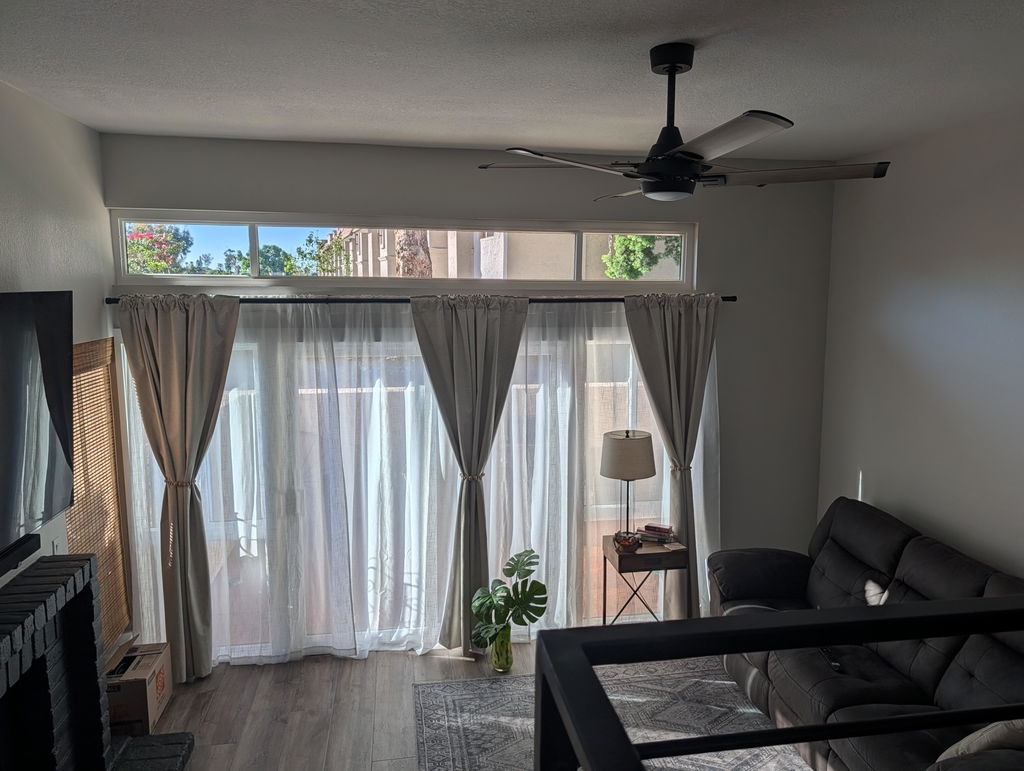
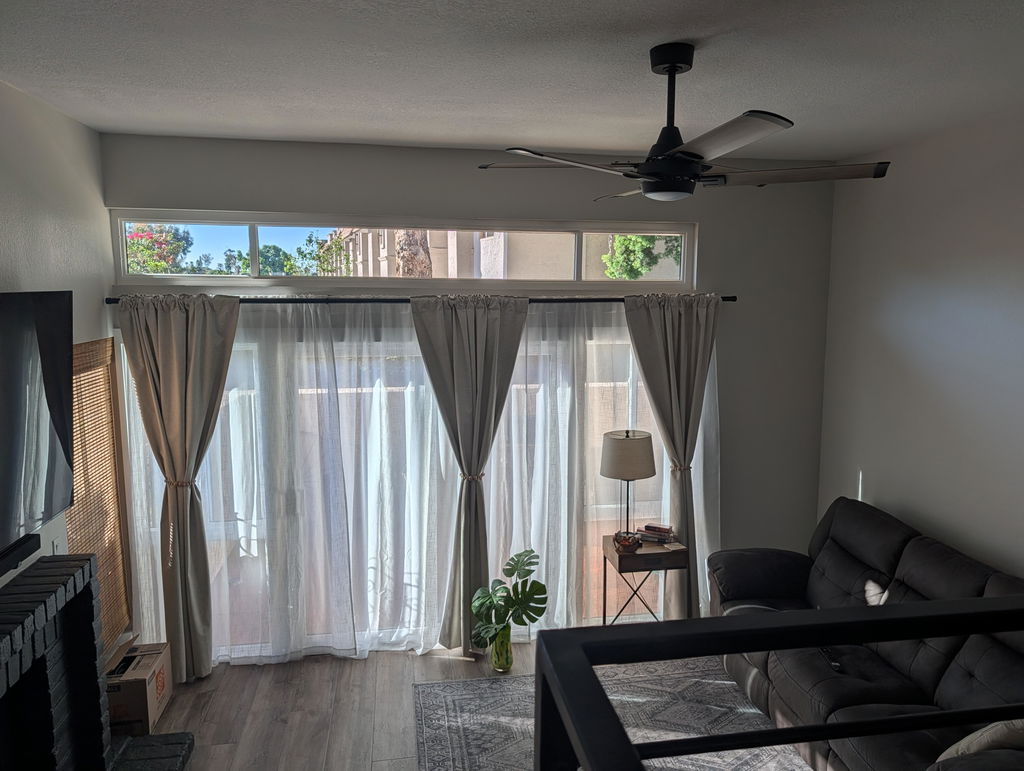
The cleanest way to layer curtains with shades is to let the shade do the close-to-glass work and let the curtain frame the window. The shade handles privacy, glare, insulation, or daily light adjustment; the curtain adds softness, color, blackout, thermal coverage, or visual height.
That division keeps the window from looking crowded. It also prevents the common mistake of buying two treatments that fight for the same job, such as a bulky patterned Roman shade under an equally busy patterned curtain.
Start With the Job Each Layer Needs to Do
Choose the base layer by function before choosing the outer curtain by style. A shade sits closest to the glass, so it is the better layer for daytime privacy, glare control, street-facing windows, and rooms where you adjust the window covering several times a day.
The curtain is the better layer for visual framing, wall-to-wall softness, stronger nighttime coverage, and color coordination with furniture, bedding, rugs, or trim. Curtains also hide some of the visual busyness that shade headrails and side gaps can create.
Use this job split as the starting rule:
| Window Problem | Better Base Layer | Better Curtain Layer |
|---|---|---|
| Daytime privacy without a dark room | Light-filtering shade, sheer shade, or privacy shade | Light-filtering or decorative curtain |
| Bedroom darkness | Light-filtering or blackout shade | Blackout curtains or lined curtains |
| Drafty or cold window | Cellular shade when available | Thermal curtains |
| Street-facing living room | Privacy shade or existing blinds | Privacy curtains or textured panels |
| Plain room needing texture | Woven, Roman, or fabric shade | Solid curtain with visible weave |
| Busy room needing calm | Plain roller or cellular shade | Solid curtain close to wall or trim color |
Layering works best when each layer has a different reason to exist. If the shade already gives full privacy and the room only needs softness, choose a lighter curtain. If the shade is decorative but not private enough at night, use the curtain as the performance layer.

The Cleanest Formula: Inside Shade, Outside Curtain
Put the base treatment within the frame whenever the frame depth allows, then hang fabric from wall-mounted hardware above the trim. This setup gives each treatment its own plane instead of forcing both pieces into the same space.
This formula solves three common problems at once. It keeps the shade from protruding into the curtain path, gives the curtains room to hang in full folds, and lets the curtain panels stack beside the glass instead of covering the window when open.
Before buying anything, check three measurements:

- Inside frame depth: The shade needs enough depth to mount securely inside the frame.
- Wall space above the frame: The curtain rod needs room above the shade headrail and trim.
- Wall space beside the frame: The curtain panels need stack-back space so they do not block too much daylight.
If the shade must be outside-mounted because the frame is shallow or uneven, the curtain can still work, but the rod or track needs enough projection to clear the shade hardware. A curtain that brushes against the shade every time it moves will look cramped and wear poorly.
Use the NICETOWN measurement guide before choosing curtain length or width. Layered treatments make small measuring errors more visible because the curtain, shade, trim, sill, and floor all create reference lines.
Pick the Shade Type Before the Curtain Fabric
The base treatment controls the window's visual weight before any outer fabric is added. A minimal base lets the front panel carry the design; a textured or folded base asks the front panel to be quieter.
Roller shades are the cleanest base layer for modern rooms, small windows, and spaces where the curtain fabric should be the main design feature. Their low-profile shape works well under custom curtains because the curtain can add the softness that a flat shade lacks.
Roman shades add fabric structure before the curtain is even installed. Pair Roman shades with solid curtains when the folds are already decorative, or use a plain Roman shade under patterned curtains when the room needs more personality.
Cellular shades make sense when comfort and insulation are part of the decision. The U.S. Department of Energy notes that insulated cellular shades are designed with honeycomb air layers and that tightly installed cellular shades can reduce heat transfer through windows. Use that as a reason to prioritize fit, not as a reason to assume any loose layered setup will perform the same.
Woven shades add texture and warmth, especially in neutral rooms. They are usually strongest as a visual base layer, so pair them with solid linen-look, cotton-look, or lightly textured curtains instead of another highly textured layer.

Existing blinds can work under curtains if they are in good condition and easy to operate. Slatted blinds are useful for glare control because the slats can tilt, but they can look busier than fabric shades, so the curtain should usually be simple.
Choose Curtain Weight by Room, Not Just by Style
Let privacy, darkness, and comfort needs decide whether the outer layer should be sheer, light-filtering, blackout, lined, or thermal. A panel that looks elegant in a living room may be too weak for a bedroom, while a heavy blackout panel may make a kitchen or casual sitting room feel overbuilt.
For bedrooms, start with the question of darkness. If the shade is light-filtering, use blackout curtains as the outer layer. If the shade already blocks most light, choose a decorative curtain that softens the room and covers edge gaps.
For living rooms, street-facing windows, and apartment spaces, prioritize daytime privacy without making the room gloomy. A privacy-focused shade under privacy curtains gives you two levels of coverage: a lighter daytime setting and a fuller evening setting.
For drafty rooms, large glass areas, or cold-weather comfort, look at the full window assembly instead of only the curtain label. The Department of Energy explains that drapery performance depends on fabric type, color, fit, placement, and how close the drapery hangs to the window. A thermal curtain can help as the outer layer, but gaps at the top, sides, and center reduce the benefit.
For dining rooms and formal living spaces, use the curtain to control the mood more than the light. A Roman or woven shade can add structure, while a tailored curtain in a calmer fabric keeps the room polished.
For kitchens, bathrooms, and moisture-prone areas, avoid heavy fabric layers unless ventilation and clearance are good. A simple shade with washable or easy-care curtains is usually more practical than dense layered fabric.
Use the One-Loud-Layer Rule for Color and Pattern
Give visual priority to a single material. If the shade has strong texture, visible weave, high contrast, or a pattern, choose a calmer curtain. If the curtain has a stripe, floral, geometric pattern, saturated color, or plush texture, choose a plain shade.
Matching the shade and curtain exactly is not required. Undertone matters more than exact color. Warm white shades pair more naturally with cream, oatmeal, taupe, warm gray, and natural linen tones. Cool white shades pair more cleanly with crisp white, blue-gray, charcoal, and cooler neutrals.
Use contrast deliberately. A low-contrast pairing, such as ivory shades with oatmeal curtains, makes the window feel calm and continuous. A higher-contrast pairing, such as white roller shades with deep green or charcoal curtains, turns the curtain into the design statement.
Scale keeps pattern from looking chaotic. A fine woven shade can sit under a larger-scale curtain pattern because the textures do not compete at the same size. A bold woven shade under a bold patterned curtain usually looks busy because both layers ask for attention.
Order curtain swatches when the shade, wall color, flooring, and furniture undertones are close but not identical. Small differences between cream, ivory, warm white, and gray-beige become more obvious when the fabric hangs beside another window treatment all day.
Get the Hardware Right: Height, Width, Projection, and Stack-Back
Layered window treatments fail most often at the hardware stage. The curtain may be beautiful, but the window will still look crowded if the rod is too low, too narrow, or too shallow.
Use this hardware checklist:
| Hardware Decision | What to Check | Why It Matters |
|---|---|---|
| Rod height | Mount above the window frame when wall space allows | Adds visual height and keeps the curtain from crowding the shade headrail |
| Rod width | Extend beyond the frame enough for stack-back | Keeps open curtains from blocking glass and daylight |
| Rod projection | Confirm the curtain clears shade hardware, trim, and handles | Prevents curtains from dragging across the shade |
| Bracket placement | Avoid conflict with shade headrails or outside-mount hardware | Keeps both layers operable |
| Center support | Use support where rod length and fabric weight require it | Prevents sagging across wide windows |
The right projection depends on the shade depth, trim profile, curtain header, and fabric thickness, so do not rely on a universal number. Measure the deepest point the curtain must clear, then choose curtain rods and brackets that place the curtain fabric in front of that point.
Stack-back deserves the same attention as curtain length. If the panels stack mostly over the glass, the room loses daylight and the window looks smaller. If the panels stack mostly on the wall beside the frame, the shade remains visible and the curtain reads as an intentional frame.

For wide windows or sliding doors, consider whether a single long rod, multiple rods, or a track system will operate better. The heavier the curtain and the wider the span, the more important smooth operation becomes.
Length and Fullness Make the Layer Look Designer-Level
A polished window needs the front panel to frame the full opening, not sit beside the shade like an afterthought. Hem placement and fabric width control that effect more than color does.
For most rooms, the curtain should reach the floor or stop very close to it. A curtain that stops several inches above the floor can make the shade look like the main treatment and the curtain look under-measured.
The outer curtain should also cover the shade's visual boundaries. If the shade ends at the sill but the curtain frames the full window height, the result looks layered. If the curtain is shorter than the shade or cuts across the window awkwardly, the layers look misaligned.
Fullness matters because flat curtain panels do not create enough visual weight to balance a shade. The goal is not excessive fabric; the goal is enough width for soft vertical folds when the curtains are closed or partly closed.
Choose ready-made curtains when the available lengths and widths align cleanly with your rod placement and floor clearance. Choose custom curtains when the layered setup needs exact length, unusual width, a specific header style, or a cleaner fit around existing shade hardware.
Room-by-Room Layering Recipes
Use these recipes as starting points, then adjust the fabric and hardware to your window size and daily routine.
| Room or Use Case | Shade Layer | Curtain Layer | Why It Works |
|---|---|---|---|
| Bedroom | Light-filtering, blackout, or cellular shade | Blackout or lined curtains | Gives a lighter daytime option and stronger nighttime coverage |
| Living room | Privacy shade, roller shade, or existing blinds | Light-filtering, privacy, or textured curtains | Keeps the room bright while softening the window |
| Nursery or kids' room | Cordless shade or cordless window covering | Simple blackout or privacy curtain | Prioritizes safety, easy operation, and sleep control |
| Drafty room | Cellular shade when available | Thermal curtain | Places an insulating shade near the glass and a fabric barrier in front |
| Dining room | Roman or woven shade | Tailored solid curtain | Adds structure and texture without overcomplicating the room |
| Rental apartment | Existing blinds or removable shade | Lightweight ready-made curtains if hardware is allowed | Improves softness without replacing the base treatment |
| Media room | Blackout shade | Blackout curtain with generous overlap | Reduces more light paths than one loose layer alone |
For nurseries and rooms used by young children, treat cord safety as a core design requirement. The Consumer Product Safety Commission says cordless window coverings are the safest option when young children are present and warns that cords on blinds, shades, draperies, and other window coverings can create strangulation hazards.
For media rooms and bedrooms, focus on light paths instead of only fabric opacity. Light can enter at the top, sides, center overlap, bottom edge, and around shallow-mounted shades. Wider curtains, better overlap, and closer wall clearance often matter as much as choosing a darker fabric.
For drafty rooms, daily use matters. A cellular shade left open all winter will not help as much as one that is lowered when the room needs insulation. A thermal curtain that stays open at night will not perform like one drawn fully across the glass.
When Not to Layer Curtains with Shades
Skip or simplify layering when the window does not have enough space for both layers to work. A shallow frame, bulky outside-mounted shade, narrow wall area, or furniture pressed close to the window can make the final setup look crowded.
Layering may also be unnecessary when one treatment already solves the room's main problem. A well-fitted blackout curtain may be enough for a guest room. A clean privacy shade may be enough for a kitchen. A simple ready-made curtain may be enough when the goal is only to soften a rental window with existing blinds.
Avoid heavy layering on tiny windows unless the room needs the fabric for balance. Small windows can disappear behind wide curtain panels if the rod is too low or the stack-back space is too limited.
Be careful with ornate trim. If the trim is part of the room's architecture, an inside shade plus simple side panels may look better than a heavy curtain treatment that hides the detail.
In rooms with patterned wallpaper, busy rugs, colorful upholstery, or exposed wood grain, use one quiet layer. The window should connect to the room, not compete with every other surface.
A Simple NICETOWN Buying Workflow
Start with measurements, not fabric. Record the window width, window height, frame depth, trim projection, sill depth, wall space above the frame, and wall space on both sides.
Then assign the shade's job. Decide whether the shade needs to handle privacy, glare, insulation, blackout, or only a clean base behind the curtains. If you are keeping existing blinds or shades, test how they operate before choosing curtain projection.
Next, choose the curtain function. Use blackout curtains for bedrooms and media rooms, privacy curtains for street-facing rooms, thermal curtains for comfort-focused spaces, and custom curtains when exact fit matters more than speed or standard sizing.
Check color with swatches before ordering if the curtain will sit next to a visible shade. Layered treatments place two fabrics or materials in direct comparison, so undertone mistakes are easier to see.
Choose hardware after you know the shade depth and curtain fabric weight. The rod has to clear the shade, support the curtain, and allow the panels to stack where they preserve light.
Use this order:
- Measure the window and frame depth with the measurement guide.
- Decide what the shade must do.
- Choose curtain type: blackout, privacy, thermal, ready-made, or custom.
- Order curtain swatches if undertone or texture is uncertain.
- Pick curtain rods with enough width, support, and projection.
- Confirm curtain length and fullness before ordering.
FAQ
Should curtains go over shades or behind shades?
Curtains usually go in front of shades because the shade works best near the glass and the curtain works best as the outer frame. The reverse can work only in specific designs, such as a sheer curtain inside a heavier outer treatment, but it is not the simplest formula for curtains over shades.
Can I layer curtains over existing blinds?
Yes, if the blinds operate well and the curtain rod projects far enough for the fabric to clear the blind headrail and slats. Keep the curtain simple if the blinds already create strong horizontal lines.
Should curtains and shades match?
They should coordinate, not necessarily match. Match undertones first, then decide whether the curtain or shade will carry the stronger color, texture, or pattern.
What is the best curtain length over shades?
Floor-length curtains usually look most intentional over shades because they frame the full window area. Short curtains can work in kitchens, bathrooms, or over built-ins, but the length should look deliberate rather than limited by a standard size.
Do layered curtains and shades block more light?
Two well-fitted layers can block more light paths than one loose layer, especially when the curtain overlaps the sides and center. The result depends on fabric opacity, shade fit, rod width, top clearance, side gaps, and how fully both layers close.
Final Takeaway
Layer curtains with shades by assigning each layer a job: shade for close-to-glass function, curtain for framing, softness, color, and stronger room control. Measure before choosing hardware, let one layer carry the visual interest, and choose curtain weight by room function instead of trend.
For a cleaner NICETOWN setup, start with the measurement guide, confirm fabric with swatches, choose rods that clear the shade, and use custom curtains when standard sizes cannot give the layered look enough length, fullness, or precision.
Before You Go…
Here are a few handpicked articles to inspire your next self-care moment.