Why Your Curtains Look Cheap: 7 Mistakes That Ruin the Look (And How to Fix Them)
You bought the fabric, installed the hardware, and stepped back to admire your work. But instead of the high-end, architectural look you pinned on your mood board, the room feels… off. It might look unfinished, slightly messy, or weirdly "squatty."
Window treatments are the eyebrows of a room; they define the expression of the space. Yet, for most first-time buyers, curtains are treated as a utility—something to block the neighbors—rather than a crucial design element.
The difference between a "dorm room" vibe and a custom designer look often has nothing to do with the price of the fabric and everything to do with how you hang it.
Here is the brutal truth about where most people go wrong, and exactly how to fix it.
1. The "High-Water" Pants Effect (The 84-Inch Trap)

If you walk into a standard big-box store, you will see walls of curtains sold in 84-inch lengths. Buying them seems logical. After all, your window frame is likely about 7 feet (84 inches) high.
This is the single most common error in window treatment history.
If you have standard 8-foot ceilings (96 inches), an 84-inch curtain forces you into a terrible compromise:
- Mount on the frame: You get floor-length curtains, but visually lower your ceiling, creating a cramped feeling.
- Mount high: You get the "high-water" look—curtains dangling 6 inches off the ground. It’s the visual equivalent of wearing pants that are too short.
The Fix:
Stop buying 84-inch panels for standard rooms. Opt for 95 or 96-inch panels.
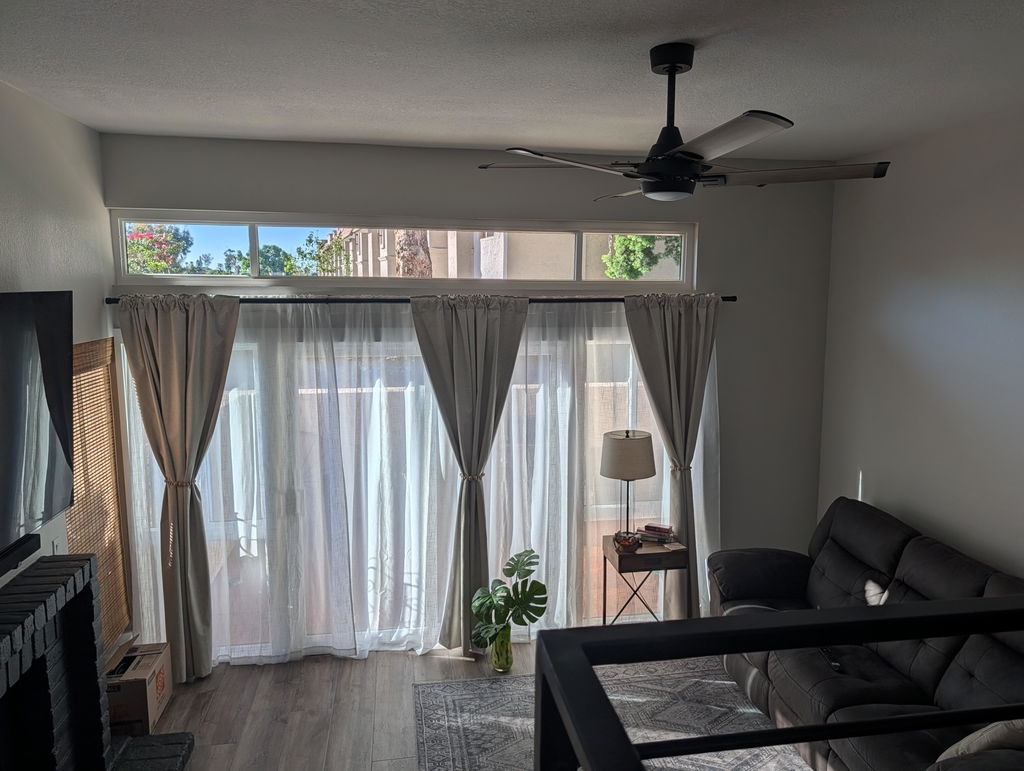
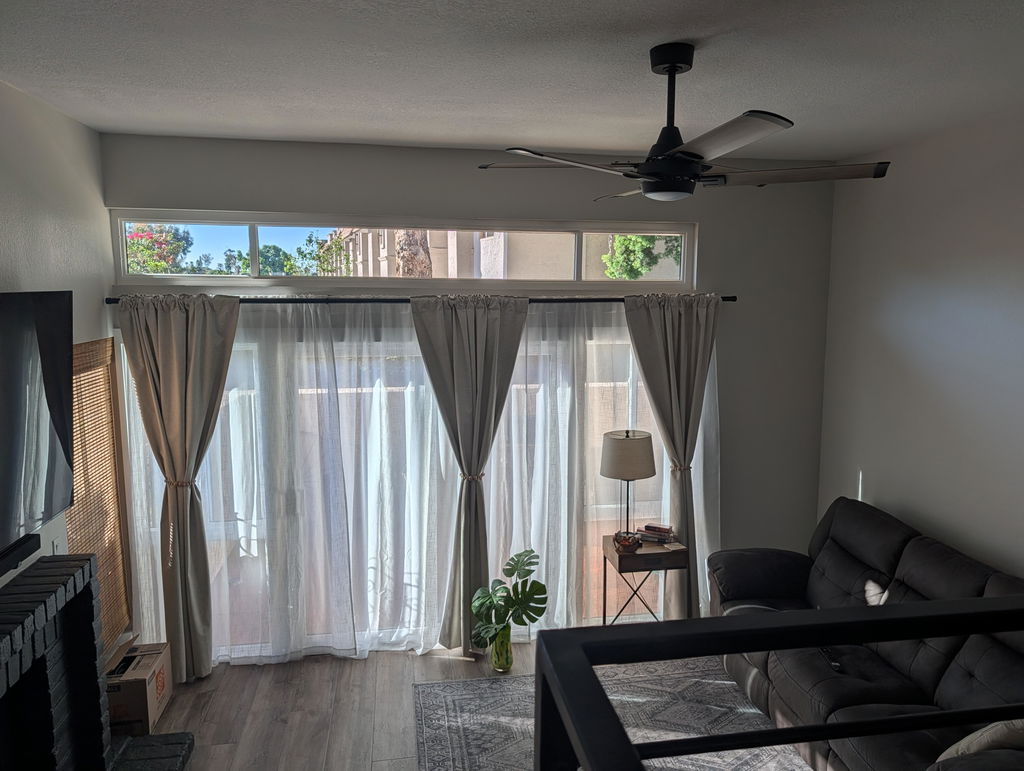
Since standard ceilings are 96 inches high, this size allows you to mount the rod just below the ceiling line or crown molding, creating a floor-to-ceiling column of fabric that makes your room look massive.
2. The "Postage Stamp" Rod Placement

Where you place the rod determines the perceived size of your window. Most beginners nest the rod bracket immediately outside the window casing.
Mounting the rod directly on the frame blocks natural light even when the curtains are open, as the fabric bunching (the "stackback") covers the glass. It makes the window look small and the room feel darker.
The Fix: Go High and Wide
Interior designers live by a simple mantra:
- High: Mount your rod brackets 4 to 6 inches above the window frame (or halfway between the frame and ceiling molding). This draws the eye upward.
- Wide: Extend the rod 6 to 12 inches past the window frame on each side. When you open the drapes, they should rest against the wall, not the glass. This maximizes natural light and makes the window appear significantly wider.
3. The "Flat Sheet" Syndrome (Skimping on Fullness)

Have you ever closed your curtains and noticed they look like a flat, taut bedsheet stretched across the wall? This happens when you prioritize width coverage over fullness.
Luxury drapery looks expensive because of volume. The fabric should undulate in deep, consistent folds, even when the curtains are pulled shut.
The Fix:
You need 2 to 2.5 times the width of your window in fabric. Do not assume one standard pack is enough for one standard window.
Fullness Cheat Sheet:
| Window Width | Recommended Total Fabric Width | Approx. Panels Needed (Standard 50") |
| 36 Inches | 72 – 90 Inches | 2 Panels |
| 48 Inches | 96 – 120 Inches | 2 to 3 Panels |
| 60 Inches | 120 – 150 Inches | 3 to 4 Panels |
| 72 Inches | 144 – 180 Inches | 4 Panels |
> Pro Tip: If you use four panels on one window, simply hang them side-by-side on the rod; the folds will usually disguise the break between panels.
4. The "Shower Curtain" Ring Disaster

For years, Grommets (metal rings punched into the fabric) were the standard.
The Brutal Truth: Grommets belong in a college dorm, not a grown-up living room.
- They look industrial and dated.
- They leak light through the ring holes.
- They make a cheap "scraping" sound against the metal rod.
The Fix:
For a tailored American home aesthetic, look for Back Tab, Rod Pocket (used with clips), or Pinch Pleat headers.
- Back Tabs: Hidden loops create soft, uniform waves without visible hardware.
- Rings with Hooks: The gold standard. Purchase drapery rings and hooks. This allows the fabric to glide silently and hang directly below the rod for a custom look.
5. Ignoring the "Vampire Gap" (Side Light Bleed)
You bought blackout curtains, but every morning a laser beam of sunlight cuts through the side gap, waking you up. This happens because standard brackets push the rod away from the wall.
The Fix:
- Option A (The Pro Choice): French Returns. Buy a "French Return" or "Wraparound" curtain rod. These curve 90 degrees directly into the wall, allowing the curtain to slide flush against the wall.
- Option B (The Hack): If you have a standard rod, take the very last hook or tab on the outer edge of your curtain and secure it to the wall bracket with a piece of double-sided tape or a small hook. This seals the gap.
6. Fabric Catfishing (Why You Need Swatches)
We buy everything online, but drapery fabric is notoriously difficult to judge on a screen. A "White" linen might arrive looking "Yellow" in your living room lighting.
The Fix:
Treat buying curtains like buying paint. Order physical swatches. Observe them at three times:
- Morning: Cool, blue-toned light.
- Noon: Harsh, direct sunlight.
- Night: Artificial lamp light (often yellow/warm).
7. Leaving the Wrinkles (The Final 10%)
This step separates the amateurs from the pros. You can buy expensive linen drapes, but if you hang them straight out of the plastic, the grid of fold lines screams "I just bought this at Target."
The Fix: Steam and Train
- Steam: Release all packaging wrinkles.
- Train: With curtains open, use your hands to arrange the fabric into uniform accordion pleats.
- Tie-Up: Loosely tie the pleated curtain with a ribbon. Leave them tied for 48 hours. When you untie them, the fabric will "remember" the fold and hang in crisp, architectural columns.
Frequently Asked Questions
Q: Should my curtains touch the floor?
A: Yes. At a minimum, they should "kiss" the floor. They should never hover above it (High-water look). For a romantic look, add 1–2 inches for a slight "break" on the floor.
Q: My window is huge (over 60 inches). Do I need a center support?
A: Absolutely. Without a center bracket, gravity will bow your rod into a "smiley face."
Q: Can I mix blinds and curtains?
A: Yes. Layering adds depth. Try woven wood shades (inside mount) paired with floor-length neutral drapes (outside mount).
Before You Go…
Here are a few handpicked articles to inspire your next self-care moment.