Choosing the Best Curtains for Every Room
Some spaces require complete light blackout while others can use lighter materials especially in areas with a lot of steam and grease. Additionally, not all fabrics can withstand high moisture areas like bathrooms. Needing different fabrics but buying the same curtains in all spaces will end with curtains that visually match but do not solve the challenges each room offers. This guide directs curtain selection to the requirements of each room to get it right the first time.
Room by Room Overview
Now we can take a closer look. Before that, take a look at this comparison table that provides a summary of spaces and typical attributes required.
| Room | Primary Need | Opacity Level | Key Fabric Concern | Budget Priority |
|---|---|---|---|---|
| Living Room | Glare control + aesthetics | Light filtering to room darkening | Fade resistance | High |
| Bedroom | Light blocking | Blackout or room darkening | Density for darkness | High |
| Kitchen | Easy cleaning | Light filtering | Washable, grease-resistant | Low to medium |
| Bathroom | Moisture resistance | Varies by window location | Mold/mildew resistant | Low |
| Dining Room | Atmosphere | Light filtering to room darkening | Drape quality | Medium |
| Kids' Room | Safety + blackout | Room darkening to blackout | Durable, washable | Low to medium |
| Home Office | Screen glare control | Adjustable options ideal | Wrinkle-resistant | Medium |
| Basement | Privacy + light maximizing | Light filtering | Moisture-tolerant | Low |
| Sunroom | UV/heat management | Variable | UV-resistant, fade-proof | Medium |
| Entryway | Privacy + curb appeal | Sheer to light filtering | Presentable from outside | Low to medium |
Consider the below items of reasoning that pertain to your advice.
The Four Questions of the Decision-Making Model
To understand what any area of the building requires, the following four questions may be asked.
What is the main function of the space? For example, one sleeps in the bedroom, therefore to be aesthetically pleasing is of lesser importance than light blocking. For a living room, it is often used for hosting, therefore one should consider the appearance more. As for kitchens, it is a work zone, so practicality is more important than everything else.
Which way do the windows face? South and west facing windows have strong afternoon sun, therefore it makes sense to have better UV protection and heavier light control. North facing windows rarely need blackout anything.
Is there an accumulation of moisture or grease or a safety concern? For example, there is humidity in bathrooms and basements. Kitchens have grease and heat sources. Kids' rooms have cord safety concerns. These hazards narrow your fabric and style options significantly.
How exposed is the space? Your living room and entryway are places that create an impression for guests. Your basement or home office may only matter to you. So, spend your effort and budget on more visible places.
To renters: If you cannot drill holes into the walls or window frames, you can only use tension rods, adhesive hooks, or command strips. This determines which styles and weights of curtains you can use. You may not want to try and dress every window in a place you might only be in for a year or two, so try to focus on the areas that you spend the most time in.
Living Room Drapery
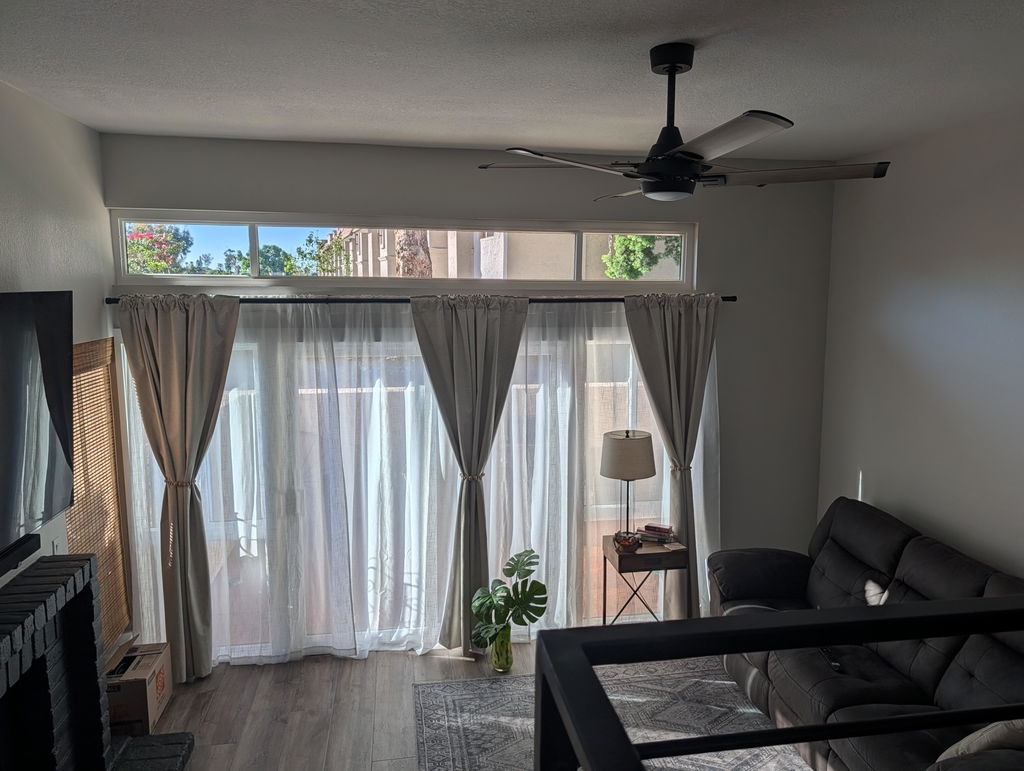
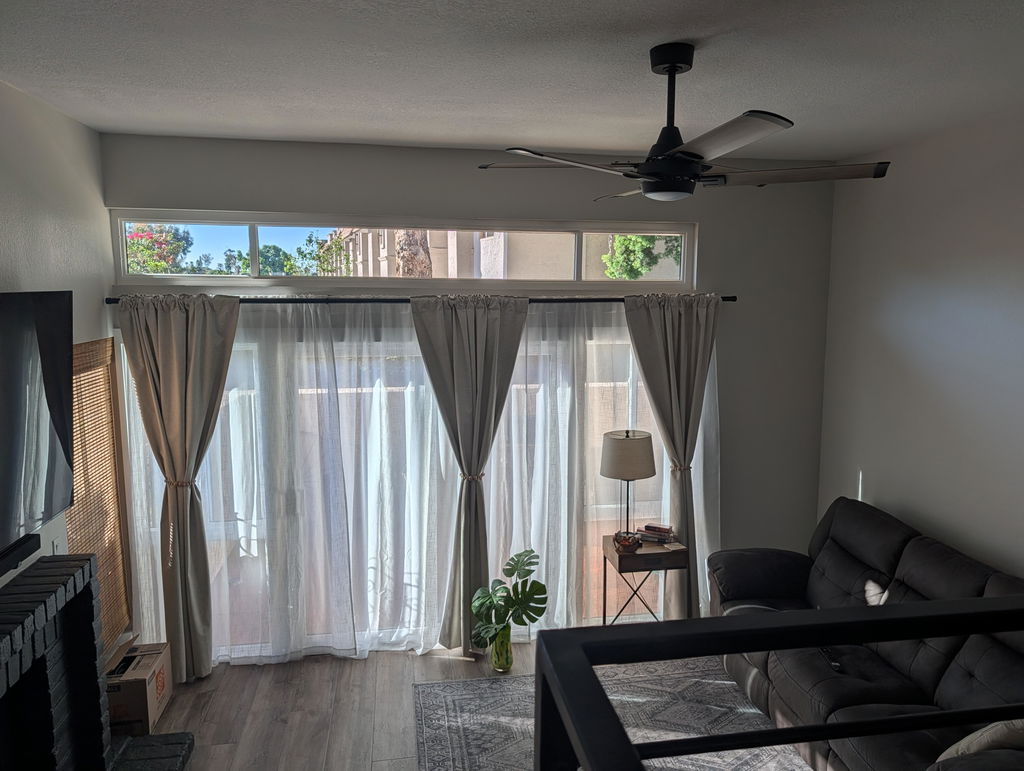
This living room is the main area in which guests and visitors will form their impression of your home, and so can be the most complex area to choose curtains. You need window treatments that look intentional, and can also mitigate some TV glare and protect the furniture from sun damage.
Finding the balance between letting in natural light and preventing screen glare is the main challenge. Ideally, you want sunlight streaming in during the day, then by evening you want to close off the view for privacy and to mitigate screen glare. One solution is to layer sheers in between heavier panels, but this is not the only solution.
This is one of the most important rooms for fade resistant curtains. Living rooms often have their curtains wide open, which can expose the fabric to UV rays for extended periods of time. If your living room has an open floor plan or is connected to other spaces, your curtain choice will reflect on the other rooms.
Curtains in the Bedroom
To guarantee good sleep quality, the most important thing is to block out as much light as possible. Things like street lights, early sunrises, and security lights can really disrupt sleep. And, for shift workers, sleeping in the daytime is especially important.
For upper-floor bedrooms, thermal properties are an added benefit, especially since heat tends to accumulate. Guest bedrooms are a little more flexible since the occasional visitor's sleep is less important than your own evening rest.
Curtains in the Kitchen
Kitchens are rough on fabrics. Grease splatters, absorbing odors, steam, and then there are heat sources that can cause safety issues.
Keep curtains short. Full-length panels are a fire hazard near the stove, and longer curtains can easily collect grease even when they're not right next to the cooking area. Cafe curtains and Roman shades that you can pull all the way up are standard for good reason.
Whatever you pick, it needs to be washable. It is not right for a kitchen if it can't be wiped down or thrown in the washing machine.
Bathroom Curtains
Bathroom humidity is one of the major problems with having curtains in the bathroom. Moisture collects and creates a perfect environment for mold growth. A rapidly growing problem as most people are unaware of the mold and the smell that late musty curtains produce. Bathroom curtains are a mistake.
Bathroom curtain material limits your options. Cotton does not work, but polyester and synthetic blends handle humidity well unlike the cotton and linen options. If your bathroom is poorly ventilated, using blinds or shutters instead of a curtain might be the better option.
Window placement is also a factor. Depending on if the window is in your backyard or facing the street, privacy might be an issue.
Dining Room Curtains
Dining rooms range from casual to formal and need curtaining that works for both and isn't obviously too formal or too casual for the room's primary purpose.
Length of the curtain is the primary factor that shows how formal or casual it is. Floor length curtains to the ground are formal while shorter curtains are casual. If your dining space is casual most of the time, very formal looking curtains will feel very mismatched.
When eating an evening meal, how the curtains are opened or closed will affect how light can come in, it is better to have a overhead light that isn't too harsh and have the curtains closed. Many dining rooms are open to or connected to the living room and the kitchen which can be a reason to ensure the sections of curtains they see from a distance work together.
Kids Room Curtains
Easily, only cordless options. The strangulation risk for young children with corded curtains and blinds is too high.
The most important for young kids is safety, and in that regard blackout capability is a must have for daytime naps and for summer bedtimes when it is still light out at 8pm. Kids also touch things with sticky hands and pull on fabric, so whatever curtain you choose needs to survive regular washing in order to be durable.
A simple pattern or solid color is better to grow with. Character themes create a highly dated look at only two years.
Home Office Curtains
The home office has two specific concerns that other rooms lack: worries about glare on monitors and backgrounds on video calls. Managing the position of your desk helps reduce these concerns, but there's an even more elegant solution: adjustable curtains that control light coming in from outside.
Natural light coming in from the windows makes the room more cheerful and energizing, and completely blocking it makes it feel unpleasant. An adjustable curtains option lets you filter light at different levels. See the full guide for specific configurations.
Basement Curtains
A finished basement has three specific challenges: potentially lots of moisture, requirements of an egress window, and a lack of natural light.
If there's a bedroom, building codes stipulate that egress windows must be present as these are emergency exits. You can't cover these windows with window treatments that would impede a quick exit.
Even 'dry' basements tend to have more moisture in the air than the rooms above. Synthetics are the better option for curtains as real fabrics that absorb moisture can mildew. And since natural light is scarce, you want window treatments that maximize natural light when open rather than heavy treatments that further darken the space.
Sunroom Curtains
Sunrooms are designed to let in lots of light, creating a particular problem for window treatments. Fading faster than anywhere else in the house, standard fabrics on curtains can be UV damaged and even completely fade in a single summer.
UV-resistant fabrics are more expensive but are cost-effective in the long run since they do not need replacing as often. The other issue is temperature control; alone, curtains on an uninsulated sunroom will not keep it comfortable in the summer heat.
Entryway Draperies
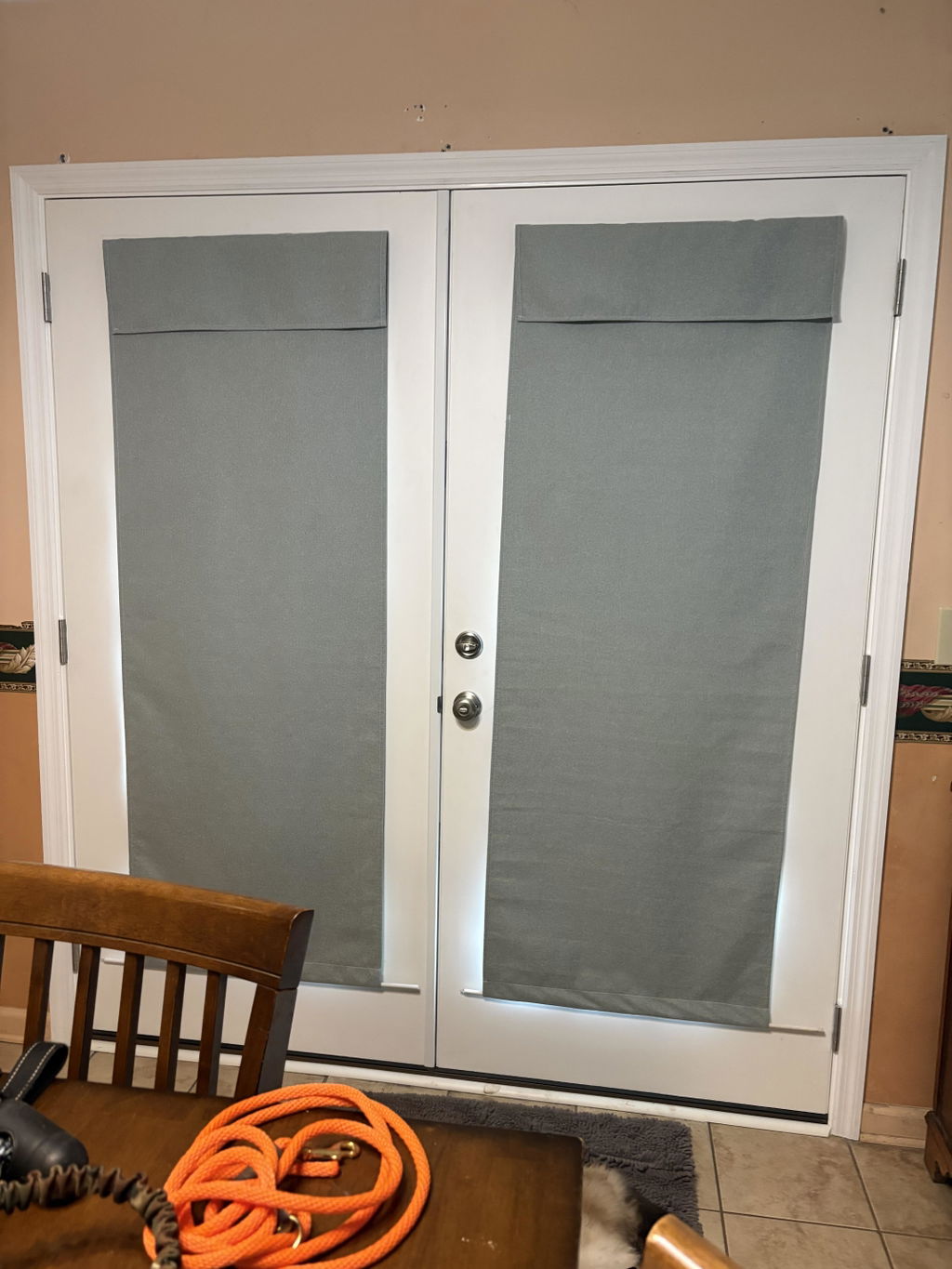
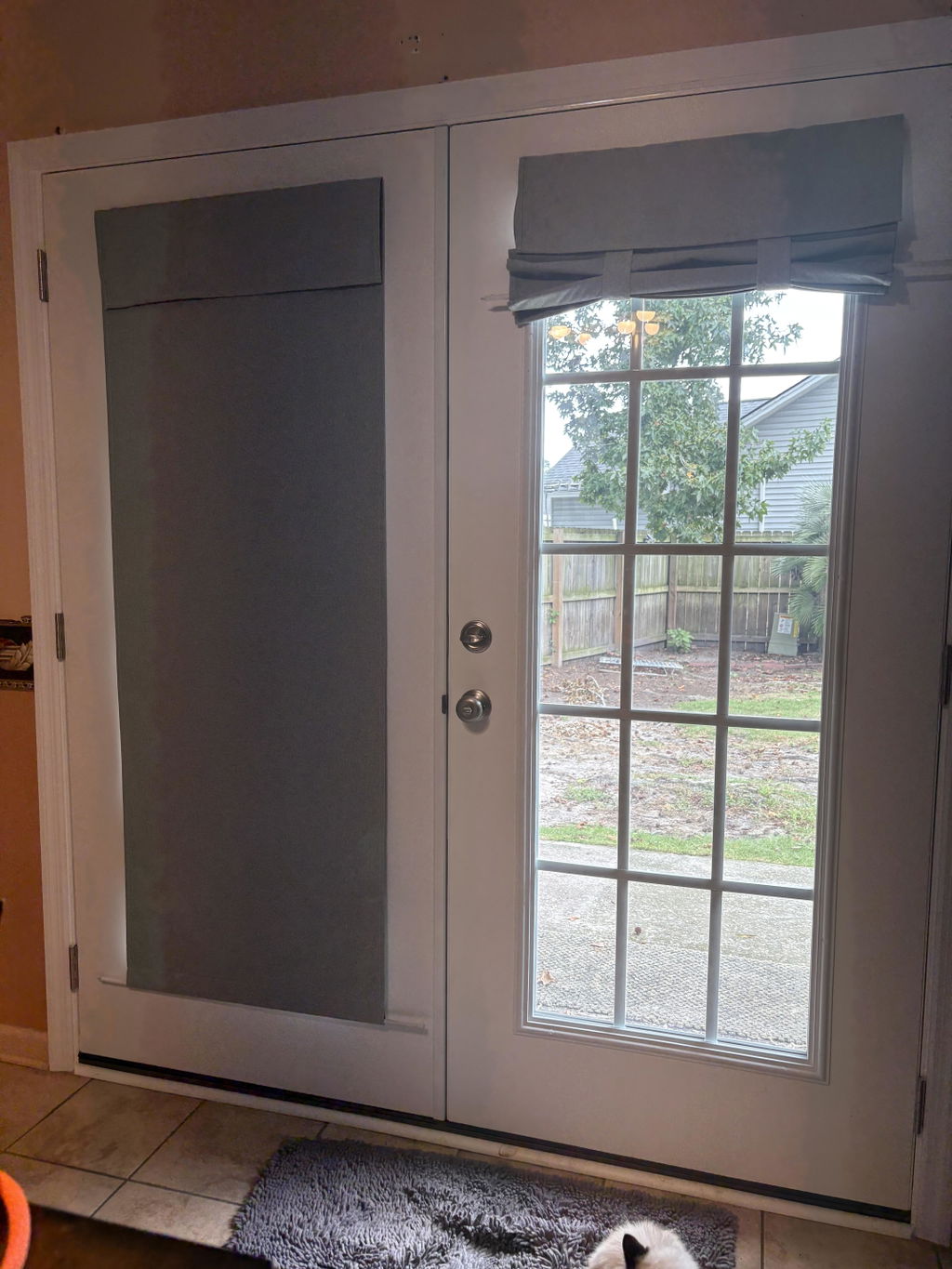
Sidelights, or the tall, thin windows that are commonly seen next to the front door, are tough to cover. The standard methods do not apply to windows that are just 8 inches wide.
Privacy versus curb appeal is always a pull; it is important to keep people from looking in, but it should not be an eyesore from the roadway. It can be tricky to install as sidelights offer little frame depth and the door can get in the way of the curtains.
Frosted glass has become a popular alternative, as has window film, which avoids the fabric discussion altogether, and both work nicely for many entryways. Those who prefer a soft touch or color will find the complete guide fabric options helpful.
Whole House Coordination
There is no need to have the same curtains in every room. It is not necessary for your curtains to be the same from room to room. Attempts to have identical curtains in every room often yield compromise on function to gain a consistent visual look, but they should not clash.
First determine sightlines. Stand in your favorite places—living room couch, kitchen sink, hallway—and see what other rooms you can see at once. To your eye, those spaces need to feel coordinated. Those spaces you can see at once because you need all the rooms in view at the same time, however, can function independently.
Working within a color family is ideal rather than exact matching. If your living room curtains are navy, your dining room might use a slate blue or a soft gray that keep to the same tonal range. They look like they are part of the same design, even if they aren't identical.
Curtains hardware can be a cohesive element on your design. There may be a different colored, and patterned, of curtains in each room, but having the same finial and bracket style can bring visual consistency across the different rooms. This is especially useful in houses that have a lot of open spaces where the sightlines encompass multiple different rooms.
There are definitely rooms that can, and should, be different. The children's rooms do not have to be consistent with the living rooms style. The same can also be said about a finished basement, where a different design style may be more appropriate. However, these rooms are separate from the main flow of the house, so cross room consistency is less of an issue.
Overthinking cohesion is the common mistake that most people make, where different rooms can sometimes end up having the same curtains in different colors. It produces an affect that is not only institutional, but also gives off the same feel that a hotel does. Without going the route of an over-cohesive design, the same effects of intention and having made a design choice can be achieved by varying the curtains within a cohesive range of patterns.
Budget Priorities
Not every room deserves the same investment towards curtains, and not every room has the same impact on your everyday life. Some rooms, like living rooms and master bedrooms, have a higher impact on everyday life, while other rooms may not require as much financial investment. These rooms that require higher investment also require more budget flexibility when it comes to the curtains as quick curtain solutions can negatively impact the overall decor of the room.
Don't worry about these spaces: Dining rooms and home offices. A dining room used primarily for everyday meals doesn't need expensive window treatments while one used for entertaining may need investments. When considering home offices, one quality window treatment may suffice for video calls without outfitting every window. These spaces can be outfitted eventually, but you can be more selective here for now.
Unused spaces: Kids' rooms and basements. For Kids' rooms, investing in quality window treatments makes little sense as curtains will need replacing as children grow. Basements are even more unused, and often have smaller and fewer windows anyway, so window treatments are even less needed.
Where cheap is fine: Spaces where function matters but aesthetics don't, such as small-windowed bathrooms, laundry rooms, and basements. In these areas of the home, any of the inexpensive moisture resistant window treatments will work well.
When to wait: If budget is tight, it's better to do the bedrooms and living room well and leave the other rooms bare temporarily than to buy cheap curtains for all windows. You can always do additional rooms over time, but replacing window treatments you don't like for a space may cost more than waiting.
Conclusion
Begin with the rooms where curtains will most improve your daily life. For most people, that means bedrooms first then the living room second for daily use and aesthetics. Use the comparison table to identify what each space actually needs, go through the four questions for any room you're unsure of, and prioritize your budget for high-impact spaces before filling in the rest.
Before You Go…
Here are a few handpicked articles to inspire your next self-care moment.