Sunroom and Three-Season Room Curtains Managing Extreme Light and Temperature
Enjoying your sunroom year-round
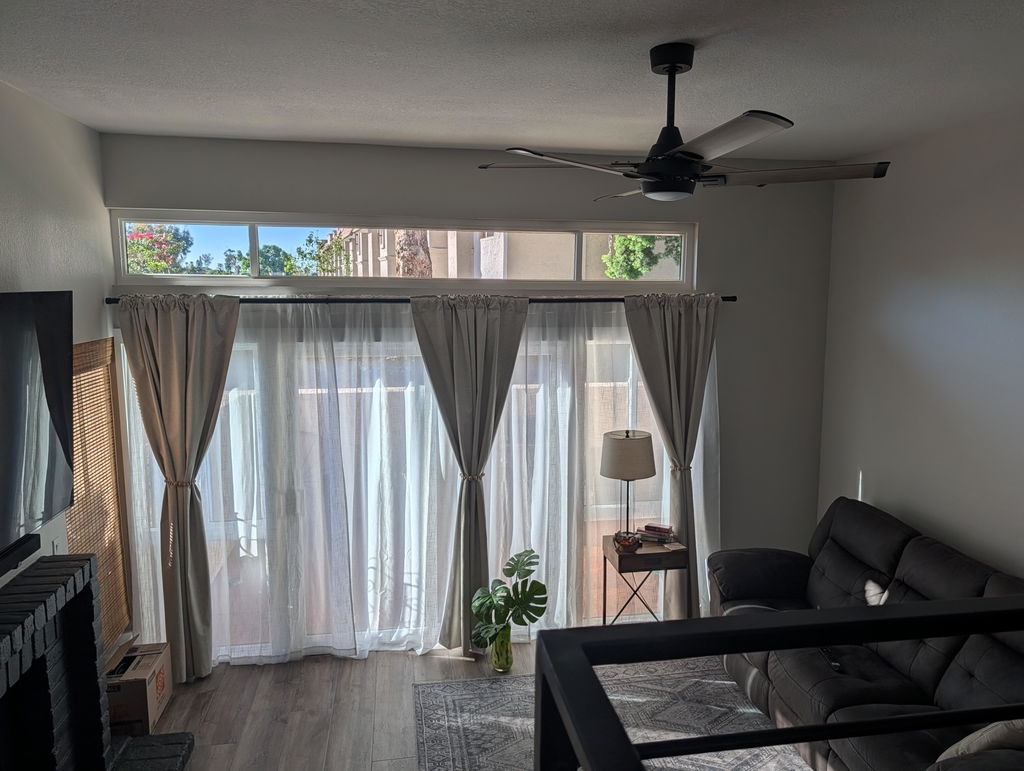
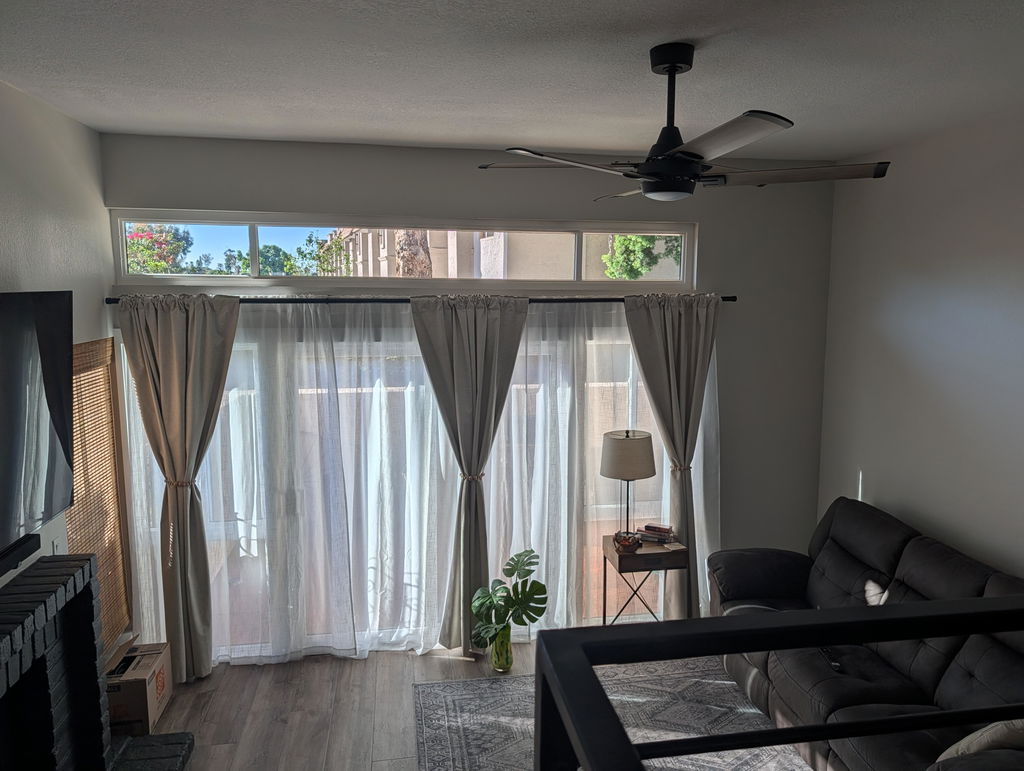
Finally, you have the sunroom you have always dreamed of…until mid-June, when the temperature inside reaches 95°F, your new sofa cushions are already fading, and the glare is too strong to read. Those gorgeous, floor-to-ceiling windows are now a problem. Luckily with the right window treatments, you can solve all of the above, all while maintaining the views and natural light.

What to know about sunrooms
There are three different types of sunrooms. Year-round sunrooms are fully enclosed and have heating and cooling systems. Three-season sunrooms are only able to be used during spring, summer, and fall, and are unheated in the winter, while screened porches allow for a more outdoor feeling, with overhead protection, and mesh screen walls.
All three types of sunrooms face the same problem, though, and that is the greenhouse effect.
UV damage is also an issue. Most window glass allows a lot of UV to enter a space which causes material within the space to fade rapidly. This includes furniture, seat cushions, and floor coverings. This is also an issue for regular curtains that you would use for bedrooms. They probably are not UV resistant and cannot handle the heat load plus will fall apart in a matter of months.
Temperature control: most important function
Temperature is the priority when deciding on window coverings. A beautiful window treatment is pointless if the space is too hot to enjoy.
Sunlight has an associated energy load. Once that energy is in the space in the form of heat, it is expensive and difficult to remove. You can use an air conditioning system to remove heat, but it is going to work on a losing battle and the best approach is to stop the heat from entering in the first place. Effective window treatments can reduce space temperature by a significant margin (10-15°F) which is often the difference between a space that is usable and one that you avoid all summer.
You may not realize that color is also very important. With respect to window coverings, light colors are better than darker colors. Light colors reflect a lot of solar energy and heat. A white solar shade will make a space feel cooler. On the other hand a black curtain will work against you and it will make the space feel hotter.
What are the best window treatment options for sunrooms?
Solar shades: the best option

If you have a sunroom, this is the best option. Solar shades are designed for controlling sun exposure. They are built with a specific mesh fabric that blocks harmful UVs, keeps the heat down, but still lets you see outside.
A key area of selection is openness factor - a percentage of how much view is blocked. Lower percentages like 3% block more light and have more privacy. 10% is for a more open view with thin covering. 5% is the sweet spot for achieving a good heat reduction and not being cut off from seeing the outside.
Quality shades block 90% and up of UVs and stop up to 70% of heat gain.
Cellular shades
In honeycomb formation, cells trap air in pockets and offer really good insulation. Great for year-round sunrooms to retain heat during the winter. The heat also needs to be cooled during the summer. The top down/bottom up option allows you to control how you open the shade for privacy.

Outdoor curtain panels
If you have a three-season room or a screened porch, outdoor curtain panels are also a great option. These panels are weatherproof, but also designed to survive sun exposure and moisture. They are mounted on a ceiling track, and they can be easily pulled open or closed as the weather and sun changes.

Bamboo and natural woven wood shades
Natural woven shades add texture to sunrooms. Bamboo shades filter light and provide just enough airflow to create a tropical feel, making them ideal for three-season rooms where adjusting for climate is not as crucial.

What to avoid
Heavy, traditional drapes tend to clash with the bright, airy aesthetic of sunrooms and can deteriorate quickly under constant sun exposure. Additionally, full blackout treatments completely defeat the purpose of having a sunroom. Lightweight sheers provide very little heat and UV protection, and should only be used as a decorative top layer over functional shades.
How to pick a fabric and a color
The best outdoor fabric is UV resistant and light in color. Everything else is secondary.
The best fabric for solar shades is UV resistant and has a long life span. They will not fade, and their fabric integrity will withstand years of sun exposure. For outdoor fabrics, while less fade and mildew resistant, they will withstand years of outdoor exposure. For added insulation, use thermal fabrics with a reflective backing.
Do not use delicate materials like silk and velvet as they degrade quickly in the sun. Standard polyester and cotton fade in UV light and are not great.
Colors:
Best: white, light gray, cream, off white, beige
Acceptable: light blue, sage green, soft pastels
Avoid: navy, black, dark brown, burgundy, dark gray
Comfort is a factor of heat and color: light colors do not absorb heat. Darker colors absorb heat, reducing comfort.
How to manage different types of sunrooms
A sunroom for use year-round will benefit from a dual system approach. In summer, use solar shades to manage heat, and in winter add cellular shades for insulation. For both functions, some people use a solar reflective cellular shade.
For three-season rooms, solar shades are the best for cooling and shading. Cold weather insulation is not needed as these spaces go unused in winter.
Screened porches require durable outdoor curtains and track systems. These can be drawn together for shade, privacy, or to block wind and adverse weather. When the weather is nice, you can fully open the curtains and enjoy the outdoor breeze.
Conservatories or rooms with glass roofs are more complex, however, since the heat can overwhelm the space. They more often than not require specialized motorized systems for the roof, and side-mounted treatments as well. These types of projects are definitely worth professional help.
Balancing views, light and privacy
Of any option, solar shades are the best at balancing all of these. When it is light outside, you can see through the shade, but people outside generally cannot see in due to the brighter exterior light. The privacy increases the more closed the weave is. Another option is top down bottom up cellular shades, which can block views at seated height and keep the top portion open.
One potential downside of the solar shade is nighttime privacy. When interior lights are on, the shades become more transparent from the outside. This may require a secondary layer of window treatment if nighttime privacy is important.
Also think through which windows really do need treatment. For instance, in a sunroom that looks out onto a private backyard, you may need shades only on the windows that are visible to the neighbors.
Operational and financial aspects
Depending on the configurations installed, sunrooms can have about 8 to 12 or even more windows, resulting in a considerable number of shades to open and close manually every day. If you have six or more windows, adjusting shades manually can become cumbersome. Remote and smartphone controlled window shades can adjust automatically based on the sun's position, integrating easily into smart home systems.
For off-the-shelf or DIY options, budget towards $80 to $200 per window for solar shades, and $200 to $500 for motorized shades. However, sunrooms often have larger or non-standard window sizes that require custom solutions. Get quotes from multiple providers before committing.
The investment will add up, but so will the rewards. You'll gain lower summer cooling bills, furniture that doesn't get bleached and a room you will actually spend time in.
Common mistakes that result in unnecessary losses:
- Using typical indoor curtains (they do not help in regulating indoor temperatures in addition to fading quickly)
- Selecting dark hues (they worsen the heat problem since they absorb heat)
- Not considering UV protective features (cost of furniture to replace adds up quickly)
- Forgetting how many windows need coverage
How to make your sunroom comfortable all year
Appropriate window treatment makes sunroom usable all year instead of just three months. Solar shades should be your starting point. Select UV-reflecting fabric in light shades. Consider motorized controls, especially if windows are many, to alleviate the daily inconvenience. Yes, sunroom window treatments are more expensive than average curtains, but they are a profitable investment due to decreased energy bills and furniture preservation. Instead of becoming a room you avoid for half the year, your sunroom should be a space that you enjoy spending time in.
Before You Go…
Here are a few handpicked articles to inspire your next self-care moment.