Entryway & Foyer Curtain Guide: balancing Privacy, Light, and Style
The sidelights and foyer windows let delivery drivers and strangers look straight into your home. When foyer windows let lots of light in, many homeowners do not think about the privacy concerns until a delivery driver is staring through the glass at them. These windows were designed for light and brightness, but will also create a privacy concern.
Why are your entryway windows a privacy problem?
Foyer windows and sidelights let a lot of light into dark corners and entryway areas, but they also let everyone and anyone standing at your door look inside very easily. Delivery drivers and solicitors can take a straight look into your home, and this is not just a privacy issue but a security concern as well. Anyone at your door can observe your belongings, daily routines, and whether you're home.
You want your entryway to be bright, but also not be a place where a passerby can spy on you as you walk around in the house. Heavy curtains would block the view, but would also make your entryway feel dark. The goal is to find something that lets some light shine and diffuses the view from outside. It is also important to think about how your curtains will look from inside the home. Mismatched or shabby window treatments can make even a well-kept home look neglected.

Solutions for sidelight windows
Curtains
The simplest solution is sheer curtain panels for each sidelight. These curtains work best when mounted with sash rods at both the top and bottom of the window frame. This dual-rod setup is important for sidelights because opening and closing your front door creates air movement and vibration that will cause a single-hung curtain to swing and flutter. Bottom mounting keeps the fabric taut and in place. Sash rods can be mounted with screws, or for renters, tension-style sash rods press into the frame without drilling.
The most common color choices are white or ivory, as easy to match to most door trim and allows the entryway to feel brighter. Many HOA communities also require that all street-facing window treatments have white or off-white backing for a uniform exterior appearance, so white sheers often serve double duty. Linen-look curtains can give a more polished feel than standard cheap ones. In terms of length, a curtain that fully covers the sidelight window is best. This is usually around 60-72in. Expect a cost of around $15-50 per sidelight to get a reasonable quality panel.
Certain factors apply when choosing curtains, or window coverings, using sheers. White sheers allow natural light while still offering light filtering during the day. However, if you turn on the interior lights at night, there will be a silhouette. Semi-sheer weaves that are more opaque will reduce this effect, but will not eliminate it entirely. If nighttime privacy is a priority, consider lined curtains or cellular shades instead of sheers.

Cellular shades
Cellular shades offer a more tailored option, really good for any organized or minimalist look. The honeycomb construction provides decent insulating properties as they trap air which can help reduce window drafts in the winter. Since entry doors are often a major source of cold air infiltration, this thermal benefit can be noticeable in winter months and help block heat from western sun exposure in summer. The top down/bottom-up option is great for sidelights as you can lower the top of the shade to let light in, but keep the bottom portion covered for privacy. This is great for scenarios when you want more control over what is being shown.
In spaces where there is really no room for fabric and curtain panels to bulk a window, the look of a shade as a window adornment is great. This is really for a minimalist and or modern aesthetic.

Frosted window film
Frosted window film is a good option if you want something permanent that requires zero maintenance. You apply it directly to the glass, and it diffuses the view while letting light pass through. Plain frosted glass is available if you're looking for something more minimal.
For renters or anyone who might change their mind later, removable films are available. They use static cling rather than adhesive, so they peel off without leaving residue.
One limitation is that, with film, you cannot change your privacy settings once a film is installed. If you have curtains or shades, you can tie back or lift them to gain full light and a clear view. But film is all or nothing.

Doors with glass panel inserts
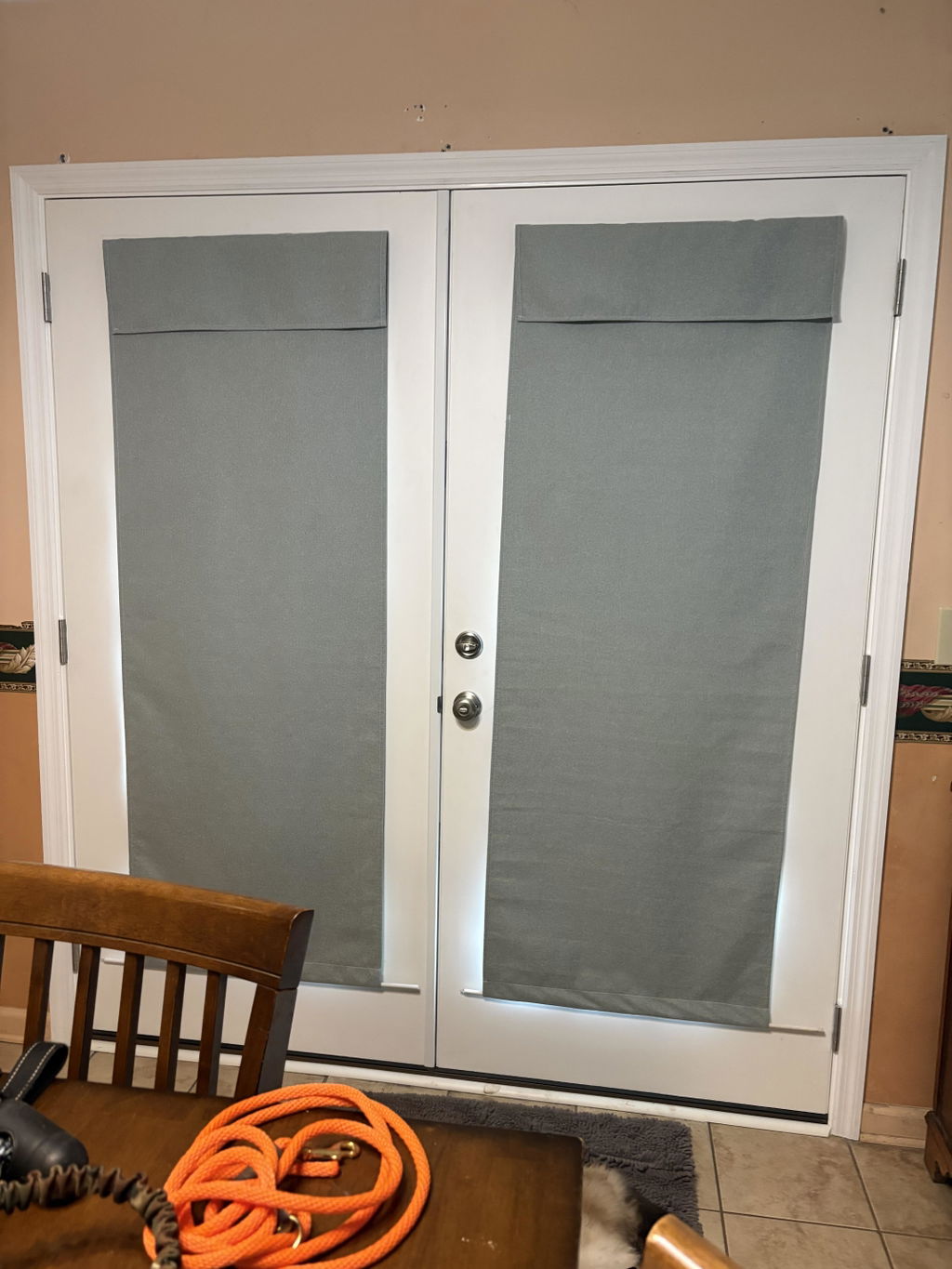
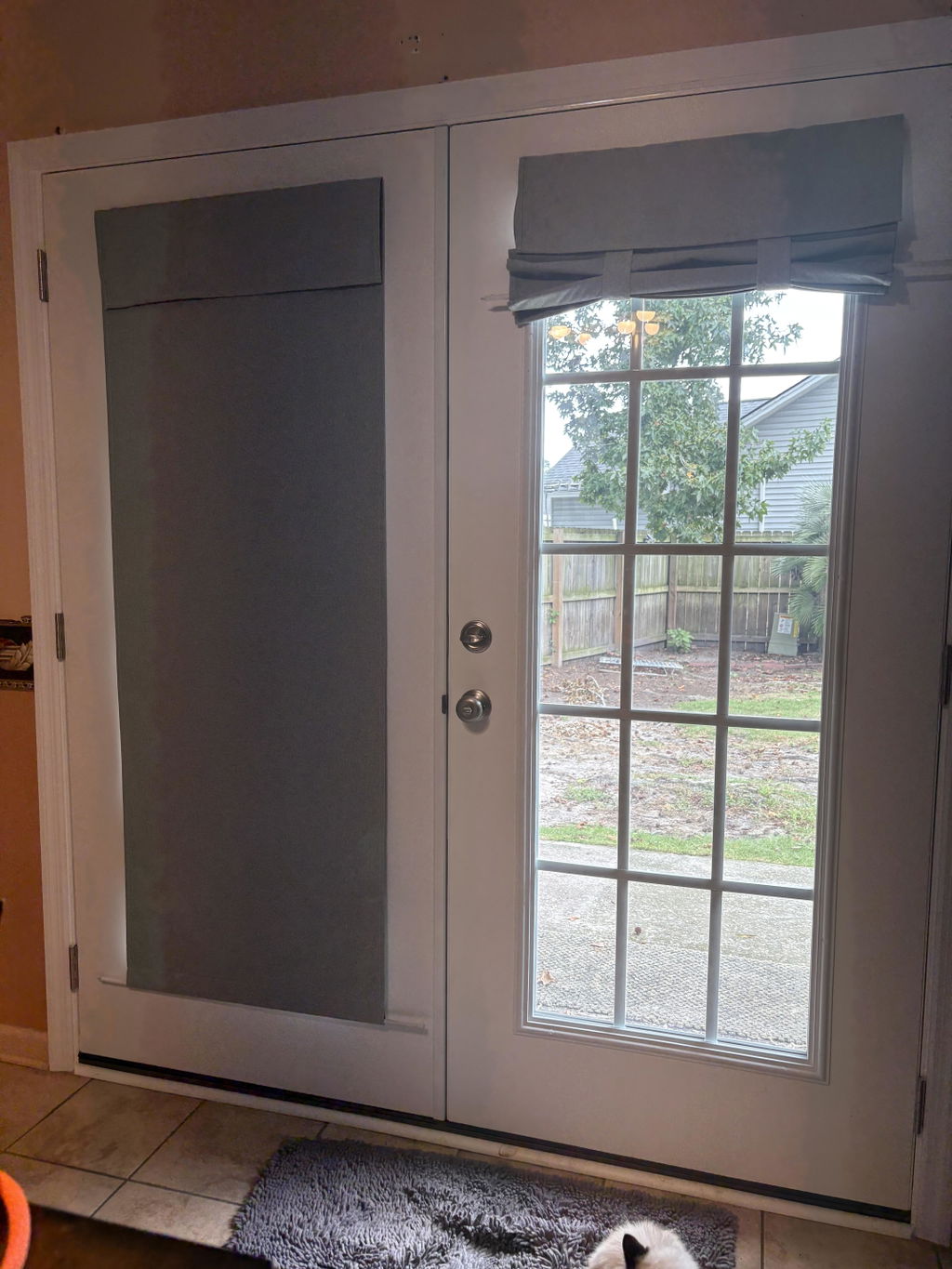
If you have a front door with glass panel inserts, this can create a challenge. Since window treatments need to move with the door, the glass panel inserts can create a challenge, and get more complicated.
Magnetic curtain rods
If your door is made of steel, you can install magnetic curtain rods that swing with the door. They don't require any permanent adjustments, which is ideal for renter situations. Check your door material first. Magnets will not work on fiberglass or wood doors, which are common in newer construction. Other door curtains can get caught on the door or have bulk that restricts the range of motion.
Decorative door window film
Decorative window film is the easiest and maintenance-free option, and you can use it on door glass. Quite a few people go for a design scheme with a decorative pattern on the frosted glass that complements the decor of the door, which is a popular choice.
When replacing the glass makes sense
If you have to replace your front door anyway, or you're open to a small renovation project, consider one with built-in textured, frosted, or stained glass. This eliminates the need for additional window treatments. The privacy is built-in, and it's seamless with the door design.
Windows in the foyer
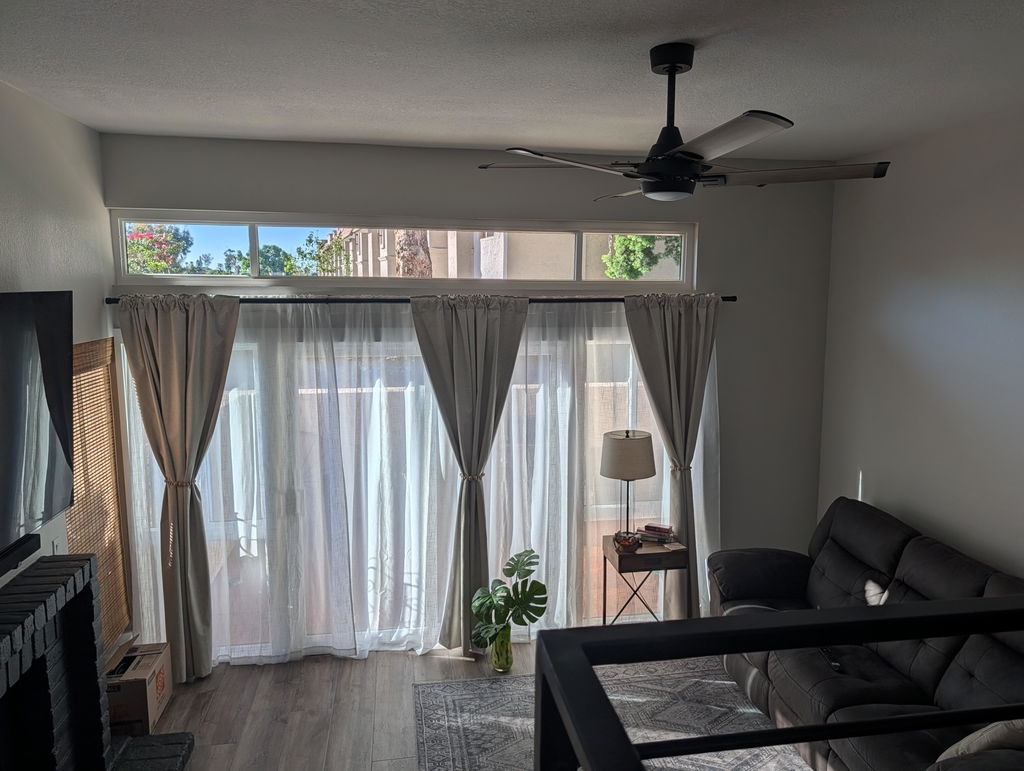
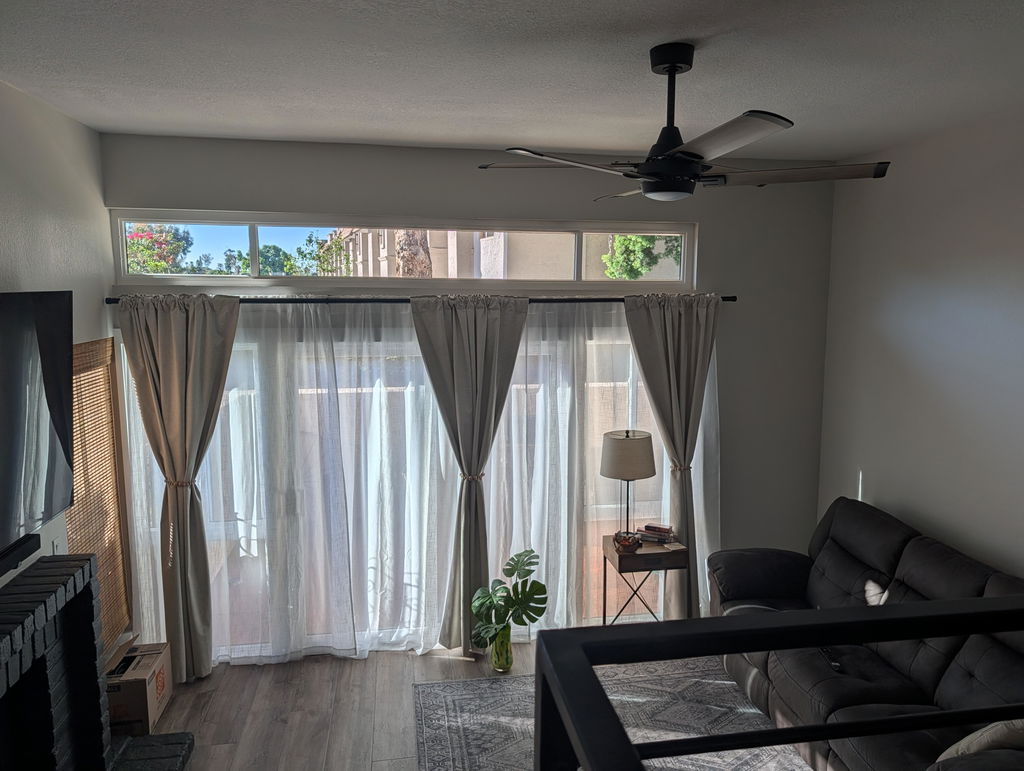
Some entryways have standard windows along with/or instead of sidelights. These tend to get treated as living room windows, but with extra consideration for first impressions.
Foyer windows usually come with floor-length panels as it keeps the space polished and creates an elongated illusion. Opt for a "kiss" length that just grazes the floor, or a break by an inch to keep extra fabric out of the way in this high traffic area. Avoid puddling fabric in an entryway as it can result in a tripping hazard.
Staying cohesive with your home's style
Your foyer curtains need to blend in with the style of your entire home.
If it's a colonial or traditional, then a classic rod pocket panel in white or ivory sheer will work best with simple, elegant hardware.
Modern residential designs have become inclined toward more minimalist and modern styles. Grommet-top panels in white or gray, or simple cellular shades, are more modern as opposed to traditional gathered fabrics.
When aiming for a farmhouse style design, white cotton or linen-look sheer curtains work best for this atmosphere. Something with a subtle detail or patterns such as ticking stripes will add to the look. Tie-top and rod pocket style sheers work well with this style.
Naturally, earth tone fabrics in the light range will work better for craftsman style homes. Simple wood curtain rod with light panel fabric will complement the style.
High traffic areas
No area is as high traffic as the entryway which is both a front and a work area. For an entryway the curtains should therefore be more durable as the fabric is bound to get more wear and tear. Particularly, sheers are made from more delicate fabric.
Expect this area to get dirty more than other areas since it is a busy entry point and outdoor dust gets carried in. Highly durable fabric such as polyester or poly-blends should be more suitable for areas such as this.
Reinforced and high fabric blends tend to be durable, also check the care instructions which will provide insight in how well this fabric will withstand the entryway curtain use. Something along the lines of machine washable should be fine as entryway dust will get embedded in the fabric.
One last tip: ensure your curtains aren't blocking your door. Solid panels or hardware that juts out might get stuck on the door as it opens. Before you install curtains, be sure to test the door swing to check for clearance issues.
Privacy and light: you can have both
The best entryway window treatments solve the privacy problem without creating new ones. They let light in, look tidy from the street, hold up to daily use, and stay out of the way when you're coming and going. For most homes, simple sheer panels on sidelights or a clean cellular shade will do the job well. Start with the practical requirements, pick something that fits your home's style, and you'll have an entryway that feels both private and welcoming.
Before You Go…
Here are a few handpicked articles to inspire your next self-care moment.