Common Mistakes When Buying Curtains: 8 Pitfalls to Avoid
On the Sunday after her April move, Nina hung the soft ivory panels she had ordered in a rush. By that night, she had already spotted three problems: the curtains looked too narrow, the bedroom still glowed at sunrise, and the rod sat so low that the room felt shorter instead of taller.
That is how most curtain regret starts. The common mistakes when buying curtains are usually small decisions made too early or too quickly. This guide breaks down the biggest curtain buying mistakes, shows you how to fix each one, and gives you a practical checklist to use before you order.
Common Mistakes When Buying Curtains Start Before You Measure
Most shoppers think the process begins with color or size. It usually starts with the room's job.
If you skip that step, the rest of the decision gets blurry fast. A bedroom, a living room, and a dining room may all need curtains, but they do not need the same thing from them.
Mistake 1: Choosing style before function
A curtain can look beautiful on a product page and still fail in your room. The question is not just, "Do I like this fabric?" It is, "What does this room need this curtain to do every day?"
Start with these practical questions:
- Do you need better sleep or glare reduction?
- Do you need daytime privacy without making the room too dark?
- Do you want the room to feel warmer, softer, or more polished?
- Will the curtains stay closed often, or mostly frame the window?
The answers change what you should buy. Bedrooms often need stronger light control. Living rooms often need a balance of privacy and daylight. Dining rooms can carry more visual weight because they are often used in softer evening light.
This is where many mistakes when ordering curtains begin. People choose the look they want first, then try to force the performance to match.
Nina did exactly that. She bought airy linen-look panels for her east-facing bedroom because they looked calm online. Once they were up, she realized she had designed for the photo, not for her 6:15 a. m. wake-up problem.
She replaced them with a warmer blackout curtain option, and the room finally matched the way she used it.

Mistake 2: Ignoring light and privacy needs
Curtains change more than style. They affect comfort, sleep, glare, and even heating and cooling expectations.
The Department of Energy reports that about 30% of a home's heating energy is lost through windows. The same source notes that sunlight through standard double-pane windows can become a major source of heat gain in warm weather.
That is why curtain choice is not just decorative.
In bedrooms, light control matters even more. Sleep Foundation explains that light exposure affects circadian rhythm and melatonin production. A room that looks restful but stays bright at the wrong time may still work against better sleep.
Use function to narrow your first decision:
- Choose blackout curtains when sleep, glare reduction, or strong light blocking matters most.
- Choose privacy curtains when you want softened daylight with daytime coverage.
- Choose layered setups when you need flexibility between openness and stronger coverage.
Need a faster way to narrow the options? Start by comparing blackout curtains and privacy curtains by room function before you worry about the final shade.
Measuring Mistakes That Ruin the Finished Look
Many curtain problems get blamed on the fabric when the real problem is measurement. A curtain can be the right color and still look wrong if the width, height, or rod plan is off.
Mistake 3: Measuring only the glass, not the finished setup
One of the most common curtain buying mistakes is measuring the visible window only. That usually leads to panels that feel too small once they are installed.
Curtains need room beyond the glass. The installed look depends on:
- rod width
- rod height
- stack-back space when curtains are open
- finished length
- obstacles such as radiators, benches, or nearby furniture
If you want the wall to look taller, rod height matters. If you want the window to feel wider, rod width matters. If you ignore either one, the final result often looks cramped.
NICETOWN's measurement guide is the right reference if you want the full measuring sequence. If you are still deciding where the rod should sit, the curtain rod height guide helps prevent the low-hung look that makes windows feel stunted.

Mistake 4: Ordering too little width or the wrong number of panels
This is the mistake that creates the "why do these look skimpy?" reaction. The fabric technically covers the window, but it does not look full enough to feel intentional.
Flat coverage and good fullness are not the same thing. Curtains need extra width so they can hang with shape instead of pulling tight across the opening.
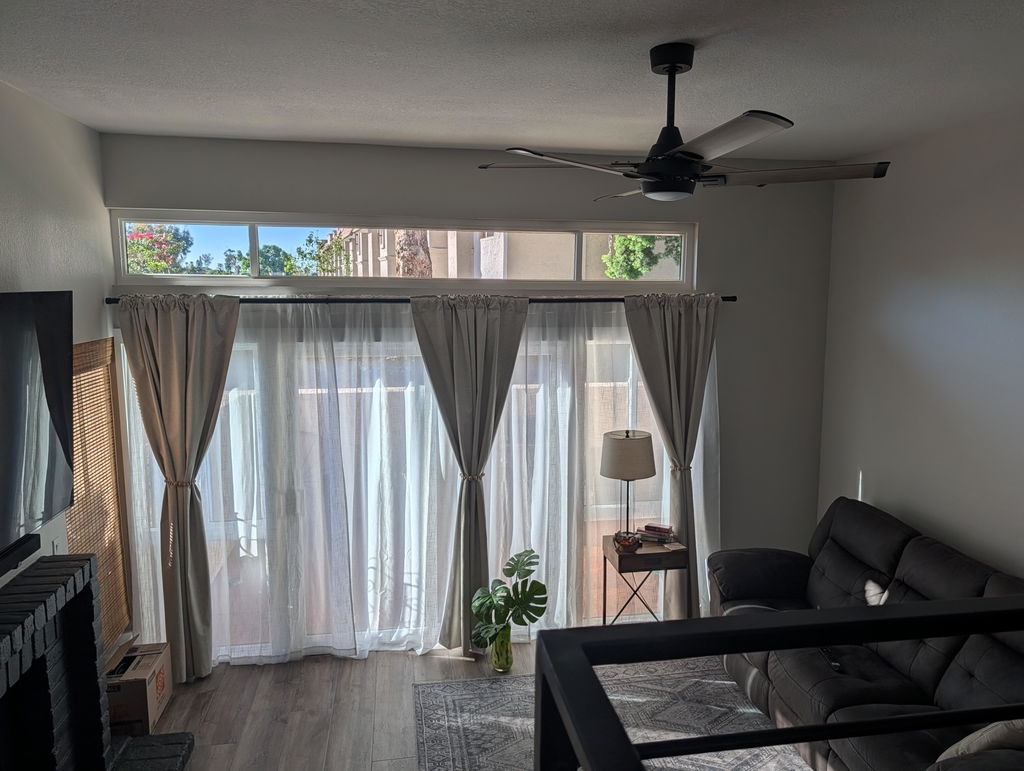
Daniel found this out in May when he ordered panels for his living room. The listing said each panel was 52 inches wide, but he read it as 52 inches total. His rod was 96 inches wide, and the two panels technically reached across it. They just looked thin, tense, and unfinished.
He re-ordered with more width and finally got the softer folds he expected the first time.
This mistake usually happens for one of three reasons:
- You measure the window width but not the total rod width.
- You forget that fullness needs extra fabric.
- You confuse single-panel measurements with pair measurements.
If you need help here, NICETOWN's curtain fullness and width guide is the best internal link to use. It is especially helpful for wider windows, pleated styles, and shoppers comparing a fuller decorative look with a more minimal one.

Common Mistakes When Buying Curtains Online
Buying online is convenient, but it creates a few risks that showroom buyers do not deal with in the same way. Most of them are preventable.
Mistake 5: Trusting screen color instead of testing the fabric at home
A product photo cannot show you how a curtain will read against your wall, floor, sofa, wood tones, or lamp light. It also cannot show you how the fabric texture changes the color.
That is why swatches matter. A small fabric sample lets you see:
- whether the color feels warmer or cooler than expected
- how much texture the fabric has in real light
- whether the shade works in morning, afternoon, and evening
- whether the curtain still feels right next to the rest of the room
This is one of the easiest curtain shopping mistakes to prevent. It is also one of the cheapest, and one of the easiest to skip if you tell yourself the screen is "close enough."
Priya ran into this in her dining room. She narrowed the choice to two neutrals that looked almost identical on her screen. Once the swatches arrived, one turned green against her wall paint and the other looked softly warm under the room's evening lamps. The second one was the clear winner, but she would not have caught it from product photos alone.
If you are comparing close shades or different textures, start with curtain swatches. That one step prevents a surprising number of returns.

Mistake 6: Skipping care details and return rules
Curtains live in real houses, not styled photos. That means pet hair, kitchen smells, wrinkling, sunlight, dust, and regular handling all matter.
Before ordering, check:
- how the fabric should be cleaned
- whether shrinkage is a concern
- whether the weave grabs lint or pet hair easily
- whether opened, altered, or custom items have different return rules
This is especially important online. A buyer who assumes every curtain can be returned the same way can end up frustrated fast.
NICETOWN's return policy is the right place to review the current rules before purchase. If you still have product-type questions, the FAQ is also worth checking.
Trying to avoid the expensive kind of guesswork? Order curtain swatches first, then confirm the care and return details before you commit to the full order.
Fabric, Lining, and Hardware Mistakes That Change Everything
Curtains are a system, not just a textile. Fabric weight, lining, rod choice, and mounting plan all affect how the finished window looks and performs.
Mistake 7: Treating lining and hardware as afterthoughts
Many shoppers focus on color and forget the supporting decisions that make the curtain work. That usually shows up in one of two ways: weak light control or an underbuilt rod setup.
Lining affects:
- light blocking
- insulation
- drape
- fabric protection
- overall visual weight
The Department of Energy notes that medium-colored draperies with white-plastic backings can reduce summer heat gain by about 33%. It also notes that conventional draperies can reduce heat loss from a warm room by up to 10% when drawn during cold weather. Those are practical reasons to think harder about lining, not just style reasons.
Hardware matters too. A rod that is too thin for heavy panels can sag. A rod mounted too low can flatten the whole wall. Projection matters when you want the curtains to clear the window trim or stack back cleanly.
If you are upgrading both the look and the function, do not separate the curtain from the rod decision. They work together.
Mistake 8: Forcing ready-made sizes onto non-standard windows
Ready-made curtains are practical for many rooms. They are often the right choice when the window size is straightforward and the room does not need a highly exact finish.
Problems start when the window is unusually wide, very tall, off-center, or blocked by trim, furniture, or nearby walls. That is when shoppers keep trying to "make standard work" and end up paying through time, compromise, or repeated returns.
Use ready-made curtains when:
- the window is close to standard sizes
- your desired length and width are easy to match
- the room can tolerate a little less precision
Move toward custom curtains when:
- the window is extra wide or extra tall
- the room depends on a cleaner tailored look
- stack-back, fullness, or exact finished length matter a lot
- you are trying to solve a problem that standard sizes keep missing
Marcus had this issue with a wide living room window over a radiator. The ready-made panels he tried were either too short, too narrow, or too bulky once open.
After two returns, he moved to a custom option and got the exact width and finished drop he needed. It cost more upfront, but less than continuing to buy the wrong thing.
That is the practical rule. Ready-made works when the window is simple. Custom makes more sense when the fit problem is the main risk.
Quick Before-You-Buy Curtain Checklist
Use this checklist before checkout. It will catch most things to consider before buying curtains in less than five minutes.
| Check | What to confirm | Why it matters |
|---|---|---|
| Function | Sleep, privacy, glare, insulation, or style goal | Stops you from choosing by looks alone |
| Measurement | Rod width, rod height, finished length, obstacles | Prevents short, narrow, or awkward installs |
| Fullness | Panel count and total width | Avoids the skimpy look |
| Fabric | Texture, care needs, pet hair, wrinkling, shrinkage | Matches the curtain to daily life |
| Lining | Sheer, privacy, lined, blackout | Aligns color with real performance |
| Hardware | Rod strength, projection, finish, mounting plan | Supports the final look and weight |
| Fit type | Ready-made or custom | Saves time on hard-to-fit windows |
| Policy | Return and alteration limits | Reduces surprise after delivery |
If you want the shortest path to a confident order, use the measurement guide, compare curtain swatches, and move into custom curtains only when the window truly needs the extra precision.
FAQ
What is the biggest mistake people make when buying curtains?
The biggest mistake is choosing based on looks before defining what the room needs. That leads to the wrong light control, the wrong width, or the wrong fit even if the fabric itself is attractive.
How do I know if my curtains are wide enough?
Check the total rod width, not just the glass, and make sure the combined panel width allows for enough fullness. If the fabric only stretches flat across the opening, the curtains are usually not wide enough.
Should curtain rods be wider than the window?
Often, yes. A wider rod gives the curtains room to stack back and can make the window feel larger. The exact amount depends on the wall space and the look you want.
Do I need blackout curtains or just lined curtains?
It depends on the room. Bedrooms, nurseries, and media spaces often benefit from blackout curtains. Living rooms and shared spaces may do better with privacy or lined curtains that keep more daylight.
When should I choose custom curtains instead of ready-made?
Choose custom curtains when the window is unusually wide, tall, or hard to fit, or when exact length and fullness matter enough that standard sizing keeps missing the mark.
Buy for the Room You Have, Not the Photo You Saw
Most curtain mistakes are not dramatic. They are small mismatches that stack up: the wrong width, the wrong opacity, the wrong rod height, the wrong assumption about what a panel measurement means.
The fix is simple, but it isn't casual. Decide what the room needs first. Measure for the installed look, not the glass. Check fullness before checkout. Test the color in real light. Treat lining, hardware, and return rules as part of the same buying decision.
If you do that, you avoid most of the common mistakes when buying curtains before they cost you money. Start with curtain swatches, review the measurement guide, and compare ready-made curtains with custom curtains based on how precise your window really needs the fit to be.
Before You Go…
Here are a few handpicked articles to inspire your next self-care moment.